


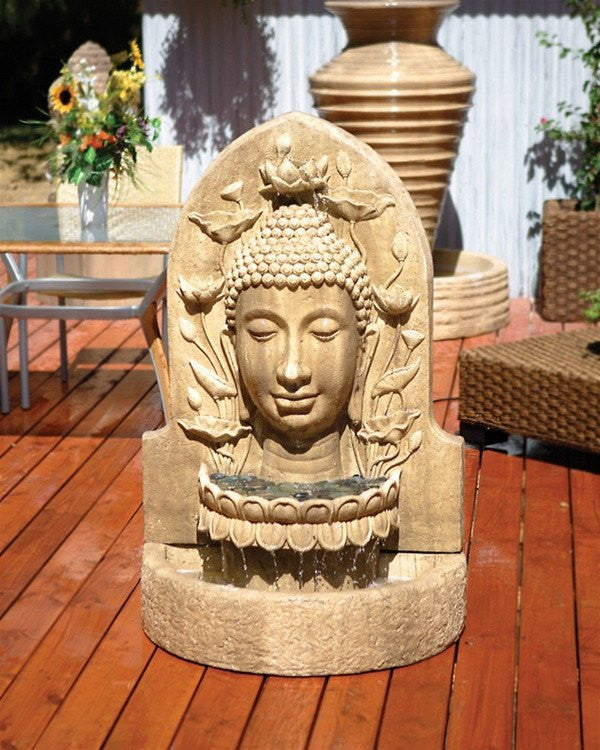


What You Need to Know About Outdoor Wall Fountains?
Outdoor wall fountains are often the collection people end up in after realizing a traditional fountain is going to take up more room than they expected.
That's especially true for patios, smaller courtyards, and entry areas. A wall fountain gives you the sound of moving water without asking you to give up the center of the space. Once it's installed, it tends to feel more like part of the architecture than a separate landscape feature.
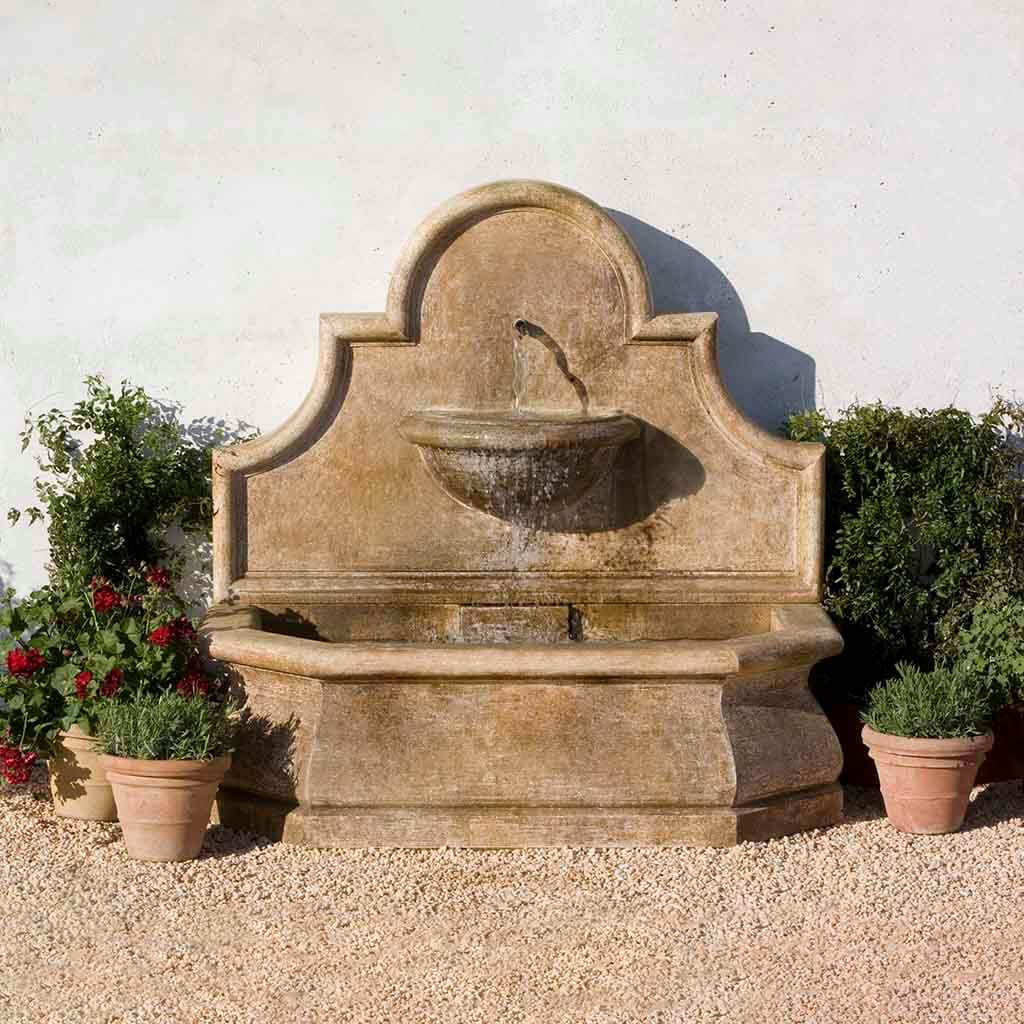
There are a few different directions represented here. Some pieces are formal and decorative, with carved details and deeper basins. Others are much simpler. Those cleaner designs are frequently considered alongside Modern Outdoor Fountains because they fit naturally with newer homes and more structured outdoor spaces.
Cast stone remains one of the most requested materials in this category, so you'll see a lot of Cast Stone Fountains throughout the collection. Customers often tell us they're looking for something that feels permanent rather than lightweight, and cast stone tends to check that box. It also develops character over time, which is part of the appeal.
Not every wall fountain in this collection is small. That's a common assumption. Some of the larger models are used the same way people use Garden Fountains—as the primary focal point of a courtyard or garden wall. The difference is that the fountain stays tucked against a structure instead of occupying valuable floor space.
One thing worth noticing as you browse is the basin design. Some fountains have larger lower basins that make the water more visible from a distance. Others keep the basin relatively compact and put the emphasis on the wall section itself. Neither approach is better; they simply create a different look once installed.
Customers tend to spend a lot of time comparing finishes, but in practice, the dimensions usually have a bigger impact. A fountain that's six feet tall creates a completely different impression than one that's three feet tall, even if the overall style is similar. The photos help, but checking the measurements is often what separates a fountain that works from one that feels too large—or not quite large enough—for the wall behind it.
This collection includes both traditional and contemporary designs because outdoor spaces vary just as much as homes do. Some fountains are meant to be noticed immediately. Others settle into the background and become part of the landscape over time. Both approaches have their place.
FAQs
Common Questions About Outdoor Wall Fountains
Most outdoor wall fountains include mounting brackets and installation hardware. Standard installations require basic tools, a GFCI electrical outlet, and 1-2 hours for assembly. Heavier models may require additional mounting support or professional assistance.
Projection varies by design, but many outdoor wall fountains extend between 12 and 24 inches from the mounting surface. Checking the depth measurement is especially important for walkways, patios, and narrower courtyard spaces.
Typical maintenance includes weekly water level checks, monthly basin cleaning, and quarterly pump inspections. Most wall fountains need deep cleaning 2-3 times annually, with additional maintenance in areas with hard water or heavy debris.
In mild climates, most stone and concrete wall fountains can stay outside all year. In colder regions, it’s best to disconnect the pump, drain all the water, and cover or store any removable parts during the winter to prevent freeze damage.
Most wall-mounted water features hold 3-8 gallons in their basins. This recirculating water needs occasional topping off due to evaporation, typically requiring 1-2 gallons weekly, depending on climate conditions.
Yes, all our wall fountains include appropriately sized water pumps. Most use energy-efficient models drawing 20-45 watts, depending on fountain size and water flow requirements.
Regular cleaning and water treatments prevent algae issues. Non-toxic fountain cleaners and algaecides designed for outdoor use maintain water clarity without harming wildlife or pets that may drink from the fountain.
Wall fountains mount vertically against walls or sturdy structures, saving floor space compared to freestanding models. They typically feature water flowing over a vertical surface rather than up from ground level, creating different visual and sound effects.
Most outdoor wall fountains are designed to be mounted to masonry, concrete, brick, or other structurally sound surfaces. For heavier models, it's important to verify that the wall can support the fountain's installed weight.