


What the photographs don't show
Most people decide where a garden bench will go before they decide which one to buy. It might be at the end of a path, beneath a favorite tree, or beside a flower bed that's finally filled in. The location is usually easy. The harder question is whether the bench will become somewhere people actually sit or simply something they admire as they walk past.
That's the difference between choosing a bench in a photograph and living with it for years. Nearly every piece in this collection is made from cast stone—a material commonly searched as concrete benches—which means each one arrives as a permanent part of the landscape rather than something that gets moved every season.
Most of the collection falls into three distinct styles, each suited to a different setting.
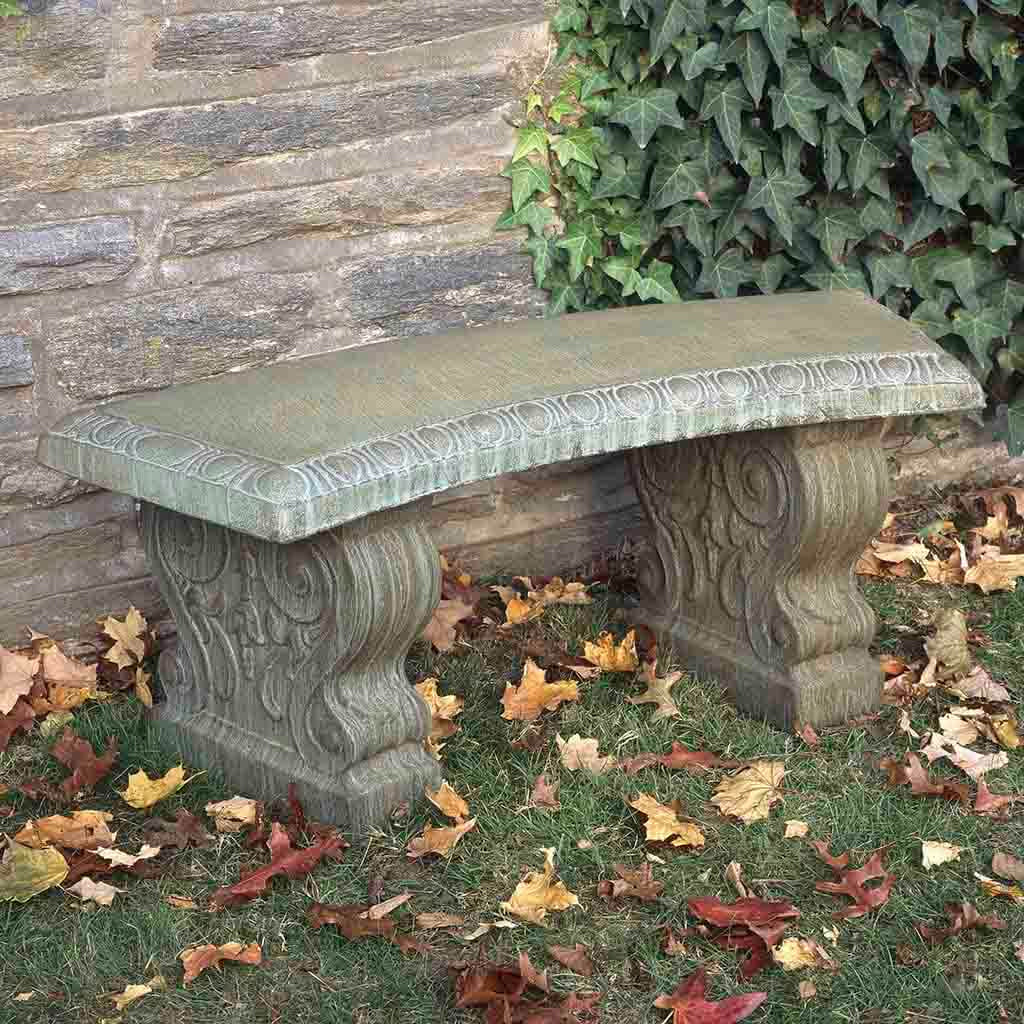
Classic benches put their character into carved supports, decorative ends and traditional detailing. They naturally complement formal gardens, brick pathways and established landscapes. If that's the look you're after, it's worth browsing the Classic Stone Benches collection. What photographs don't always reveal is that many of these decorative designs trade a little seat depth for their ornamental details, making them feel more upright than you might expect.
Modern benches take the opposite approach. Their clean lines and solid forms let the material speak for itself, making them feel at home in contemporary gardens as well as more traditional landscapes. The Modern Outdoor Benches collection is worth exploring alongside the classic styles because they solve the same problem with a completely different design language.
Curved benches change the space around them as much as they change the seating. They naturally wrap around trees, fountains and circular planting beds, creating a destination rather than simply filling an empty edge. If your landscape already has curves, the Curved Outdoor Benches collection is worth comparing before deciding on a straight design.
The biggest mistake buyers make is judging every bench by its appearance alone. Height and depth are difficult to read in photographs, yet they're what determine whether a bench becomes somewhere to pause for a moment or somewhere you'll happily spend an afternoon. Choosing a slightly larger, more comfortable seat is rarely the decision people regret. Choosing one that looks beautiful but never gets used usually is.
Some details sit outside the usual categories. Hand-applied patina finishes continue to weather naturally over time, so every bench develops its own character. A few designs are supplied as seat tops only, allowing them to be paired with an existing base or incorporated into a custom landscape project.
This collection is for choosing a bench you'll still enjoy sitting on long after the photograph that sold it has been forgotten.
FAQs
Common Questions About Concrete Benches
Seat heights vary more than most buyers expect. Lower benches create a more relaxed, informal place to pause, while higher seats feel closer to a dining chair and are easier to get in and out of. The right choice depends less on appearance than on how you expect the bench to be used.
Seat depth changes the sitting experience as much as height. Shallower benches encourage shorter stops, while deeper seats make it easier to settle in comfortably. Decorative benches often devote more space to their carved supports, while simpler designs typically provide a roomier seating area.
Most benches comfortably seat two people, although lengths vary across the collection. Rather than judging the bench on its own, consider how it relates to the wall, pathway or planting bed beside it. A bench that feels generous on its own can appear undersized in a large garden setting.
These are substantial cast stone benches that arrive on a freight pallet and are intended to stay where they're placed. Once installed, moving one is a significant task, making it worthwhile to decide on the location before choosing the design.
Yes. Without a backrest, the proportions of the seat become much more noticeable. They're ideal for open spaces where people approach from either direction and work particularly well beside pathways, lawns and fountains, but they're generally better suited to shorter periods of sitting.
Although people commonly search for concrete benches, nearly every bench in this collection is made from cast stone. It's a wet-cast blend of cement, sand and stone aggregate that produces the weight, durability and detailed finishes associated with traditional garden stonework.
Very close, but not identical. Patina finishes are applied by hand, so slight colour variation is part of the character of each piece. Natural outdoor lighting also affects how finishes appear in product photography compared with your own garden.
No. The finish is designed to complement natural aging rather than prevent it. Over time, the bench continues to develop character outdoors, which is part of the appeal of cast stone for many homeowners.
Yes, in most climates. Where freezing temperatures are common, it's best to prevent water from collecting on or around the bench and avoid letting the legs freeze directly to the surface below. With those precautions, cast stone benches are designed to remain outdoors throughout the seasons.