Wall Fountains vs. Freestanding Tiers: Which is Right for Your Space?

Trying to choose between a wall fountain and a freestanding tiered fountain? This guide compares space requirements, splash radius, installation needs, and where each style works best in patios, courtyards, and open gardens.

If you’re deciding between a wall fountain and a tiered freestanding fountain, the real difference comes down to space and layout.

Wall fountains sit against a wall or fence and take up less floor space, making them ideal for patios, courtyards, or narrow garden areas. Freestanding tiered fountains are designed to be viewed from all sides, which makes them better suited for open yards where they can act as a centerpiece.

Both styles create the same calming effect of moving water, but they behave differently in terms of footprint, splash, and installation. Understanding those differences before you buy can make the decision much easier.

Rock Wall Garden Fountain

The Biggest Difference: How Much Space You Have

The first question most homeowners should ask is simply how much room the fountain will occupy.

Wall fountains are designed to sit directly against a vertical surface. That surface might be the exterior wall of a house, a courtyard wall, or even a sturdy fence. Because the fountain only projects outward instead of occupying a full circular footprint, it works well in tighter spaces.

This is one reason wall fountains are common in small patios or enclosed garden areas. They allow homeowners to enjoy the sound of water without giving up valuable walking space.

Freestanding tiered fountains, on the other hand, are meant to be seen from every direction. Water flows from tier to tier down toward a basin at the bottom, creating a visual centerpiece. Because they operate in a full 360-degree layout, they need more breathing room around them.

You’ll often see tiered fountains placed in the middle of a garden bed, at the center of a courtyard, or in a circular patio where the fountain becomes the focal point of the entire space.

If your yard layout already has a clear central area, a tiered fountain usually fits naturally there.

Classic 3-Tier Cast Stone Outdoor Fountain

Footprint and Walking Space

Footprint matters more than people realize when planning a fountain.

A wall fountain’s footprint is mostly depth rather than width. It sits against the structure behind it, leaving open space around the rest of the patio or garden path.

That makes it easier to place seating nearby without feeling crowded.

Freestanding tiered fountains require a circular clearance area. You’ll usually want walking room all the way around the fountain so it doesn’t feel cramped. Even smaller models benefit from some open space to maintain balance in the landscape.

This is why tiered fountains tend to appear in larger lawns or garden islands rather than narrow patios.

Splashing Radius

Another difference people rarely think about before installation is splash.

Any fountain with moving water creates a small splash radius. The stronger the water flow and the greater the drop height, the more noticeable it becomes.

Tiered fountains often have a little more splash potential simply because the water is falling multiple times from bowl to bowl. Wind can occasionally push some of that splash outward beyond the base.

That’s why many tiered fountains are placed in planting beds or gravel areas where a little moisture isn’t a concern.

Wall fountains tend to keep water more contained. The water flows downward along a vertical surface and usually lands directly into a basin at the bottom. Because the drop path is controlled, splashing tends to stay closer to the fountain itself.

For patios with outdoor furniture or seating nearby, this controlled flow can be helpful.

Structural Support and Installation

Wall fountains and freestanding fountains also differ in how they’re supported.

Wall fountains rely on a vertical structure behind them. Some mount directly to the wall, while others lean securely against it. Either way, the wall becomes part of the fountain’s stability.

Because of this, the installation surface matters. A solid wall, masonry surface, or reinforced fence works best.

Freestanding tiered fountains don’t rely on any surrounding structure. Their stability comes from their weight and their base. Most simply require a level surface such as pavers, gravel, or a concrete pad.

Once placed, they remain stable on their own.

For many homeowners, this simplicity makes tiered fountains easier to install in open areas where no wall is available.

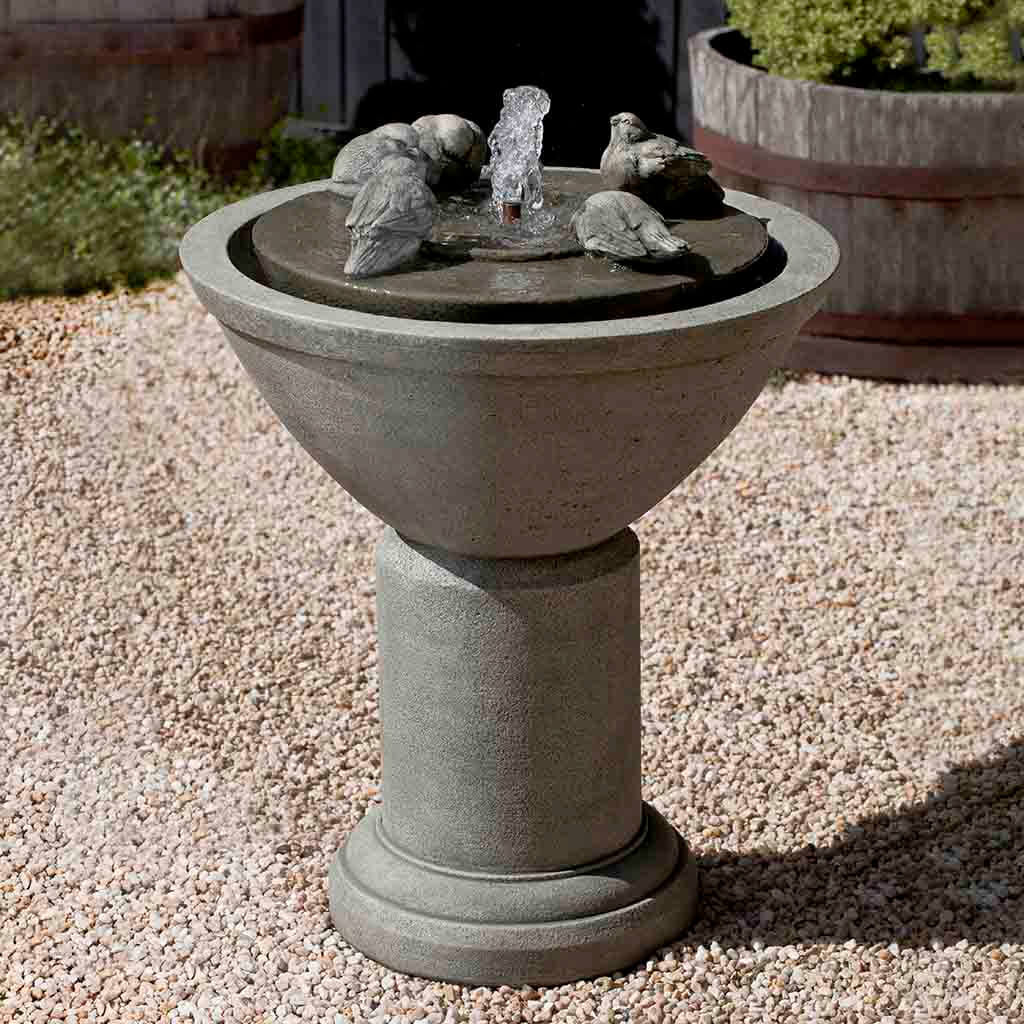
Passaros II Birds Water Fountain

Visual Style and Landscape Design

Beyond the practical differences, the two fountain styles create slightly different visual effects in the yard.

Wall fountains tend to feel more architectural. Because they interact with the structure behind them, they blend into the design of the house or courtyard. They’re often chosen to complement walls, outdoor kitchens, or seating areas.

Tiered fountains create a more traditional garden look. Their layered bowls and flowing water naturally draw the eye, which is why they’re frequently used as landscape centerpieces.

In some gardens, homeowners pair tiered fountains with bird bath fountains nearby. The bird bath serves wildlife and adds charm to the surrounding planting beds, while the larger fountain provides the main visual anchor.

The combination can create a layered water feature effect without overwhelming the space.

Which One Fits Your Space Best?

When choosing between wall fountains and tiered fountains, the decision usually comes down to layout rather than preference.

Wall fountains often work best when:

  • The space is narrow or enclosed
  • A wall or fence is already available
  • You want the fountain near seating areas
  • Floor space is limited

Tiered fountains often make more sense when:

  • You have an open yard or courtyard
  • You want a central focal point
  • The fountain will be viewed from multiple directions
  • There’s plenty of walking space around it

Neither option is better overall. They simply serve different roles in landscape design.

The Right Fountain Feels Natural in the Space

A good fountain doesn’t look like it was squeezed into the yard as an afterthought.

Wall fountains tend to feel like part of the structure around them, quietly adding sound and movement along the edges of a space.

Tiered fountains tend to feel like a centerpiece — something the rest of the garden subtly revolves around.

Once you picture how people will move around the space and where their attention naturally goes, the right choice usually becomes obvious.

And when the fountain fits the space, it stops feeling like a purchase and starts feeling like part of the landscape itself.


No matter which style you lean toward, getting the proportions right is what ultimately makes the fountain feel like it belongs.