Budgeting for a Water Feature: Upfront Costs vs. Long-Term Operations

Planning to add a water feature to your yard? This guide explains the real cost of owning an outdoor fountain, including the fountain price, freight delivery, site preparation, electricity use, and seasonal maintenance.

When people start shopping for a fountain, they usually focus on the price of the fountain itself. That’s understandable — it’s the most visible cost. But owning a water feature involves a few other small expenses that are easy to overlook.

The good news is that most of them are predictable and relatively modest once you understand them. In fact, many homeowners are surprised to learn that running a fountain day to day is often inexpensive. The real planning usually happens at the beginning: delivery, placement, and getting the space ready.

Once those pieces are handled, the long-term cost of enjoying a fountain is typically quite manageable.


And before locking in a budget, it’s worth making sure the size you’re planning for actually fits your space the way you imagine.

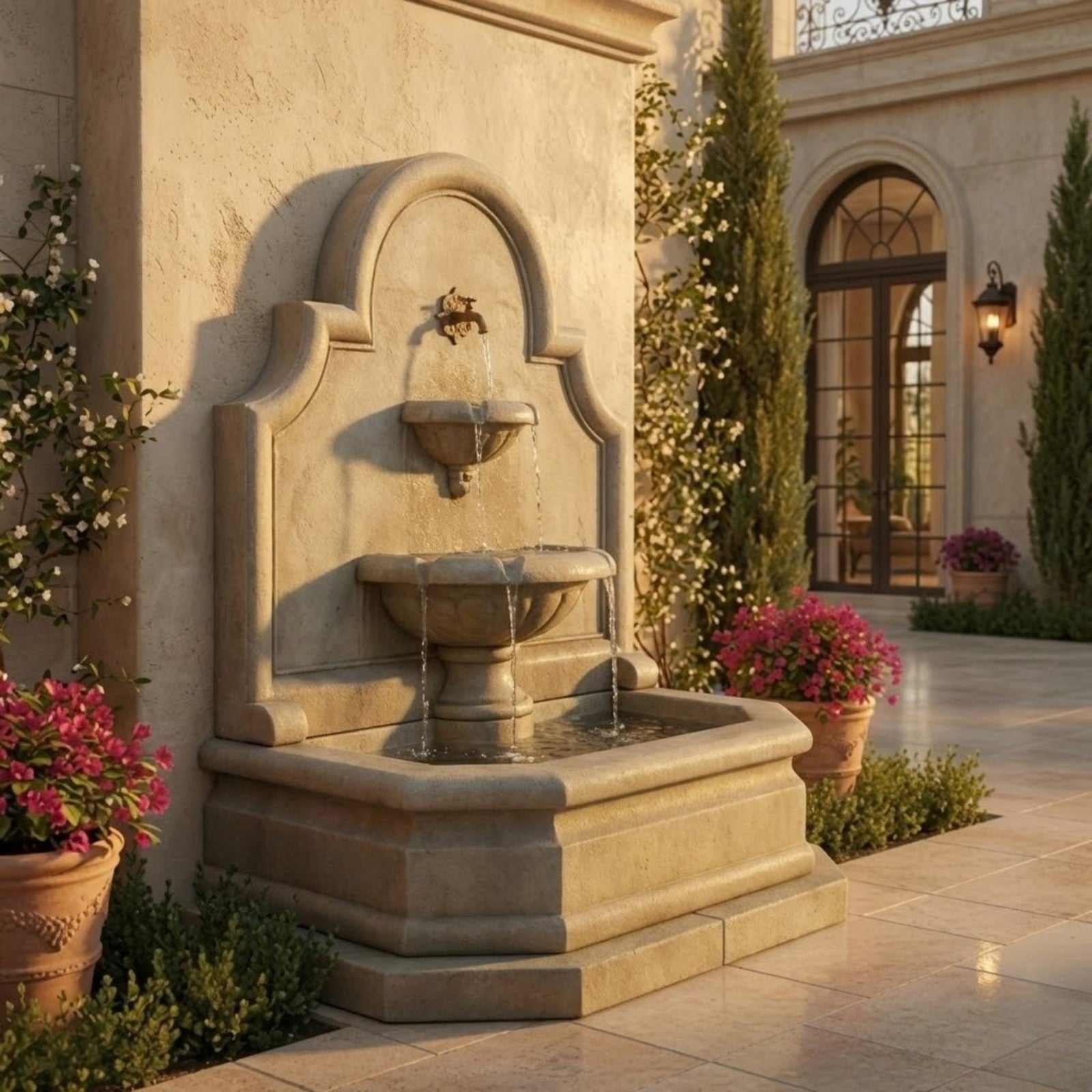
Grand Venasque Wall Fountain

The Fountain Itself

The fountain will always be the largest upfront expense, and the price range can vary widely depending on size, materials, and design.

Smaller decorative options are usually the most accessible starting point. Many small fountains are designed specifically for patios, porches, and garden corners. Because they’re compact and lightweight, they tend to cost less both to purchase and to ship.

As fountains get larger or more detailed, the price increases mainly because of materials and construction. Stone or cast concrete pieces are heavier and built to last outdoors for years. These are common for larger garden installations and for more architectural styles like wall fountains.

Then there are decorative specialty designs, such as animal fountains, which are often chosen for their personality and visual charm. These can range from small accent pieces to medium-sized garden features, depending on the design.

In other words, the fountain itself can fall into a wide range — but the size and material usually explain most of the price difference.

Delivery and Freight Costs

This is the part that surprises buyers the most.

Heavier fountains, especially stone or concrete ones, are often delivered by freight rather than standard parcel shipping. When a fountain weighs several hundred pounds, it typically arrives on a pallet.

Freight delivery isn’t necessarily complicated, but it does require a little planning. The carrier may schedule a delivery window, and someone usually needs to be available to receive it.

For smaller fountains, this isn’t an issue. Many small fountains and decorative pieces ship through regular carriers like standard home packages.

If you’re considering a larger installation, it’s worth checking delivery details early so you know what to expect. Once the fountain arrives, most homeowners simply move it into place with a second person or basic yard equipment.

Preparing the Space

Fountains don’t require major construction, but they do benefit from a stable surface.

In many cases, homeowners prepare a simple base using:

  • Pavers
  • Compact gravel
  • A concrete pad
  • Or an existing patio surface

This step helps keep the fountain level and prevents shifting over time. A level base is important for proper water circulation and for keeping the pump submerged.

For smaller pieces, preparation can be as simple as placing the fountain on an existing patio or a flat garden stone. Larger wall fountains or freestanding pieces may benefit from a more solid base, especially if they weigh several hundred pounds.

Fortunately, this kind of site preparation is usually straightforward and inexpensive compared to other landscaping projects.

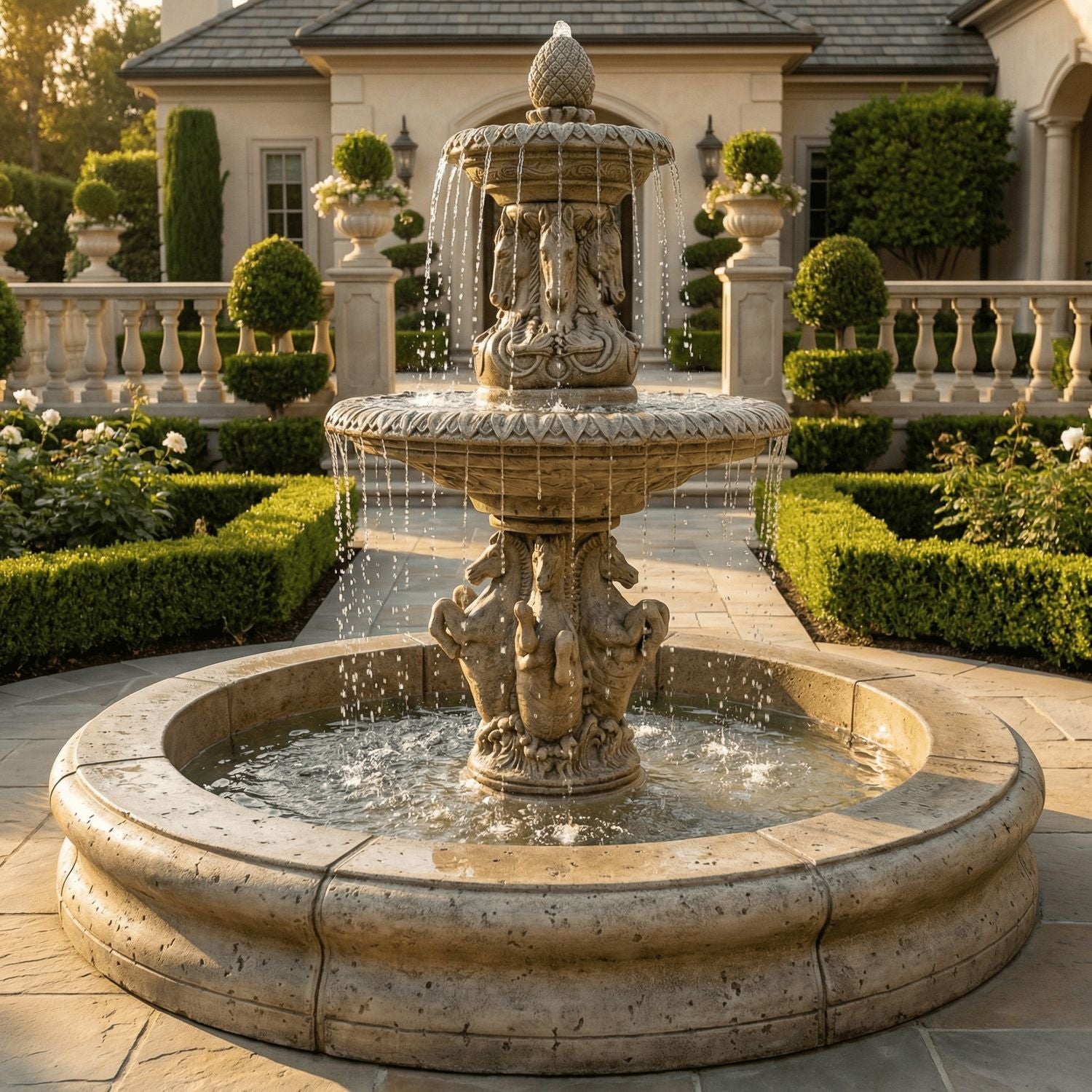
Cavalli Outdoor Fountain with Fiore Pond

Electricity and Daily Operation

One of the most common questions people ask is how much electricity a fountain uses.

In most cases, the answer is: not much.

Fountain pumps are typically small motors designed to run continuously with minimal energy consumption. Many pumps draw power comparable to a household light bulb.

Even when a fountain runs all day, the monthly electricity cost tends to be relatively low. Some homeowners choose to run their fountain only during the hours they spend outside, while others leave it running continuously for the calming background sound.

Both approaches work — it mostly comes down to personal preference.

Water Usage

Another concern buyers sometimes have is water consumption.

A fountain doesn’t constantly use new water. Instead, it recirculates the same water through the pump and basin. The only water you’ll need to add occasionally replaces what evaporates or splashes out during normal operation.

Evaporation varies depending on climate, sunlight, and wind exposure. On hot summer days, you may top off the basin every few days. In cooler or shaded areas, the water level changes much more slowly.

The important thing is simply making sure the pump stays submerged so it doesn’t run dry.

Seasonal Maintenance Supplies

Owning a fountain doesn’t involve complicated maintenance, but there are a few small items many owners keep on hand.

These may include:

  • Fountain cleaner or mild treatment to control algae
  • A soft brush for occasional basin cleaning
  • Pump cleaning tools or replacement filters
  • Winter covers in colder climates

These supplies are usually inexpensive and only used periodically. Most maintenance routines simply involve cleaning the basin and checking the pump every so often.

Smaller decorative fountains often require even less upkeep because they’re easy to empty and rinse when needed.

Replacement Parts Over Time

Like any mechanical component, fountain pumps eventually wear out. The good news is that pumps are typically easy to replace and widely available.

Many pumps last several years before needing replacement, depending on usage and maintenance. Because the pump is the only moving part in most fountains, replacing it is usually the primary long-term maintenance cost.

Compared to the lifespan of the fountain itself, pump replacement is usually a minor expense.

What Most Owners Say After Installation

Interestingly, most people who install a fountain rarely talk about the operating cost afterward.

What they tend to mention instead is how much time they spend near it.

A small patio fountain can change the atmosphere of a seating area. A wall fountain can soften background noise in a courtyard. Decorative animal fountains often become conversation pieces in garden beds.

Once the fountain is in place and running, it stops feeling like a purchase and starts feeling like part of the yard.

Thinking About Cost the Right Way

When budgeting for a water feature, it helps to think of the expenses in two phases.

First is the setup: buying the fountain, having it delivered, and preparing a place for it.

After that, the ongoing costs are usually minimal — occasional electricity, topping off water, and routine cleaning supplies.

Most homeowners find that once the initial installation is complete, the fountain becomes one of the lower-maintenance elements in their outdoor space.

And when the water is flowing and the sound settles into the background, the focus shifts away from the cost entirely — and toward the reason people add fountains in the first place: creating a space that feels calm, lived-in, and a little more enjoyable to spend time in.