Hard Water and Mineral Scale: The Best Ways to Clean White Buildup

White mineral buildup is a common issue in fountains using hard water. This guide explains how calcium and lime deposits form and the safest ways to clean mineral scale without damaging finishes like copper or dyed concrete.

If you’ve owned a fountain for a while, you’ve probably noticed it: a chalky white film forming where water flows or dries.

This buildup usually isn’t dirt or algae—it’s mineral residue left behind when hard water evaporates. Minerals like calcium and lime remain on the surface after the water disappears, and over time they create the pale crust many fountain owners see around edges, spillways, or basin walls.

The good news is that this kind of buildup is very common and usually easy to remove. With the right cleaning approach—and by avoiding harsh chemicals that can damage certain finishes—you can keep fountains looking fresh for years.

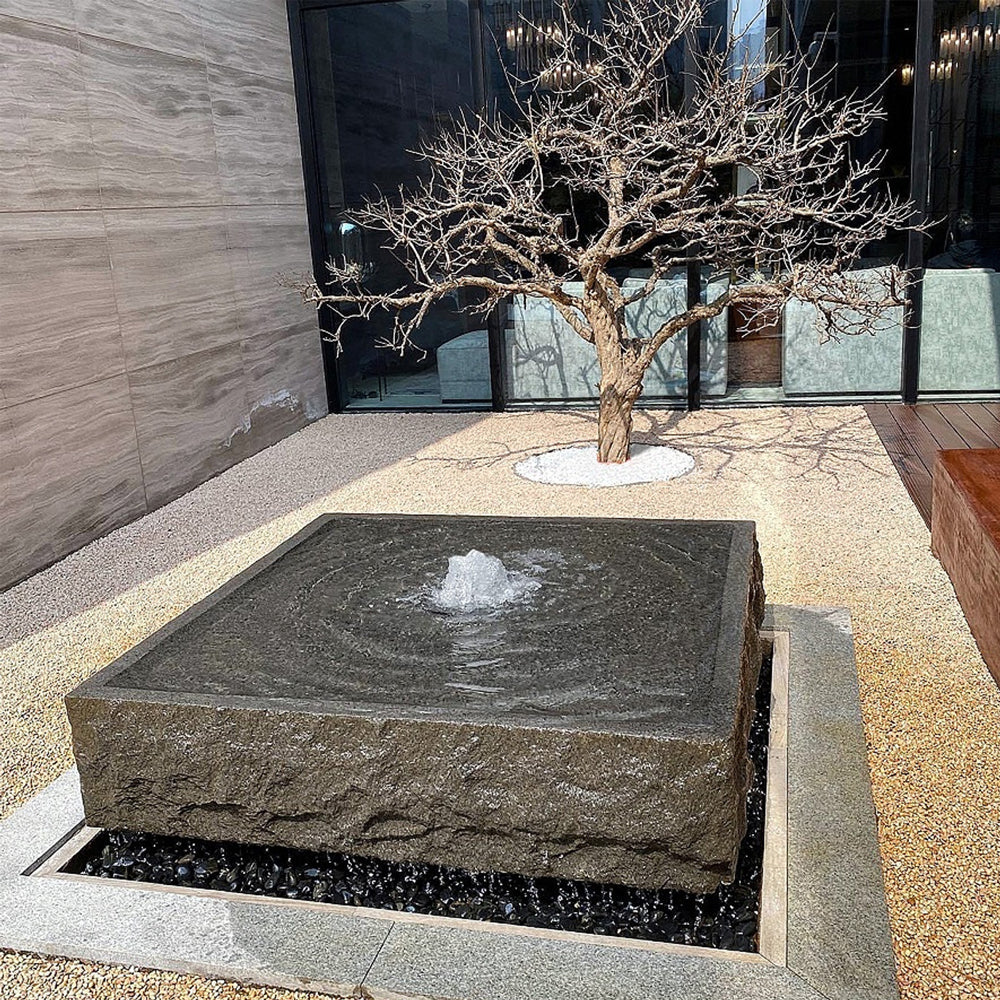
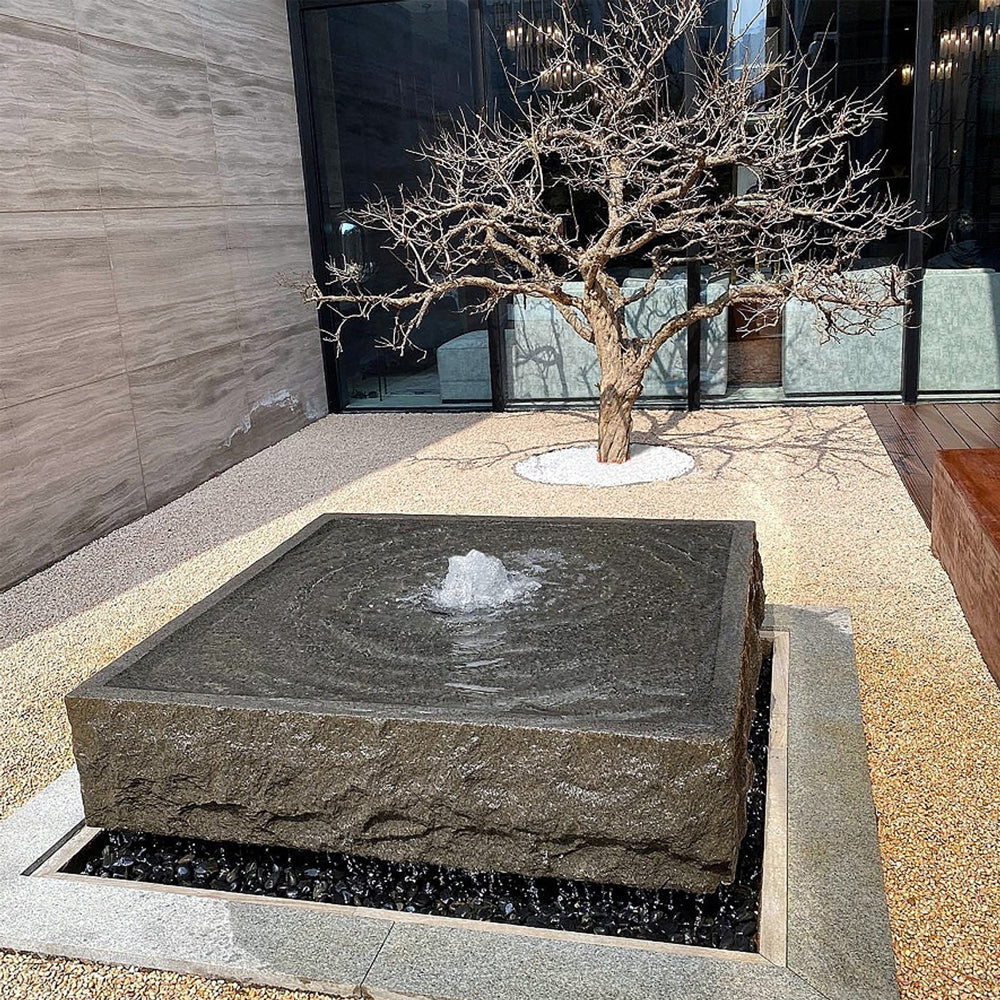
Yoshida Square Stone Fountain

Why Mineral Scale Happens

The white film that shows up on fountains usually comes from minerals that are already present in regular tap water.

As water moves through the fountain and slowly evaporates, those minerals don’t disappear with it. Instead, they stay behind on the surface. At first the layer is so thin you barely notice it, but after weeks or months it can start to look like a chalky or cloudy residue.

You’ll often see it forming in the same spots again and again—places where water flows constantly or where droplets dry in the sun.

Fountains with continuous movement tend to show it a little sooner for that reason. In Bubbler fountains, for example, water is always rising and spilling from the center, so those surfaces stay wet and dry repeatedly. Smooth finishes found in many Modern Fountains can make the buildup easier to see as well because there’s nothing to hide the light-colored residue.

The Safest First Step: Vinegar

When mineral buildup starts showing up on a fountain, many owners reach for something simple first—plain white vinegar.

Vinegar works well because it’s slightly acidic, which helps break down calcium and lime deposits without being too aggressive on most fountain materials. It’s often enough to loosen the chalky residue that forms where water dries on the surface.

The usual approach is fairly straightforward. The pump gets unplugged, the basin is drained if possible, and vinegar is applied directly to the areas where scale has formed. Some people pour a little on the surface, while others use a spray bottle to spread it more evenly.

Letting it sit for a few minutes gives the vinegar time to soften the buildup. After that, a soft cloth or brush is usually all that’s needed to wipe the residue away.

Once the surface looks clean again, rinsing the area with fresh water helps remove any remaining vinegar before refilling the fountain.

This method tends to work well for regular upkeep, especially on smooth surfaces like those found in many Bowl fountains, where mineral deposits are easier to see once they start forming.

When Scale Is Stubborn

Sometimes mineral buildup sits long enough to harden into thicker deposits.

If vinegar alone doesn’t remove it, the same method can still work with a little more time. Allowing the vinegar solution to soak longer—sometimes fifteen or twenty minutes—helps soften the mineral layer before scrubbing.

A plastic brush or non-abrasive scrubbing pad usually works better than a rough brush. The goal is to dissolve the minerals, not grind them away.

Patience here often produces better results than aggressive scrubbing.

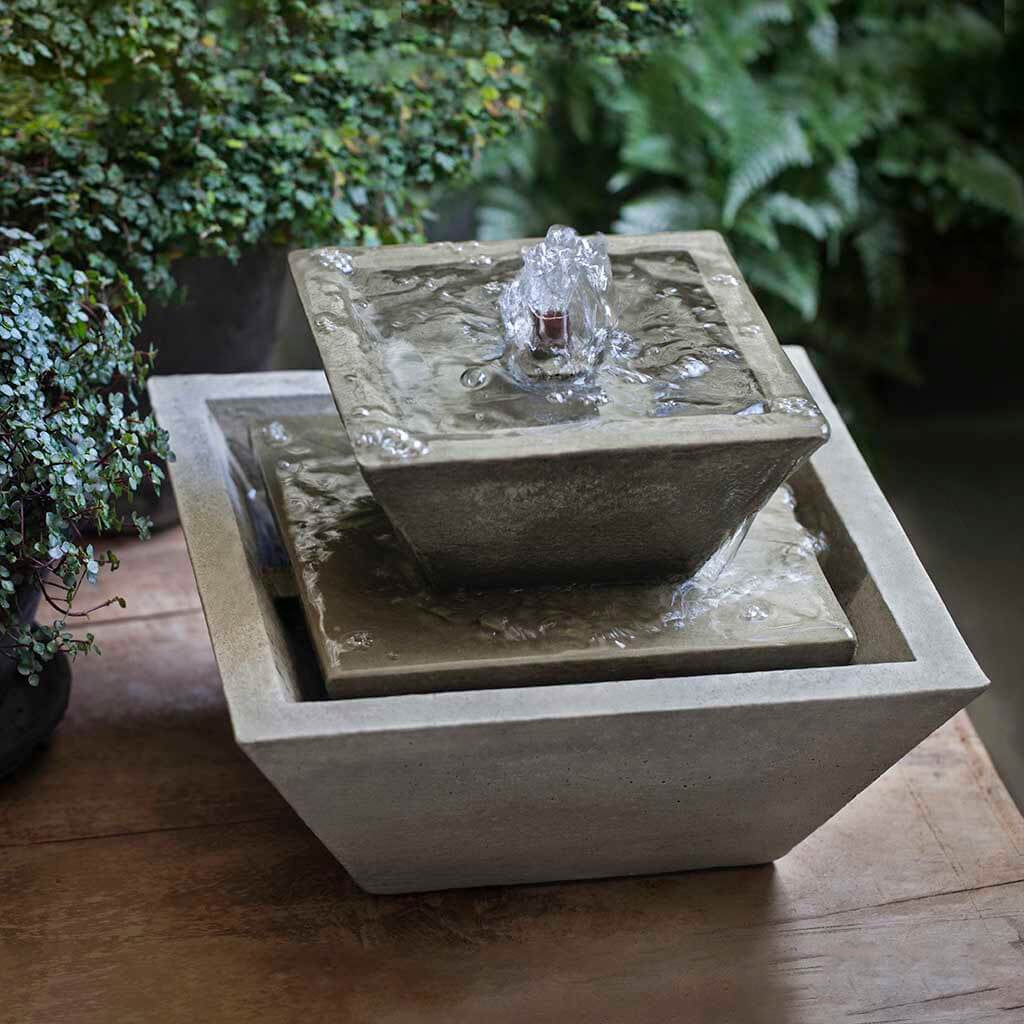
M-Series Kenzo Garden Water Fountain

Why Harsh Chemicals Can Be Risky

When mineral buildup starts getting stubborn, some people go straight for heavy-duty cleaners that promise to dissolve calcium and lime quickly. Products like CLR can certainly remove scale, but they’re not always a good match for fountain materials.

The problem is that fountains aren’t all made from the same surface. Some finishes react badly to strong chemicals. Copper pieces, for example, can change color in ways that are hard to reverse. Dyed concrete sometimes ends up with faded spots or uneven patches. Even certain stone finishes can lose their natural look if the cleaner is too aggressive.

Because of that, many fountain owners avoid harsh chemicals unless they know the material can handle it. Slower methods—like mild acids or repeated cleanings—usually take a little more patience, but they’re much less likely to damage the surface of the fountain.

When there’s any uncertainty about the material, the safer approach is simply taking the gentle route and cleaning the buildup in stages rather than trying to remove everything at once.

Cleaning the Pump Too

Mineral deposits don’t only appear on the visible parts of the fountain.

Over time, they can also collect on the pump housing or around the intake screen. If scale builds up inside the pump, it may restrict water flow or cause the pump to work harder than necessary.

During routine cleaning, it helps to remove the pump and give it a quick rinse. If mineral deposits are visible, soaking the pump components briefly in diluted vinegar can help loosen them.

After rinsing, reassemble the pump and place it back in the basin before refilling the fountain.

This small step helps keep the water circulation steady.

Preventing Buildup Before It Starts

Once mineral scale appears, it’s usually easy enough to clean. But most fountain owners eventually realize it’s even easier to deal with before it has time to harden.

Fresh deposits are usually very thin, almost like a light film. A quick wipe now and then can remove that layer before it turns into the chalky buildup people notice later. It doesn’t have to be done constantly—just often enough that the minerals don’t have time to settle in.

Some people also experiment with the type of water they use. Mixing a little distilled water with regular tap water can dilute the minerals somewhat. That approach tends to work best with smaller fountains where the water volume is manageable.

With larger fountains, though, constantly filling with distilled water becomes expensive pretty quickly. Because of that, many owners simply stick with tap water and focus on occasional cleaning instead. It’s usually the easier option in the long run.


If buildup keeps coming back, it’s often tied to the type of water you’re using from the very start.

Sun and Evaporation Play a Role

Something as simple as where the fountain sits can affect how quickly mineral buildup shows up.

Fountains that spend most of the day in direct sunlight tend to lose water faster. As the water evaporates, the minerals it carried stay behind on the surface. Over time that’s what creates the white residue people notice along the edges or spill areas.

You’ll often see it forming where the water spreads thinly across a surface or where droplets dry after splashing.

Even a little shade can slow that process down. When the water evaporates more slowly, minerals don’t accumulate as quickly, which usually means less visible buildup between cleanings.

When the Buildup Looks Worse Than It Is

One thing that surprises new fountain owners is how dramatic mineral deposits can look compared to how easily they clean up.

That cloudy white film often appears more permanent than it actually is. In many cases, a mild cleaning solution and a soft brush remove it quickly.

Regular cleaning also keeps scale from building up thick layers, making each maintenance session easier than the last.

Keeping Fountains Looking Their Best

If a fountain runs on regular tap water, a little mineral residue showing up over time is pretty normal. Most owners notice it eventually.

It doesn’t mean anything is wrong with the fountain. It’s simply the result of water evaporating and leaving those minerals behind on the surface.

In practice, most people deal with it by giving the fountain a light cleaning once in a while. As long as the buildup doesn’t sit there for years, it usually comes off without much trouble. Using gentler cleaners also helps protect the finish so the surface doesn’t get damaged.

You’ll see the effect a bit more on smoother designs—like the clean surfaces often used in Modern Fountains, the rounded basins in Bowl fountains, or the spill areas in Bubbler fountains where water constantly moves.

Once the surface is wiped down and the water is circulating again, the mineral marks fade into the background and the fountain goes back to doing what it’s meant to do—moving water and adding that steady sound people enjoy in the first place.