The Complete Fountain Maintenance Schedule (Weekly, Monthly, Yearly)

Keeping a fountain clean and running smoothly is easier with a simple routine. This guide provides a weekly, monthly, and yearly maintenance checklist to help maintain water clarity, pump performance, and overall fountain health.

Many people expect fountain maintenance to be a big project, but it usually turns out to be much simpler than that.

What actually happens is pretty routine. Water slowly evaporates, a few leaves or bits of debris end up in the basin, and over time the pump might collect small particles from the water. None of this is unusual—it’s just part of having moving water outdoors.

As long as those little things get attention once in a while, the fountain tends to run the way it should. The water stays clear, the pump doesn’t struggle, and everything keeps circulating normally.

Most owners fall into a rhythm after the first few weeks. They glance at the water level now and then, do a quick rinse every so often, and give the fountain a more thorough cleaning once or twice a year. That routine works well for many setups, whether it’s one of the smaller Bird bath Fountains, decorative Tabletop fountains, or other compact Small fountains used around patios and gardens.

After a while it stops feeling like maintenance at all—it’s just part of taking care of the space around the fountain.

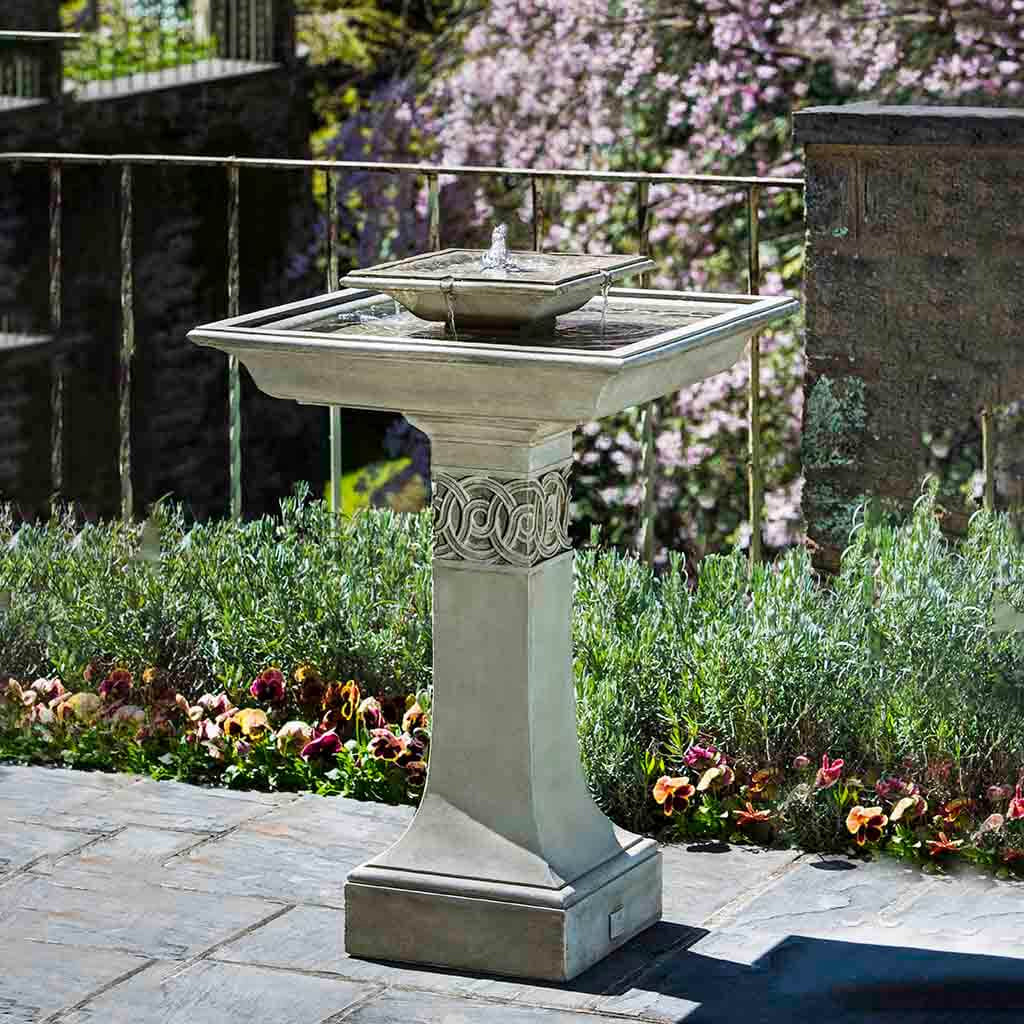
Portwenn Garden Water Fountain

Weekly Maintenance: The Quick Check

Most weeks, taking care of a fountain only takes a minute or two.

A quick look at the water level is usually the first thing people check. Outdoor fountains slowly lose water as it evaporates, especially during warm or windy days. When the basin gets too low, the pump can start pulling in air instead of water, which isn’t great for the motor. Adding a little water now and then keeps everything running smoothly.

It also helps to glance inside the basin while you’re there. Outdoor fountains tend to collect whatever the wind brings—leaves, grass clippings, or small bits of debris. Pulling those out early keeps them from settling at the bottom where they might eventually reach the pump.

Some owners also pay attention to how the water looks. If it starts to look cloudy or dull, a quick refill usually fixes it. With smaller setups, draining and refilling only takes a few minutes.

This step tends to matter a bit more with Bird bath Fountains. Birds visiting the basin naturally stir up debris or drop small bits of leaves while they drink or bathe, so checking the water occasionally helps keep things fresh.

These quick weekly habits don’t take long, but they usually prevent the kinds of buildup or pump issues that appear later when a fountain is ignored for too long.

Monthly Maintenance: Cleaning and Pump Care

Once a month, it helps to give the fountain a slightly deeper cleaning.

This usually begins by turning off and unplugging the pump. After draining the basin, wipe the interior surfaces with a soft cloth or brush. Mineral deposits or algae sometimes begin forming along areas where water flows continuously.

A mild cleaning solution—often just diluted vinegar or a fountain-safe cleaner—can help loosen any buildup without damaging the finish.

While the basin is empty, it’s also a good time to check the pump itself.

Most pumps lift out easily from the basin. Rinsing the intake screen and removing any small debris helps maintain good water circulation. If the pump housing can be opened, a quick rinse of the internal parts removes sediment that may have collected during the month. And since the pump does most of the heavy lifting, giving it a quick clean during your routine makes a bigger difference than most people expect.

For Tabletop fountains and other Small fountains, this monthly cleaning often takes less than fifteen minutes.

Once everything is rinsed and reassembled, refill the basin with fresh water and plug the pump back in.

M-Series Medallion Garden Water Fountain

Seasonal or Yearly Maintenance: The Deep Reset

Once a year—usually before winter or at the start of spring—it’s worth giving the fountain a more thorough reset.

This involves completely draining the system and cleaning every surface carefully. Over time, minerals from tap water can leave light scale on the basin walls or decorative features. A deeper cleaning helps restore the fountain’s original appearance.

The pump should also be inspected closely during this yearly cleaning. If any buildup is present inside the pump housing, soaking the parts briefly in a vinegar solution can dissolve stubborn deposits.

Seasonal care also depends on climate.

In colder regions where temperatures drop below freezing, fountains often need to be winterized. Water left inside a basin can freeze and expand, which may damage the fountain material.

Many owners simply drain the fountain, remove the pump, and store it indoors during winter months.

Smaller installations—especially Tabletop fountains or other Small fountains—can sometimes be moved indoors entirely until spring.

In warmer climates, where fountains run year-round, this annual deep cleaning simply replaces the winterization step.

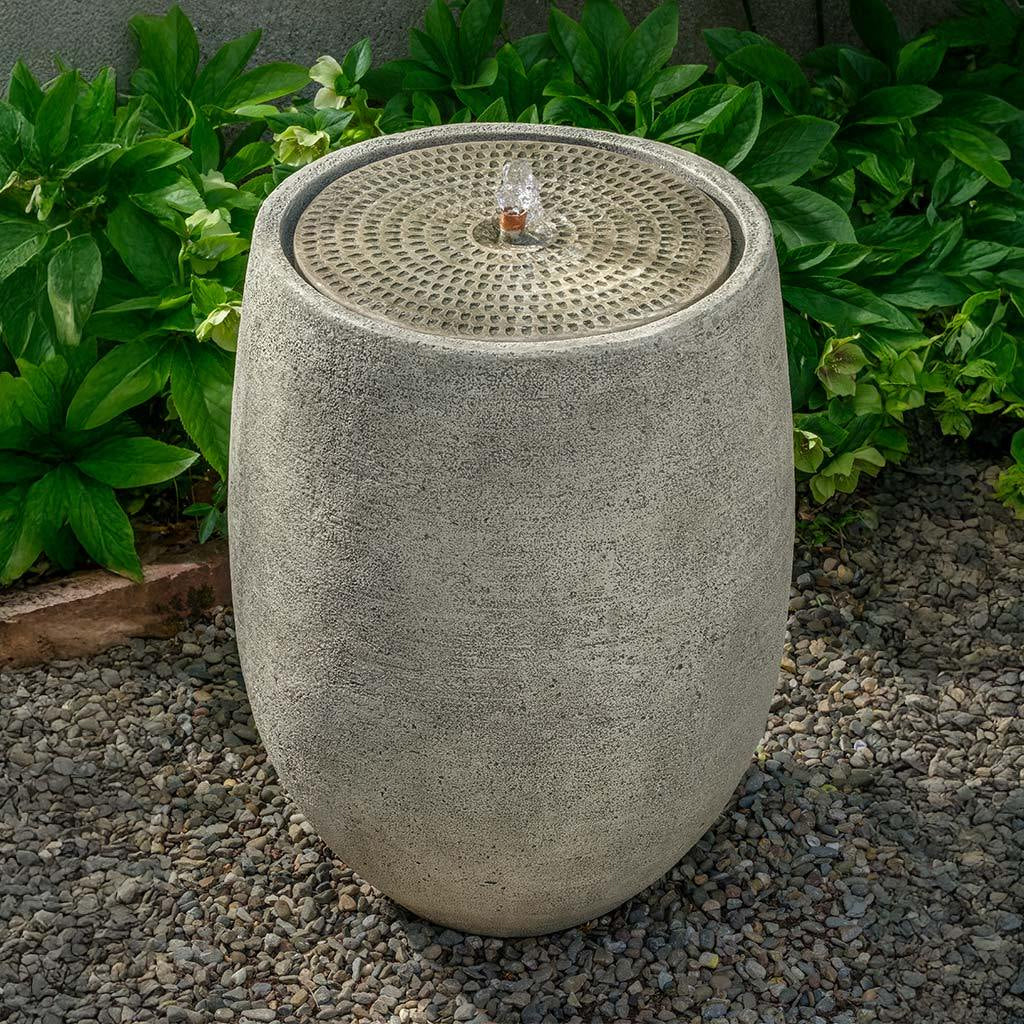
Bebel Cosmos Fountain - Tall

Keeping the Water Healthier Between Cleanings

Even with a regular cleaning routine, a few small habits can make a noticeable difference in how clean the fountain stays.

Some fountain owners like to add a small amount of fountain treatment to the water. It’s not required, but it can help slow down algae growth or reduce mineral residue in places where sunlight is strong or the tap water is particularly hard.

Where the fountain sits can also play a role. A fountain placed directly beneath trees tends to collect more leaves, pollen, and small debris, which means the basin may need attention a little more often than one sitting in a more open spot.

Another thing that helps is simply keeping an eye on the water level. When the basin stays properly filled, the pump doesn’t have to work as hard and the water continues circulating the way it was meant to.

None of these habits take much effort, but over time they help keep the fountain cleaner and can extend the life of the pump as well.

What Most Owners Eventually Realize

When someone first sets up a fountain, it’s easy to assume there will be a lot of upkeep involved.

But after living with it for a while, most people find the routine becomes pretty simple. Checking the water level takes a moment, and pulling out a few leaves or bits of debris is hardly noticeable once it becomes part of the routine.

Even the occasional cleaning doesn’t usually feel like a chore. It ends up being more like giving the fountain a quick refresh so the water looks clear again.

After a bit of time, the maintenance fades into the background. The fountain just becomes part of the space—something that quietly adds the sound of moving water and a little bit of life to the garden or patio.

A Maintenance Schedule You Can Actually Follow

Many fountain owners eventually settle into a simple rhythm that keeps everything running well without much effort. It doesn’t need to be complicated—just a few things done occasionally.

On a weekly basis, it’s usually enough to glance at the water level and add a little if it’s dropped. While you’re there, it’s worth pulling out any leaves or small debris that may have landed in the basin. The main goal is simply making sure the pump stays fully underwater so it can keep circulating properly.

About once a month, a slightly deeper refresh helps. This might mean draining the basin, giving the interior a quick rinse, and wiping away any light mineral residue that’s beginning to show. It’s also a good time to look at the pump intake and clear away anything that might be collecting around it.

Then once a year, many owners give the fountain a more thorough cleaning. That usually involves rinsing all surfaces, checking the pump more carefully, and preparing the fountain for winter if freezing temperatures are common in your area.

This kind of routine tends to work well for smaller setups, including Bird bath Fountains, decorative Tabletop fountains, and other compact Small fountains placed around patios and gardens.

After a while the process becomes second nature. The routine checks take only a moment, and the fountain continues doing what it was meant to do—adding the gentle sound of moving water to the space around it.