Spring Start-Up: How to De-Winterize Your Fountain

Getting a fountain ready for spring takes just a few simple steps. This guide explains how to safely uncover your fountain, check for winter damage, reinstall the pump, and flush the system before the warmer months begin.

When winter finally fades and the weather starts warming up, many fountain owners look forward to hearing water flowing again. But before turning the pump back on, it’s worth taking a little time to bring the fountain out of winter properly.

Cold weather can leave behind debris, mineral deposits, or small cracks that are easy to miss if you rush the process. A careful spring start-up helps make sure everything is still in good shape and that the fountain runs smoothly once the season begins.

Fortunately, bringing a fountain back to life after winter usually involves just a few steps: uncovering it, checking for damage, reinstalling the pump, and running fresh water through the system.

Start by Removing the Winter Cover

Most fountains that stay outdoors during winter are covered with a protective wrap or waterproof cover. This keeps snow, ice, and debris from collecting inside the basin.

When spring arrives, remove that cover slowly rather than pulling it off all at once. Leaves, dust, or small twigs often gather around the base during the colder months.

Clearing away that debris first helps keep it from falling into the basin as the cover comes off.

Once uncovered, it’s common for the fountain to look a little dull or dusty after months of sitting idle. That’s completely normal and will be addressed during cleaning.


Look for Small Cracks or Surface Changes

After the fountain is exposed again, it’s a good time to inspect it closely.

Winter weather can sometimes cause tiny cracks in materials if water froze inside the structure. These cracks are usually very small—sometimes no more than a hairline—but catching them early is helpful.

Run your hand gently along the edges of the basin and along any spillways or decorative surfaces. Look for anything that seems different from when the fountain was put away for the winter.

Most fountains come through the season without any issues, but a quick inspection helps avoid surprises once the water starts circulating again.

This step is especially important for larger outdoor pieces like Garden fountains or decorative Fire fountains, where the structure holds more water and experiences more seasonal temperature change.

Tiki Column Garden Water Fountain

Clean Out the Basin

Before reinstalling the pump, it helps to clean the basin.

Even when covered, a fountain often collects dust, small debris, or mineral residue during winter. A quick rinse with fresh water usually removes most of it.

For more stubborn buildup, a soft brush and a mild cleaning solution—such as diluted vinegar—can help loosen mineral deposits.

The goal here isn’t deep restoration. It’s simply starting the season with a clean basin so the water circulating through the pump stays clear.

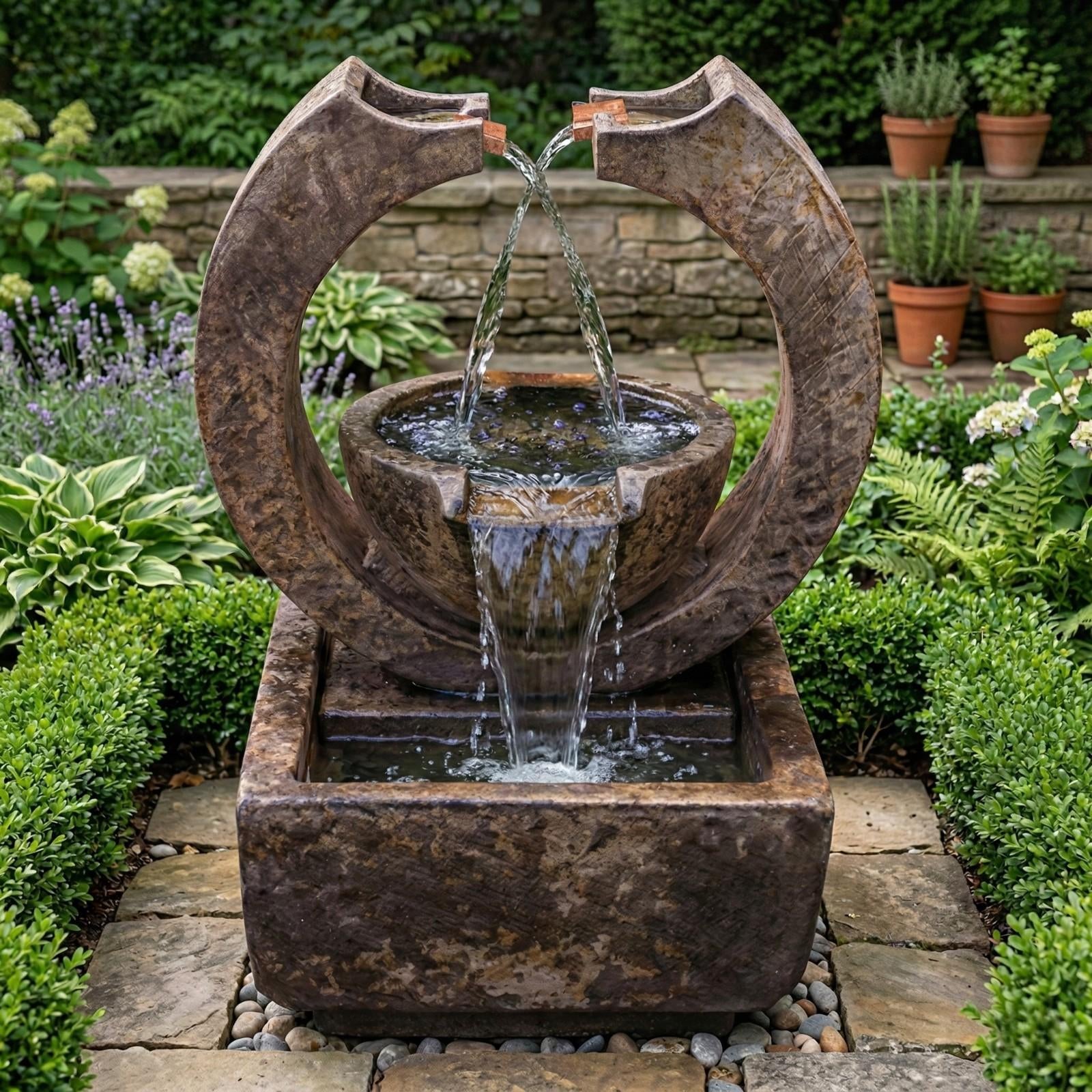
Crescent Two-Spill Fountain

Reinstall the Pump

If the pump was removed during winterization, this is the time to place it back into the basin.

Before installing it, take a moment to rinse the pump housing and intake screen. Dust or mineral particles can sometimes settle on the pump while it’s stored.

Once it looks clean, reconnect the tubing that carries water to the top of the fountain.

Most pumps simply sit in the basin and attach to a small hose that runs up through the center of the fountain structure. Making sure this connection is secure helps prevent weak water flow later.

This step is similar whether you’re working with small decorative Zen Fountains or larger outdoor garden installations.

Fill and Flush the System

With the pump back in place, the next step is filling the basin with water.

At this stage, it’s helpful to let the fountain run briefly and then drain it once. This initial run helps flush out any dust or residue that may have remained inside the tubing or pump.

After the short flush cycle, refill the fountain again with clean water.

This step ensures the system starts the season with fresh water circulating through it.

Watch the First Flow

Once everything is running again, take a few minutes to observe the water flow.

Sometimes the pump may release small air pockets during the first few minutes of operation. That’s normal and usually resolves itself quickly.

Check that the water is flowing evenly across spillways or tiers. If something looks uneven, the base may simply need a slight leveling adjustment.

This first run is also a good opportunity to confirm that the water level stays high enough to keep the pump fully submerged.

Preparing for the Warmer Months

After the fountain has been cleaned and restarted, it’s essentially ready for the season. Once it’s running again, sticking to a simple maintenance routine helps prevent issues from creeping back in mid-season.

Spring is also a good time to establish a simple maintenance rhythm. Checking the water level occasionally, removing debris, and giving the basin a light rinse now and then helps keep the fountain looking fresh as temperatures rise.

For many people, the moment the fountain begins circulating again marks the true start of outdoor season.

Whether it’s the calm simplicity of Zen Fountains, the classic presence of Garden fountains, or the dramatic look of Fire fountains, hearing water flow again is often the signal that winter is finally behind us.

And with a careful spring start-up, the fountain can run smoothly throughout the months ahead.