How to Light Your Outdoor Fountain for Nighttime Curb Appeal

Outdoor fountain lighting transforms your space after dark. This guide explains how to use underwater LED lights, exterior spotlights, and the right color temperature to highlight water movement and create a striking nighttime focal point.

If you want your fountain to stand out after sunset, lighting makes the biggest difference.

During the day, the movement of water does most of the work. At night, it’s the light that brings that movement back to life. A well-lit fountain doesn’t just stay visible—it becomes a focal point. The water catches the light, reflects it, and creates that subtle shimmer people notice right away.

The setup doesn’t have to be complicated either. A combination of underwater lighting, a bit of exterior spotlighting, and choosing the right color tone is usually enough to transform how a fountain looks at night.

This applies whether you’re working with compact tabletop fountains, decorative garden fountains, or tucked-away corner fountains that you want to highlight after dark.

Adobe Springs Fountain

Start With Underwater Lighting

One of the easiest ways to light a fountain is from within.

Underwater LED lights are designed to sit directly in the basin, often placed near the pump or around the base. Some come as small spotlights, while others are built as rings that sit around the pump and shine upward.

What makes this type of lighting effective is how it interacts with the water. As the light shines upward, it catches the movement of the water and creates a soft glow that changes as the water flows.

In garden fountains, this can highlight cascading tiers. In smaller setups like tabletop fountains, even a single light can create a noticeable effect.

The result isn’t harsh—it’s more of a subtle glow that makes the water feel alive at night.

Add Exterior Lighting for Depth

If you only light the water from inside, it can look nice—but sometimes the fountain ends up feeling like it’s just glowing in the dark without much context around it.

Adding a light somewhere outside the basin helps ground it a bit. It lets you actually see the shape of the fountain and whatever’s around it, instead of just the water.

With corner fountains, this tends to make a bigger difference. A light coming from the side can make that area feel more intentional, especially at night when corners usually disappear.

You don’t really need much here. One light in a good spot is usually enough. Adding more doesn’t always make it better—it just gets brighter.

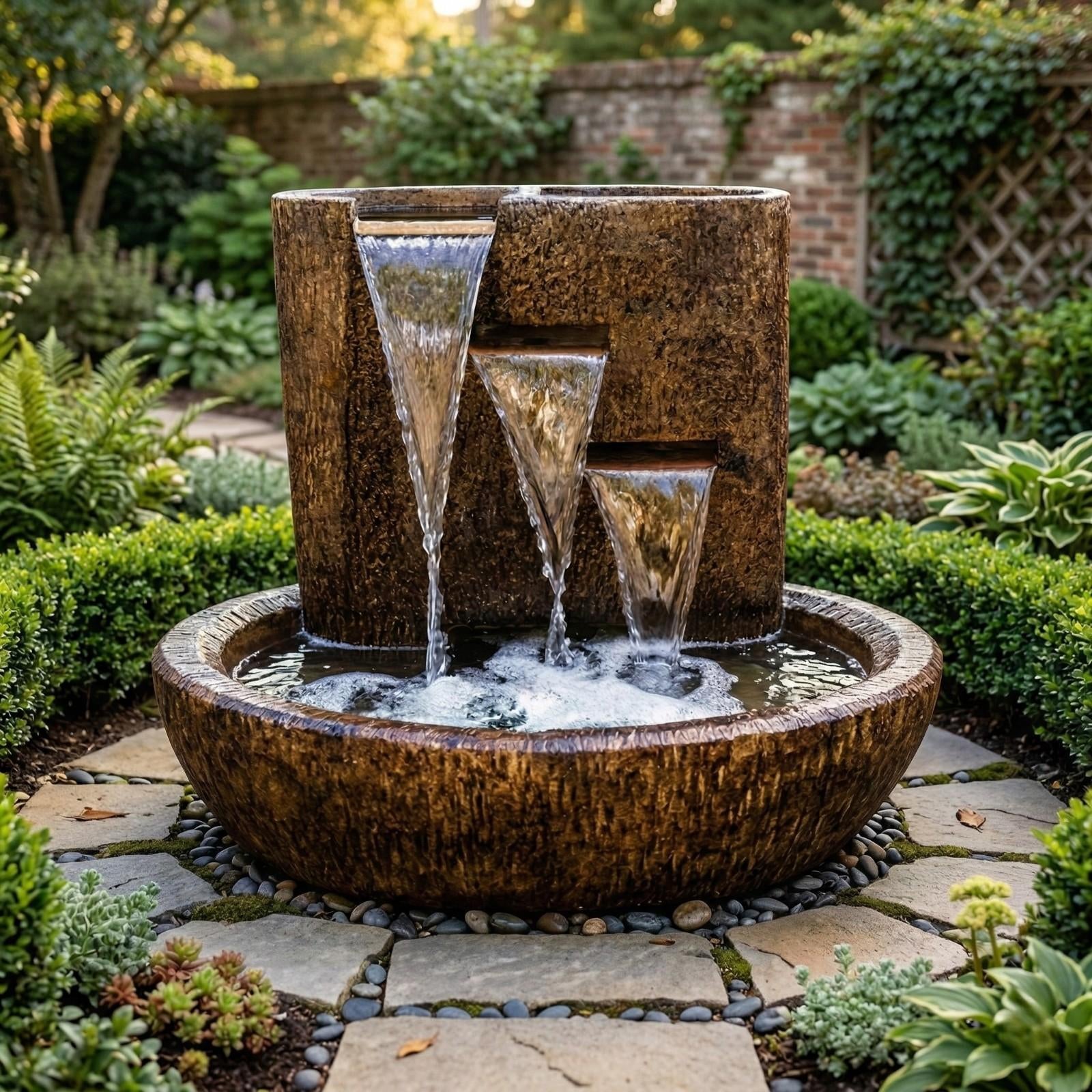
Falling Diamonds Outdoor Wall Water Fountain

Warm vs. Cool Light: What Actually Looks Better

The color of the light ends up changing the feel of the fountain more than most people expect.

Some lights have a warmer tone to them—slightly soft, almost a bit yellow—and those tend to blend in nicely with outdoor spaces. They don’t feel harsh, especially if you’re sitting nearby in the evening.

Others are cooler and a bit brighter. Those can make the water look sharper, almost more reflective, which some people like depending on the setup.

In a lot of cases, people lean toward the warmer side without really thinking about it. It just feels more natural once everything is turned on at night.

That said, there are setups where cooler light fits better. Smaller tabletop fountains or more modern-looking spaces sometimes work well with that cleaner, brighter look, especially if everything around it is kept pretty minimal.

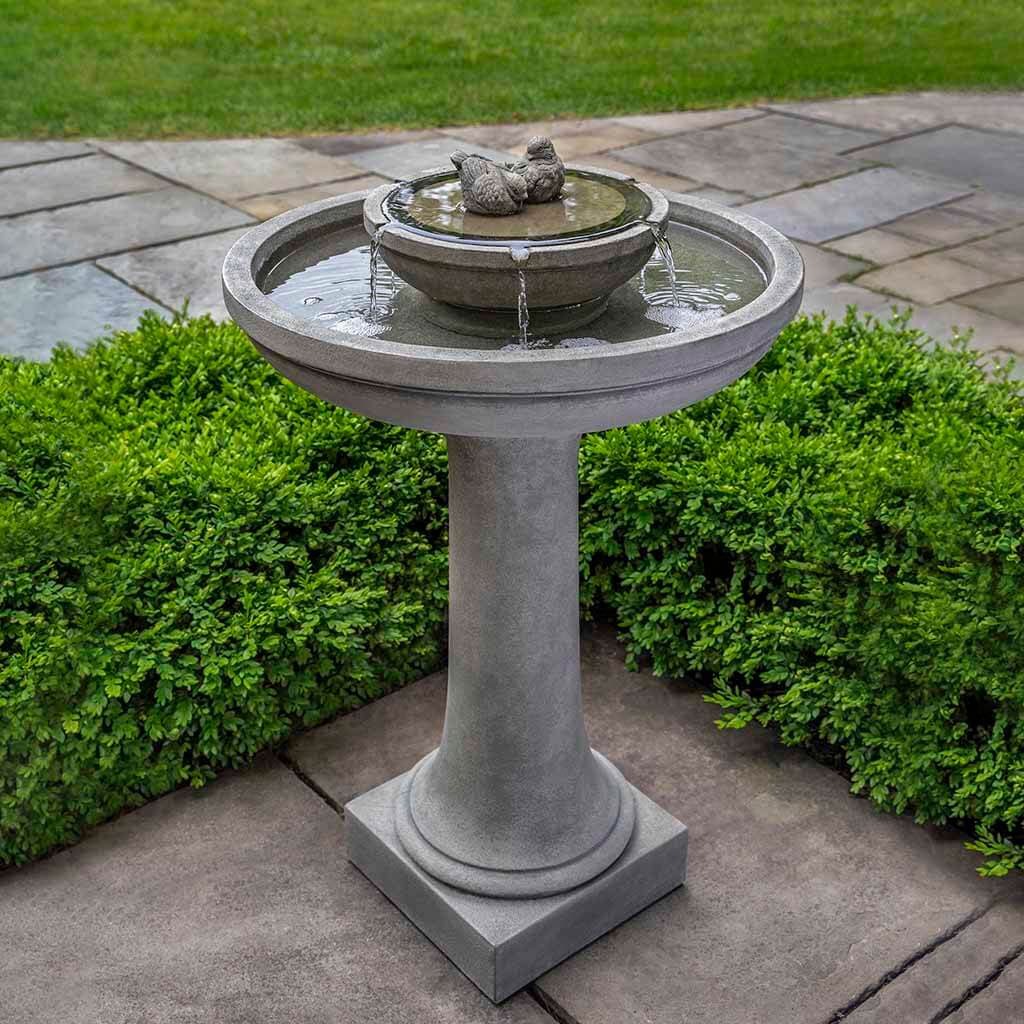
Dolce Nido Garden Fountain

Positioning Matters More Than Brightness

A lot of people start by turning the brightness up, thinking that’s what will make the fountain stand out at night.

But after a bit of trial and error, it usually comes down to where the light is sitting instead.

Even a softer light can look better if it’s hitting the water from the side or slightly below. When it’s not aimed straight on, you start to see more variation—the water catches it in some spots, other areas stay darker, and the whole thing feels a bit more natural.

This shows up pretty clearly with garden fountains, especially when there are plants nearby. The light ends up catching bits of leaves, edges, and movement in the water all at once.

Sometimes just nudging the light a few inches changes the look more than swapping to a brighter one.

And once the lighting is in place, pairing it with the sound of moving water can completely change how the space feels at night.

Keep the Wiring Simple and Hidden

Lighting works best when you don’t notice the setup behind it.

Most outdoor fountain lights are low-voltage and designed to be easy to install. Running wires along edges, behind planters, or under gravel helps keep everything out of sight.

For corner fountains, this is usually easier since walls or nearby structures can help conceal wiring.

Taking a little time to hide cables makes the finished setup feel cleaner and more intentional.

Don’t Light Everything—Let Shadows Do Their Job

One thing that makes fountain lighting look natural is contrast.

If every part of the fountain is brightly lit, the effect can feel flat. Leaving some areas in shadow actually helps the lit sections stand out more.

This is where restraint comes in. Instead of trying to illuminate the entire fountain, focus on key areas—the flowing water, a spillway, or a central feature.

The rest can stay dim.

Matching Lighting to the Space

The way you light a fountain usually depends on how big the setup is and where it sits.

With tabletop fountains, it doesn’t take much. One small light is often enough, and adding more can start to feel a bit too bright for something that size.

For garden fountains, people often end up using a mix without really planning it—something in the water, plus a light from the outside. It gives a bit of depth without making the whole area look overlit.

With corner fountains, lighting from an angle tends to work better than pointing a light straight at it. It opens up the space a little and keeps it from feeling boxed in once it gets dark.

A Simple Setup That Feels Complete

You don’t need a complex lighting system to make a fountain look good at night.

In many cases, one underwater light and one exterior spotlight are enough to create a noticeable effect. Once the water starts reflecting that light, the entire space feels different.

It’s one of those changes people don’t always think about at first—but once it’s in place, it’s hard to imagine the fountain without it.

When the Fountain Comes Alive at Night

A fountain already adds movement during the day, but it feels a bit different once it gets dark and the lights come on.

The water starts picking up whatever light is there, and the look changes depending on how it flows. Some parts catch more light, others fall into shadow, and it ends up feeling softer overall.

You’ll notice it whether it’s a small setup with tabletop fountains or something larger like garden fountains. Even corner fountains that aren’t very noticeable during the day can stand out more at night once they’re lit.

It’s one of those things you don’t fully see until it’s set up, but once the lighting is there, the fountain doesn’t really disappear after sunset anymore.