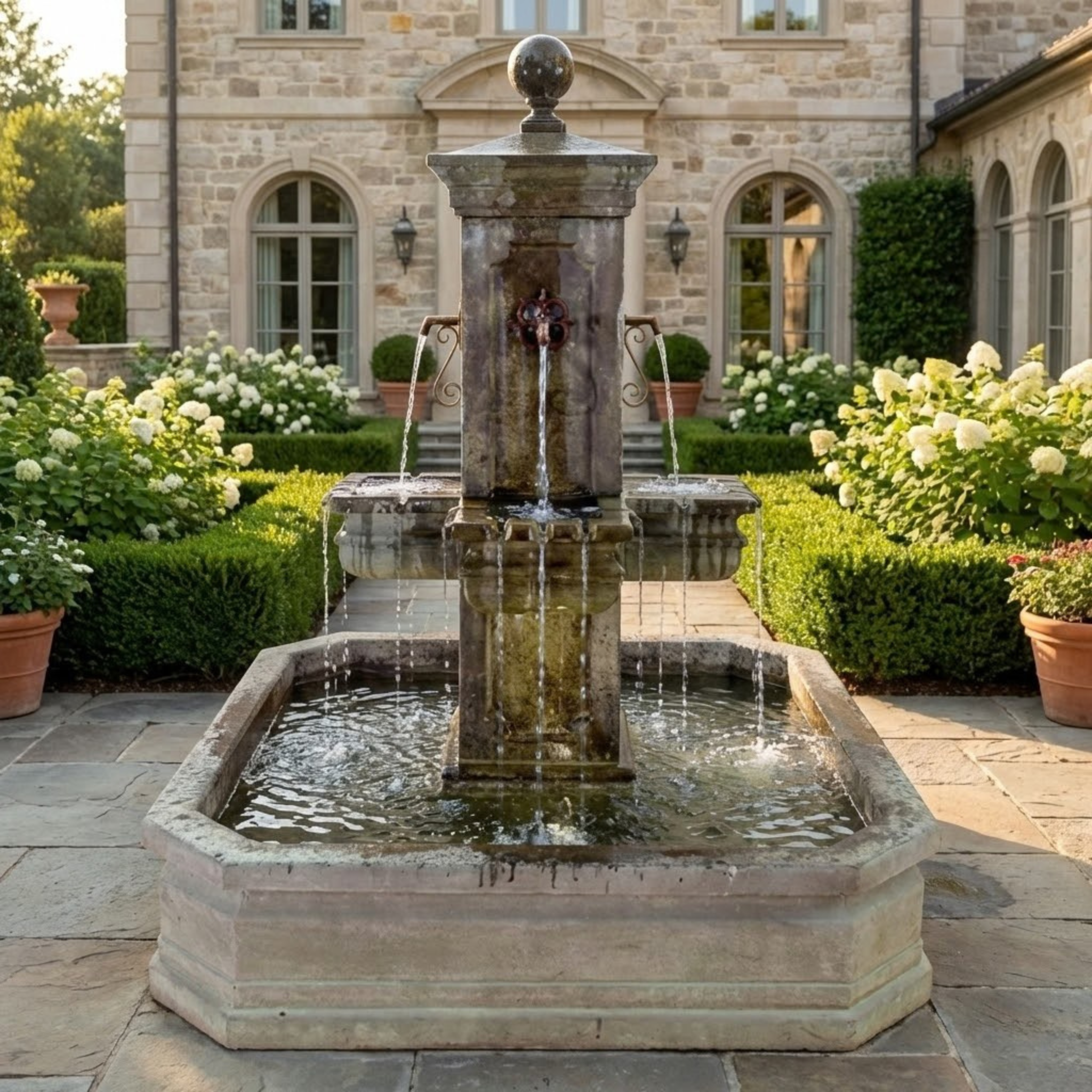
Using an Outdoor Fountain to Mask Neighborhood Noise

Outdoor fountains can help reduce unwanted noise by creating a steady, soothing water sound. This guide explains how white noise works in landscaping and which high-flow, cascading fountains are best for masking traffic or neighborhood noise.

If outside noise is starting to wear on you—traffic, neighbors, or just general background sound—a fountain can help more than most people expect.

It’s not that a fountain completely blocks noise. What it does instead is change what you hear. The steady sound of moving water fills in the gaps, so sharp or inconsistent noises become less noticeable. That’s why many people describe it as “white noise,” even though it’s really just a natural, continuous sound that your brain starts to tune into instead.

With the right setup, a fountain can make a patio, garden, or seating area feel noticeably quieter.

The effect depends a lot on how strong or soft the water sound is, which is why different fountain styles can feel so different in the same space.

Fonte Acanto Pond Outdoor Water Fountain

Why Water Helps With Noise

Outdoor noise tends to be irregular.

A car passes. A door shuts. Someone talks nearby. These sounds stand out because they break the silence.

Water works differently. It creates a steady, consistent sound that sits in the background. Once it’s there, those sharper noises don’t stand out as much because they blend into that ongoing sound.

It’s the same reason people use fans or rain sounds indoors—the constant noise makes everything else feel less intrusive.

Not All Fountains Sound the Same

One thing people don’t always realize is how much the sound of a fountain can vary.

Some fountains produce a very light trickle. Others create a more noticeable cascade. The difference comes from how the water moves—how far it falls, how many levels it passes through, and how it lands.

If the goal is masking noise, softer fountains usually aren’t enough on their own.

You’ll want something with a bit more presence.

Anduze Carre Fountain with Square Pond For Spouts

Go Taller for Better Coverage

Height plays a bigger role than most people expect.

With tall fountains, the water has farther to travel before it reaches the basin. That extra distance creates more sound as the water moves and lands.

The result is a fuller, more noticeable background sound that can carry across a wider area.

This is especially helpful if you’re trying to cover noise coming from a specific direction, like a road or neighboring yard.

Padova Three Tier Outdoor Water Fountain

Tiered Fountains Create Layered Sound

Another option that works well for noise masking is tiered fountains.

Because water flows from one level to the next, these fountains create multiple points of sound instead of just one. Each drop adds a layer, and together they form a more consistent audio backdrop.

This layered effect tends to feel more natural than a single strong stream of water.

It’s also more effective at blending with different types of background noise.

Placement Matters More Than Size

Even a larger fountain won’t help much if it’s placed too far away.

If you’re trying to reduce noise in a specific area—like a seating space or patio—it helps to position the fountain somewhere between you and the source of the noise.

That way, the sound of the water reaches you before the outside noise does.

For example, placing a fountain near the edge of a yard that faces a street can help soften traffic sounds before they carry into the rest of the space.

Wall Fountains for Smaller Spaces

If space is limited, wall fountains can still make a noticeable difference.

They don’t take up much room, but they can produce a steady, vertical flow of water that creates a consistent background sound.

Mounted against a wall or fence, they also help reflect sound slightly, which can make the water seem more present than its size would suggest.

This makes them a practical option for patios, courtyards, or smaller outdoor areas where a larger fountain isn’t possible.

Adjusting the Flow Changes the Sound

Most fountains allow you to adjust the pump flow, and that directly affects how the fountain sounds.

A higher flow creates a stronger, more noticeable cascade. Lowering the flow softens the sound.

If your goal is masking noise, you may want to keep the flow slightly higher than you would for a purely decorative setup.

It’s worth experimenting a bit to find the level that feels right for your space.

Combining Sound With Surroundings

Fountains don’t work in isolation. The surrounding space affects how sound travels.

Walls, fences, and plants can help contain and reflect sound, making the fountain feel louder than it actually is.

This is why fountains placed in enclosed areas—like patios or courtyards—often feel more effective at masking noise than those in wide open spaces.

Even a few plants or structural elements can help shape how the sound carries.

Setting Real Expectations

It’s worth being clear about what a fountain can and can’t do.

A fountain won’t completely eliminate loud or close noise. You’ll still hear what’s happening around you.

What it does is soften the edges. Instead of sharp interruptions, the sound becomes part of a more consistent background.

For many people, that change alone makes a big difference in how a space feels.

Creating a More Relaxed Space

Once the fountain is running, the effect tends to be subtle but noticeable.

The space feels calmer. Conversations are easier. Background noise fades into something less distracting.

Whether it’s a multi-level design like tiered fountains, a vertical setup with wall fountains, or one of the more prominent tall fountains, the goal is the same: creating a steady, natural sound that helps everything else feel quieter.

And once that sound becomes part of the environment, it’s hard to imagine the space without it.