The Best Plants to Frame Your Outdoor Fountain

Choosing the right plants around a fountain helps keep maintenance low. This guide recommends evergreens, hostas, and ornamental grasses that add beauty without dropping leaves, pollen, or debris that can clog pumps.

If you’re adding plants around a fountain, the goal isn’t just making it look good—it’s making sure it stays easy to maintain.

The wrong plants can turn a low-maintenance fountain into something you’re constantly cleaning. Leaves fall in, pollen clouds the water, and berries or petals end up clogging the pump. The right plants, on the other hand, frame the fountain nicely without creating extra work.

In most cases, the best choices are plants that stay relatively clean—things like evergreens, hostas, and ornamental grasses. These tend to hold their shape, drop less debris, and pair well with different fountain styles, whether it’s a compact setup or something larger like courtyard fountains, calming Zen fountains, or decorative small fountains.

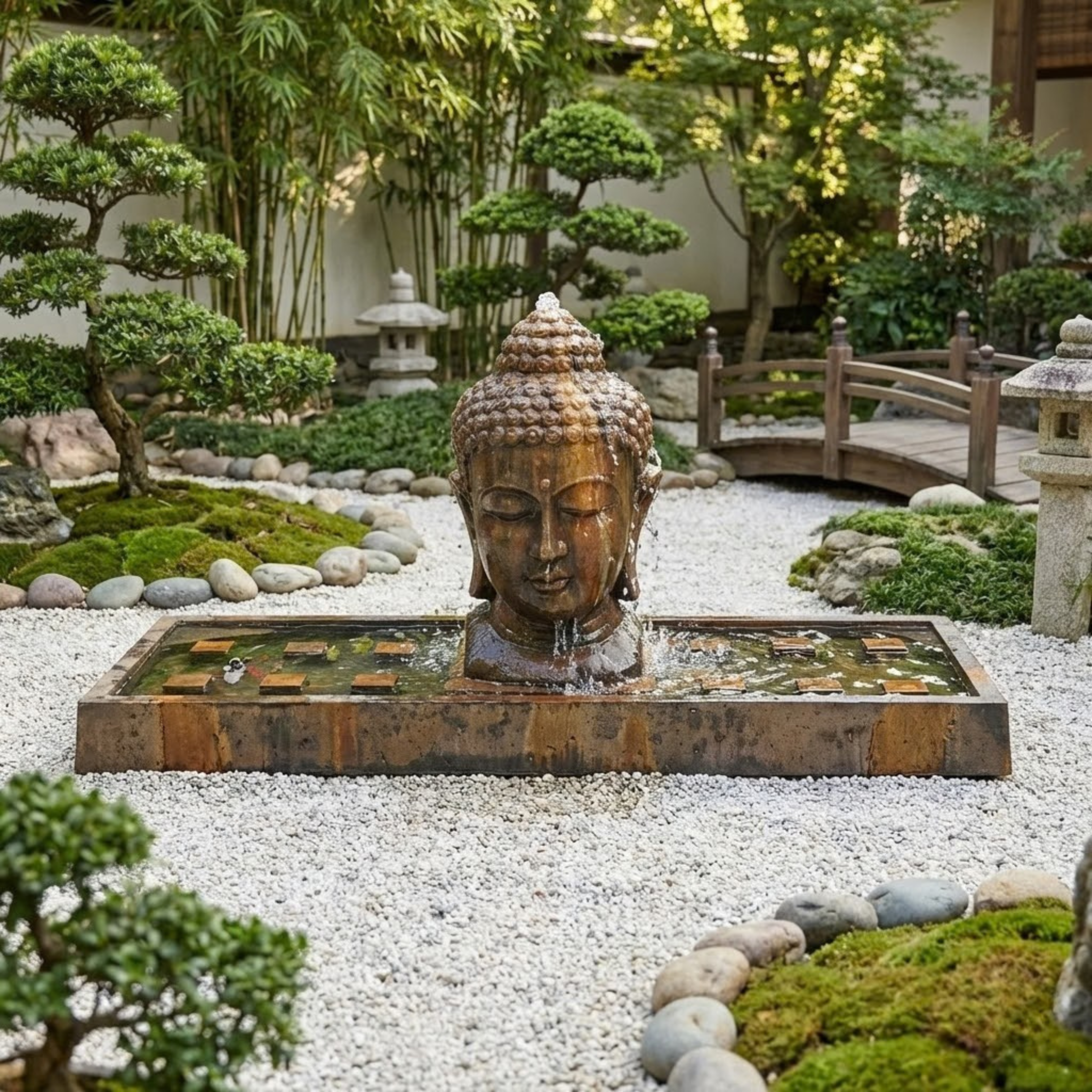
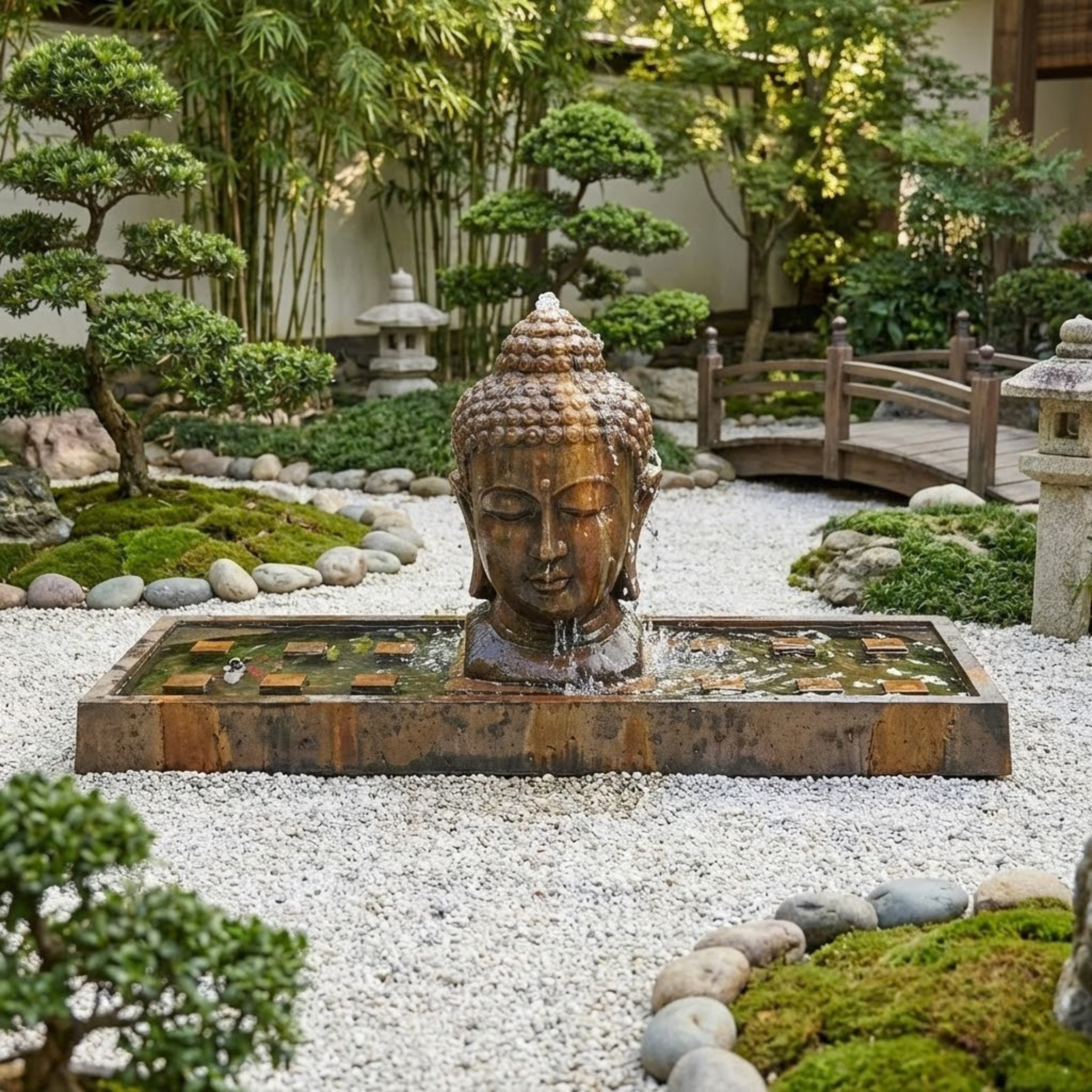
Buddha Head Outdoor Fountain - Large

Start With Low-Debris Plants

When choosing plants, it helps to think less about color and more about what they leave behind.

Some plants constantly shed leaves, petals, or seeds. Around a fountain, that debris doesn’t just fall to the ground—it ends up in the water.

Plants that keep a tidy footprint are usually the better choice. Evergreens, for example, hold onto their foliage year-round and don’t create the same mess as deciduous plants.

This one decision alone can make a big difference in how often you need to clean the basin or pump.

Evergreens for Structure and Simplicity

Evergreens are one of those choices people end up appreciating later, mostly because they don’t create extra work.

They stay pretty consistent through the year, so you’re not dealing with piles of leaves or constant cleanup around the fountain. Plants like boxwood or smaller conifers tend to hold their shape and don’t spread too much, which makes them easier to manage over time.

Around courtyard fountains, they tend to make the space feel a bit more put together without drawing too much attention. Nothing feels busy, and the fountain doesn’t get lost in the planting.

Because they don’t change much from season to season, your eye naturally goes to the water instead of the plants. That’s usually what people want anyway once everything is set up.

Parisienne Two Tier Outdoor Water Fountain

Hostas for Soft Edges

If you want something that softens the look of stone or concrete, hostas are a natural fit.

Their broad leaves create a gentle contrast against the hard lines of a fountain. They tend to grow low and full, which makes them useful for filling in the space around the base without blocking the view.

Hostas do shed leaves occasionally, but not in a way that creates constant mess. As long as they’re not planted directly over the basin, they’re easy to manage.

They’re especially popular around small fountains, where a few well-placed plants can make the space feel more complete without overwhelming it.

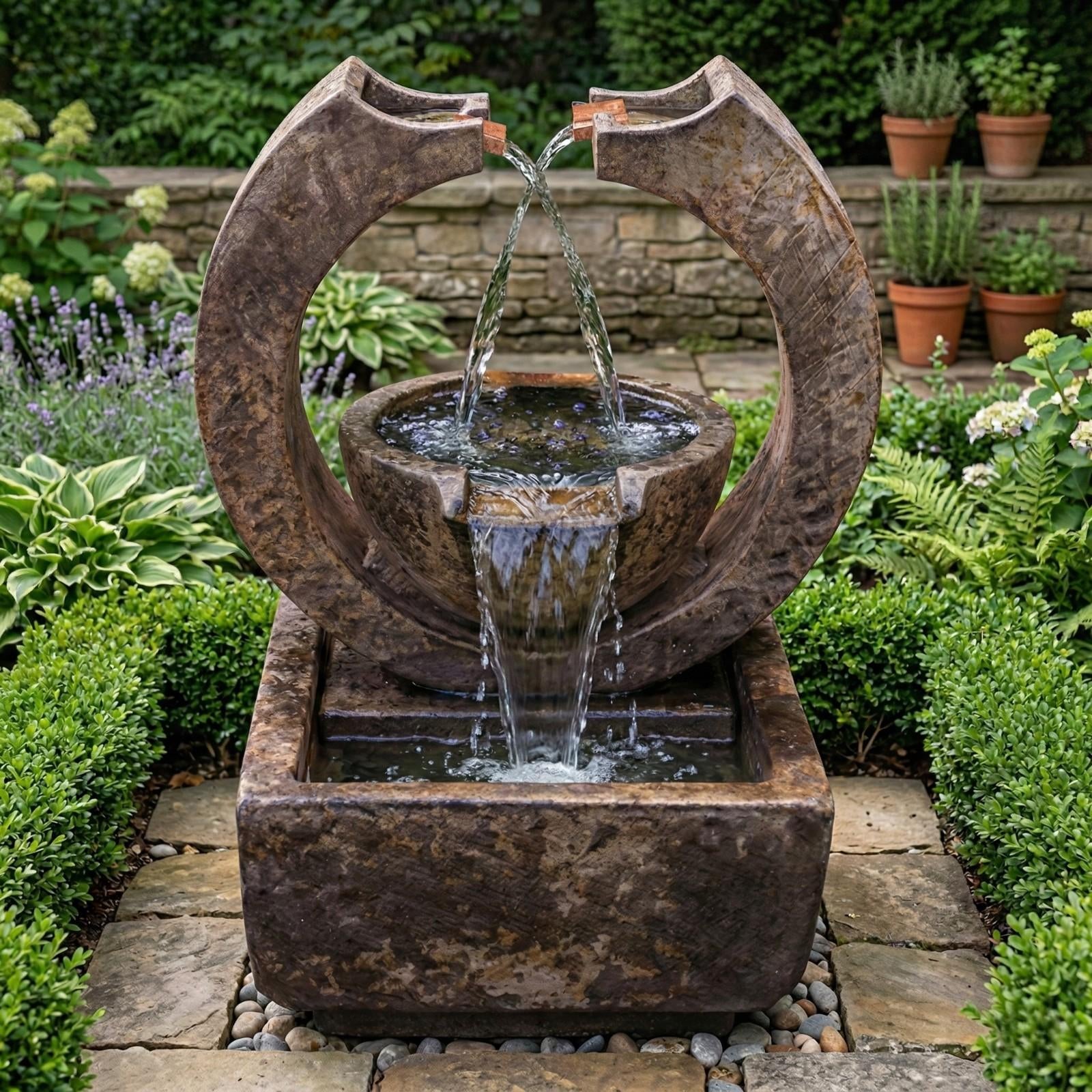
Crescent Two-Spill Fountain

Ornamental Grasses for Movement

Ornamental grasses bring something different to the space—movement.

As the wind passes through them, they create a soft, natural motion that pairs well with the sound of flowing water. This works particularly well with Zen fountains, where the goal is often a calm, balanced atmosphere.

Most ornamental grasses are relatively low maintenance. They don’t drop large leaves or heavy debris, and their fine texture means anything they do shed is usually minimal.

Planted in clusters, they can frame a fountain without making the area feel crowded.

Give the Fountain Breathing Room

One mistake people often make is planting too close to the fountain.

Even low-debris plants can cause problems if they overhang the basin. Leaves, soil, and mulch can easily fall into the water if the plants are too close.

Leaving a bit of space around the fountain makes maintenance easier and keeps the water cleaner.

It also helps visually. When the fountain has room around it, it feels more like a focal point rather than something hidden inside dense planting.

Think About Height and Layers

When placing plants around a fountain, it usually helps to step back and look at how everything sits together rather than focusing on each plant on its own.

Some people naturally place shorter plants near the base—things like hostas or low growers—then let slightly taller plants fill in behind them. After that, anything with more height ends up farther back, almost like a backdrop.

It doesn’t have to be exact. The idea is just to avoid everything sitting at the same level, which can make the space feel flat or crowded.

With courtyard fountains, this tends to work out nicely because the walls already frame the space. The plants don’t need to do too much—they just soften the edges a bit and let the fountain remain the main thing you notice.

Avoid High-Mess Plants

Some plants look great in a garden but aren’t ideal near water features.

Trees that drop a lot of leaves, flowering plants that shed petals quickly, or shrubs that produce berries can all create extra work.

The debris doesn’t just affect the appearance—it can also reach the pump and affect water flow over time.

Even if you like those plants, it’s usually better to place them a bit farther away from the fountain.

Matching Plants to the Style of the Fountain

The way you plant around a fountain usually ends up following the style of the fountain itself, even if you don’t plan it that way.

With Zen fountains, people tend to keep things simple. A few grasses, maybe a low shrub or two—nothing too busy. The whole setup leans toward open space and calm surroundings rather than filling every corner.

Around courtyard fountains, the planting often feels a bit more structured. You’ll see cleaner shapes, sometimes more symmetry, and plants that match the enclosed feel of the space.

With small fountains, it’s easy to go overboard without realizing it. A couple of well-placed plants usually does the job. Once there’s too much around it, the fountain starts to disappear instead of standing out.

A Setup That Stays Easy to Maintain

The best fountain setups are the ones that still look good weeks later—not just the day they’re planted.

Choosing plants that don’t constantly shed debris keeps the water cleaner, reduces how often you need to clean the pump, and makes the whole space easier to enjoy.

Over time, that matters more than any single design choice.

Let the Fountain Be the Focus

It’s easy to get carried away with planting, especially once everything starts coming together. But most of the time, the fountain works best when it’s still the thing your eye goes to first.

The plants are really just there to support it. They soften the edges, fill in the space, and make everything feel a bit more natural—but they don’t need to take over.

You’ll notice this more once everything settles in. In a quiet corner with Zen fountains, or a more enclosed setup with courtyard fountains, even a few well-placed plants can be enough. The same goes for small fountains—a lighter touch usually makes the whole setup feel more balanced.

When the planting isn’t competing for attention, the movement of the water tends to stand out on its own, which is usually the whole point of having the fountain there in the first place.

It also helps to choose plants that won’t add extra debris to the water, since buildup is one of the most common causes of cloudy or foamy fountains.