




What You Need to Know About Tall Outdoor Fountains?
Most people who end up here already have the spot picked out. A bare corner of the yard, an entryway that's felt empty for a while, a stretch along the back fence that's been bothering them since spring.
These aren't small purchases, and they're rarely impulse ones. Customers shopping this category tend to have some room to work with — a fountain that's five or six feet tall needs to be seen from a distance, not tucked next to a patio chair.
As you scroll through the collection, a few directions become pretty obvious.
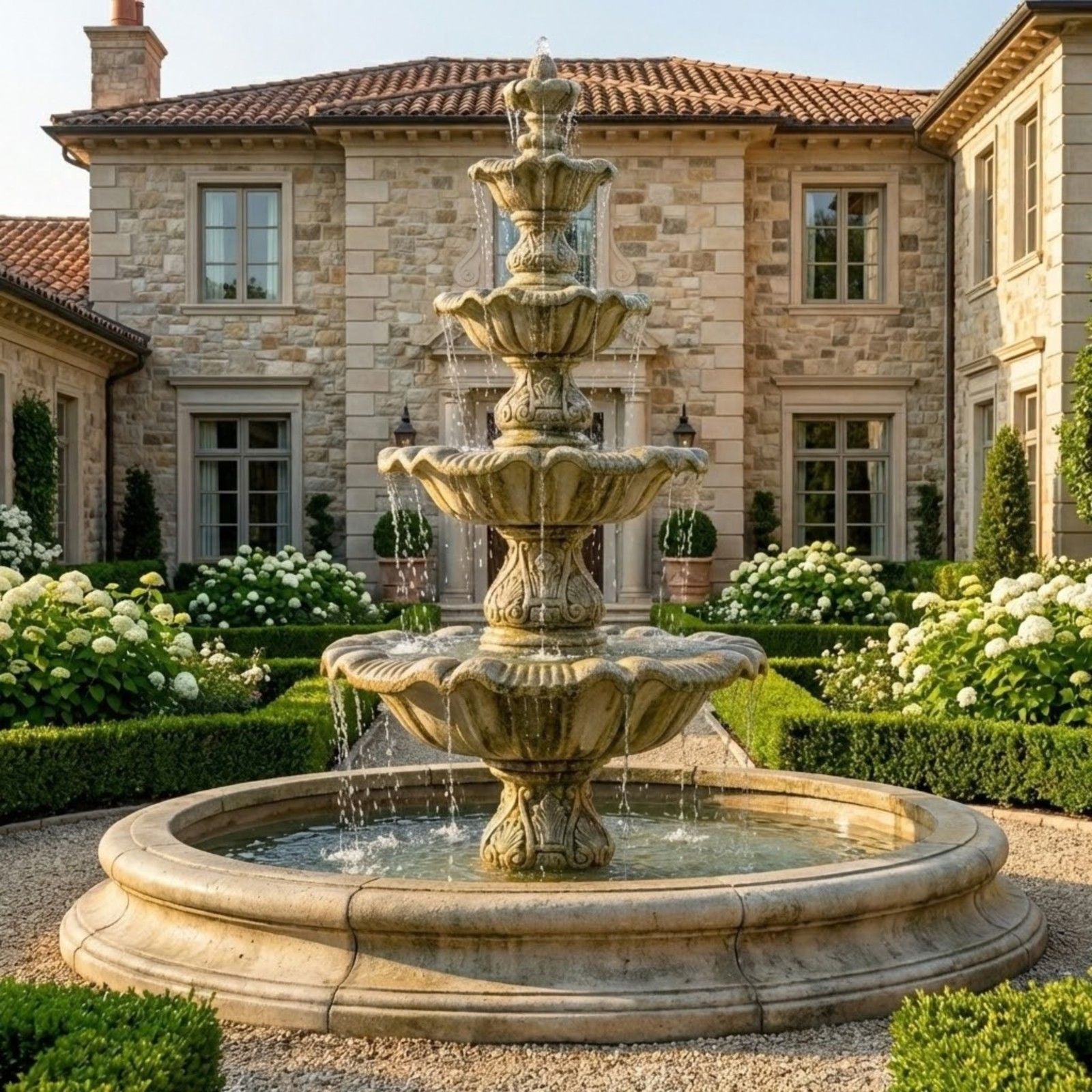
Most of what's here falls under Large Outdoor Fountains — multi-tier pieces with stacked basins, water working its way down from top to bottom. These read as formal even in a simpler finish, and they're the ones that tend to anchor a long driveway or sit centered in a courtyard. If the rest of your yard already leans traditional, this is usually where people land without much back-and-forth.
Tiered Outdoor Fountains overlap with that group, but the tier count matters more than it looks like it should. Two tiers and four tiers can photograph almost the same, but in person the taller ones have more sound and more presence. Customers comparing tiers usually end up thinking less about looks and more about how much noise they actually want.
Then there are the Wall Fountains, which solve a different problem entirely. They mount against an exterior wall instead of needing open ground, so they've become the default for courtyards, side yards, and entryways where floor space is tight. A fair number of people who come in looking for a traditional tall fountain leave with one of these instead, once they realize how little room it actually takes.
One thing customers compare more than expected is sound. Not right away — it's usually the third or fourth thing they notice once they've narrowed down a few favorites. A taller drop means more splash and more water noise, which is either exactly what someone wants near a busy street, or more than they bargained for next to a quiet patio.
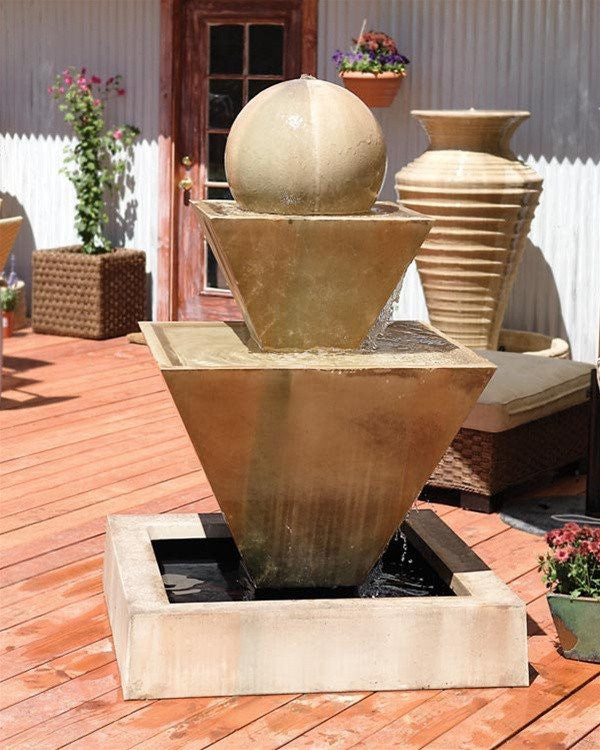
There are also pieces here that don't sit neatly in one category. A tiered base paired with a cleaner, more modern basin. A wall fountain with the kind of detailing you'd normally see on something freestanding. Those tend to be the ones that catch people off guard, in a good way.
The collection shifts over time, but the goal doesn't — tall fountains substantial enough to actually anchor a space, not just fill one for a season.
FAQs
Common Questions About Tall Outdoor Fountains
It comes down to viewing distance more than yard size. A fountain that looks right from across a big lawn can feel oversized in a smaller courtyard viewed up close. Leave at least five to eight feet of open space around the base, and picture the fountain from wherever you'll actually be standing most — a window, a patio, the front walk.
Not difficult, just regular. Clean the basin about once a month during the season and check the pump's intake screen now and then. Tiered designs need a little extra attention since mineral deposits can build up between levels, but none of it requires special skill.
Depends on your climate. Nowhere it freezes, they can generally stay out all year with normal upkeep. Anywhere it does freeze, drain the water and bring the pump in before winter — leaving water in the lines is the most common way these get damaged.
Usually, especially tiered designs where water drops a longer distance between basins. Wind matters as much as height, though — the same fountain splashes more in an open, breezy spot than a sheltered one. Most pumps let you turn the flow down if it becomes an issue.
Five to eight feet on all sides is a fair minimum. Wall fountains are the exception, since they sit flush against a surface and barely need floor space at all — part of why they're popular for tighter courtyards.
Cast stone holds up the longest and tends to look better with age. Fiberglass is lighter and easier to reposition if you're not fully set on a spot yet. Metal develops a patina over time, which is part of the look rather than a flaw.
Louder than a tabletop fountain, and that's often the point — the sound is genuinely useful for covering road noise or a nosy neighbor's conversation. Most pumps are adjustable, so you can turn it down if you're installing near a spot where people will actually be talking.
These recirculate, so you're topping off evaporation, not refilling from scratch. Expect somewhere between 5 and 15 gallons a week depending on size and weather. The water cost itself is minor.