
Is your tiered fountain only flowing on one side? This guide explains how to fix uneven water flow by leveling the base, using shims, or adjusting the tier edge so water cascades evenly.
Troubleshooting Uneven Water Flow on a Tiered Fountain

Is your tiered fountain only flowing on one side? This guide explains how to fix uneven water flow by leveling the base, using shims, or adjusting the tier edge so water cascades evenly.
If your fountain is only spilling water down one side instead of flowing evenly all the way around, the issue is almost always balance—not the pump.
In most cases, uneven flow comes down to one of two things: the fountain isn’t perfectly level, or one section of a tier is slightly lower than the rest. Water will always follow the easiest path, so even a small tilt or dip can send everything in one direction.
The good news is that this is one of the easier fountain problems to fix. A small adjustment at the base or a slight correction at the tier edge is usually all it takes to get the water flowing evenly again.
This applies whether you’re working with compact bird bath fountains, classic tiered fountains, or taller statement pieces like tall fountains.

Water doesn’t spread itself evenly—it reacts to gravity.
If one side of the fountain sits even slightly lower, more water will naturally move in that direction. The same thing happens if one part of a tier edge dips just a bit lower than the rest.
What makes this frustrating is how subtle the difference can be. A shift that’s barely visible to the eye is enough to change how the water flows.
That’s why fountains that looked perfect when first installed can start favoring one side after a bit of settling.
Before adjusting anything on the tiers, it’s worth checking the foundation.
If the base of the fountain isn’t level, everything above it will follow that same tilt. This is the most common reason water flows unevenly.
A small level placed across the basin can quickly show whether one side sits lower than the other. It helps to check from multiple directions—front to back and side to side.
If you notice a slight tilt, lifting one side and adding a thin shim underneath can correct it. Shims can be as simple as a small piece of plastic, wood, or even a flat stone.
Once the base is level, the water often redistributes itself naturally.
This step is especially important for heavier installations like tall fountains, where even minor settling can shift the balance over time.
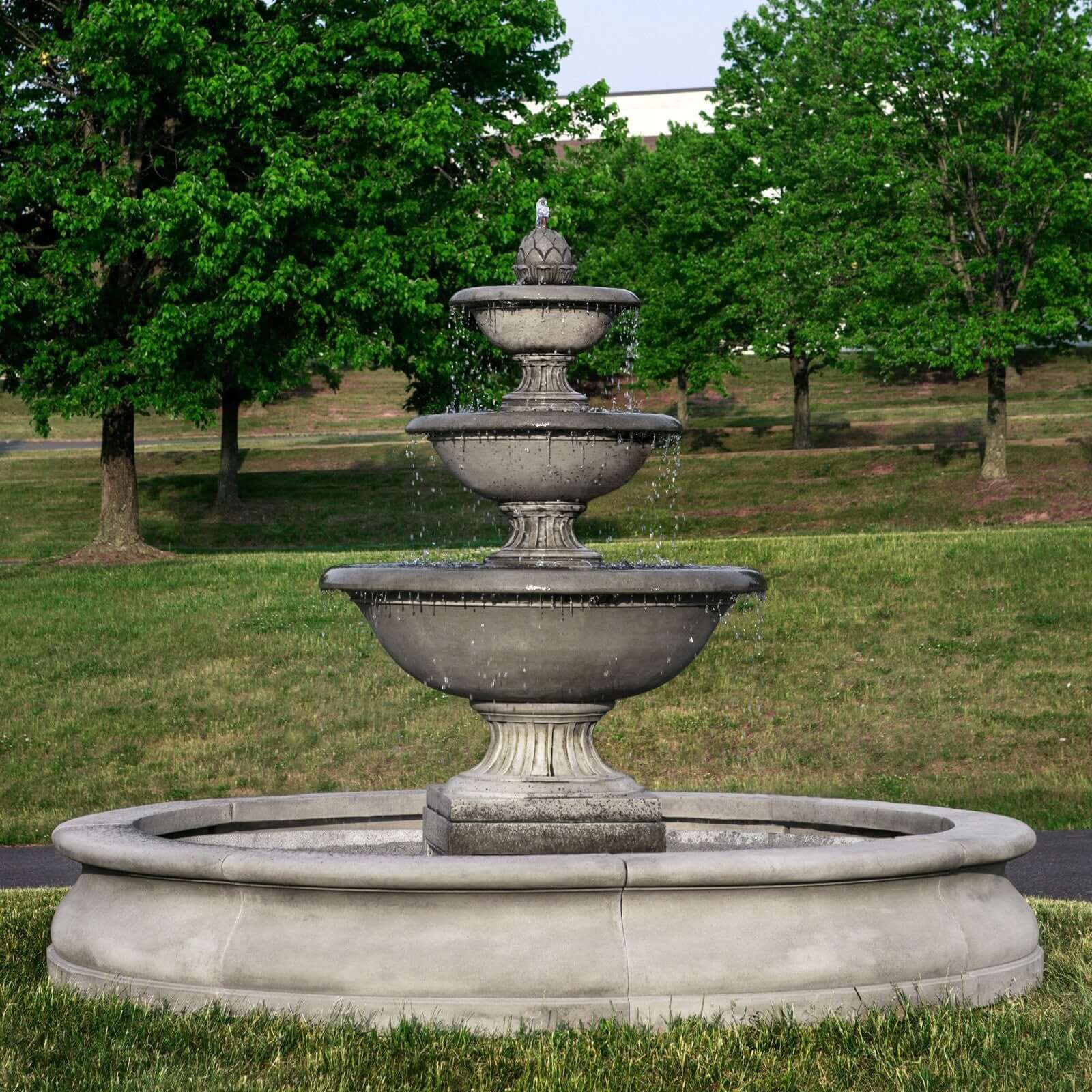
Sometimes the base checks out, but the water still favors one side.
In that case, the issue is usually with the tier itself.
Not every fountain is perfectly uniform. Small variations in the edge of a bowl or spillway can affect how water leaves the surface. Over time, mineral buildup can also slightly change the shape of the flow edge.
When one part of a tier sits lower—even by a tiny amount—water will concentrate there.
There are a couple of simple ways to guide the water back into balance.
One approach is gently rotating the tier. In some fountains, turning the bowl slightly can change how water spreads across the edge.
If that doesn’t solve it, a more direct fix is building up the lower area slightly.
Some fountain owners use a small amount of marine putty or similar material along the edge where the water drops too heavily. This creates a subtle lift that encourages water to spread more evenly across the rest of the tier.
The adjustment doesn’t need to be visible. Even a thin layer can change the flow pattern.
It’s usually best to start small and test the result before adding more.
After making any change, let the fountain run for a few minutes and observe how the water behaves.
Water flow can take a short time to settle, especially after repositioning a tier or adjusting the base.
Standing back and viewing the fountain from a distance often gives a clearer picture than looking at it up close.
With a little patience, the flow usually evens out.
Most of the time, uneven flow comes down to leveling—but the pump setting can sometimes make it more noticeable.
If the water is moving a bit too fast, it tends to favor the lowest spot even more. Instead of spreading out across the edge, it rushes in one direction and makes the imbalance look worse than it actually is.
Dialing the flow back slightly can help. When the water moves more gently, it has a better chance of spreading out before it spills over.
This tends to show up more on tiered fountains, especially ones with several levels where the water drops from one bowl to the next. A small adjustment to the flow can sometimes make the whole fountain look more balanced without changing anything else.
Sometimes the fountain looks perfectly balanced, and then a day or two later the water starts favoring one side again.
That kind of shift usually isn’t random. It often comes from small changes in the ground underneath—things like soil settling after rain or slight movement from temperature changes. The difference can be so minor you wouldn’t notice it just by looking, but the water reacts to it right away.
When that happens, it usually doesn’t take much to correct. A quick check of the base and a small adjustment is often enough to bring the flow back to where it was before.
Uneven water flow can look like a major issue, but it’s usually caused by something very minor.
A slight tilt, a small dip in the edge, or a bit of buildup is often all it takes to change how the water moves.
Once corrected, the difference is immediate. The water spreads evenly across the tiers, and the fountain looks the way it was meant to.
Whether it’s one of the decorative bird bath fountains, a classic multi-level tiered fountains, or one of the taller statement tall fountains, getting the flow balanced brings the whole piece back to life.
And once it’s adjusted, it tends to stay that way—until the next small shift reminds you just how sensitive moving water can be.
If it keeps happening, it’s often worth checking whether the base is truly level from the ground up.