Pet and Wildlife Safety: Are Your Fountain Water Treatments Toxic?

Pets and wildlife often drink from outdoor fountains, so water treatments must be chosen carefully. This guide explains which fountain cleaners and algaecides are safe for dogs, cats, and birds—and which products to avoid.

If you have a fountain in your yard, it’s almost guaranteed that animals will eventually visit it. Birds drink from it, squirrels investigate it, and many dogs treat it like their own outdoor water bowl. Because of that, one of the biggest questions homeowners ask is whether fountain water treatments are safe.

The short answer is: some are safe, some are not. Many algaecides and cleaning chemicals designed for fountains were originally made for decorative ponds or large water features where animals rarely drink the water. In smaller installations—like bird bath fountains, decorative animal fountains, or other small fountains—wildlife interaction is much more likely. That means the products you add to the water matter.

The good news is that safe options exist. Understanding which treatments to use—and which ones to avoid—helps keep the fountain clean without putting pets or wildlife at risk.

Vesuvio Outdoor Fountain with Lion Pedestals - Extra Large

Why Water Treatments Are Used in the First Place

Outdoor fountains naturally collect organic material.

Leaves fall in. Pollen lands on the surface. Dust and small debris drift into the basin. When sunlight and warm temperatures are added to the mix, algae can begin to grow surprisingly quickly.

That’s why many fountain owners use treatments designed to:

  • slow algae growth
  • reduce mineral buildup
  • keep the water clearer between cleanings

These products work well in many situations, but the safety of the ingredients becomes important when animals have access to the water.

It’s also worth knowing that not all cleaning solutions are safe, especially when you’re dealing with mineral buildup in shared water.

The Reality: Animals Will Drink From the Fountain

Even if a fountain wasn’t designed as a watering spot, animals rarely see it that way.

Birds are naturally drawn to moving water, which is why bird bath fountains are so popular in garden landscapes. The circulation attracts birds looking for a safe place to drink or bathe.

Pets often behave the same way. Many dogs prefer fresh moving water over standing bowls, and they may drink directly from outdoor small fountains without hesitation.

Wildlife such as squirrels, rabbits, and even neighborhood cats may stop by as well.

Because of this, fountain owners often assume the water should be treated like shared outdoor drinking water, not just decorative water.

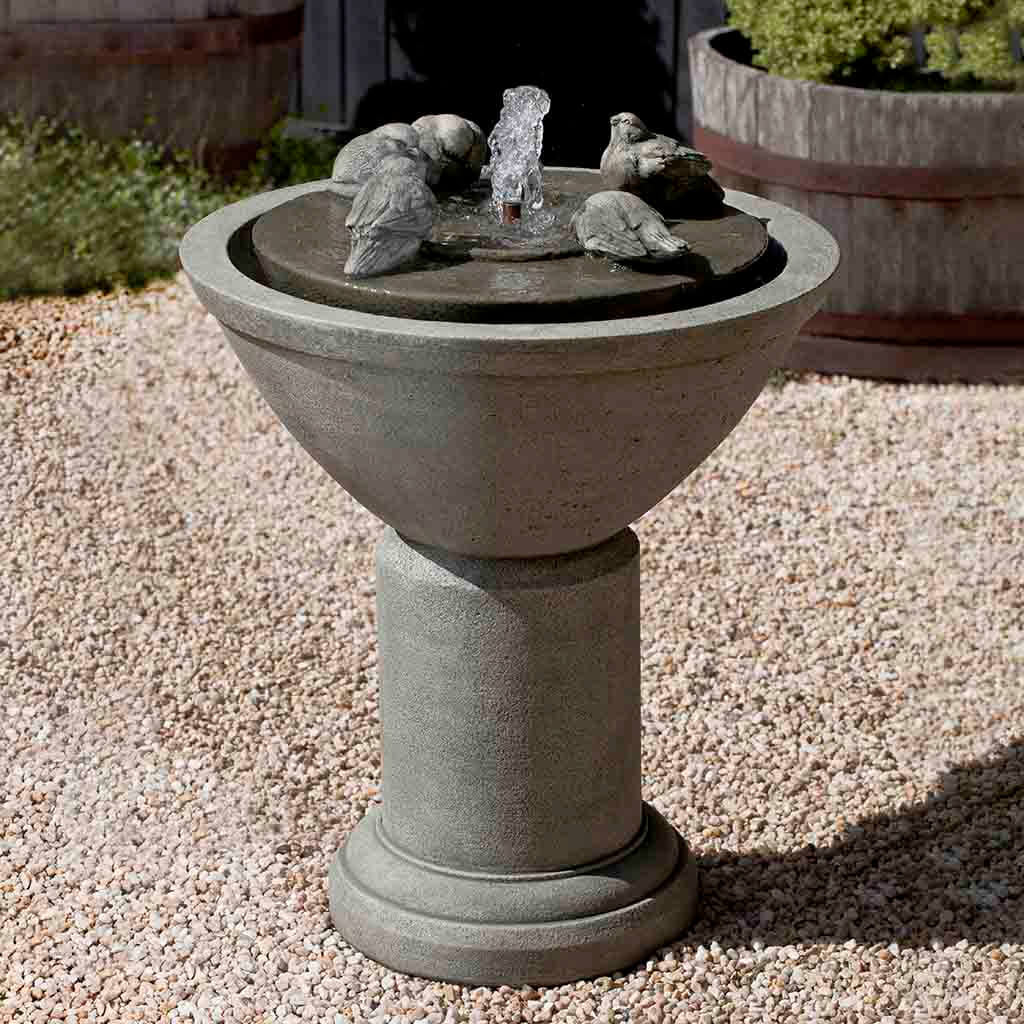
Passaros II Birds Water Fountain

Treatments That Are Generally Considered Safer

Some fountain products are designed specifically with wildlife and pets in mind.

Treatments labeled “pet safe” or “bird safe” are usually made with milder ingredients that slow algae growth without introducing toxic compounds into the water.

These products typically rely on small amounts of natural enzymes or bacteria that break down organic debris rather than poisoning algae directly.

When used according to instructions, these treatments are usually considered the safest option for fountains that wildlife may access.

They’re especially useful for smaller features like animal fountains or decorative bowls where animals can easily reach the water.

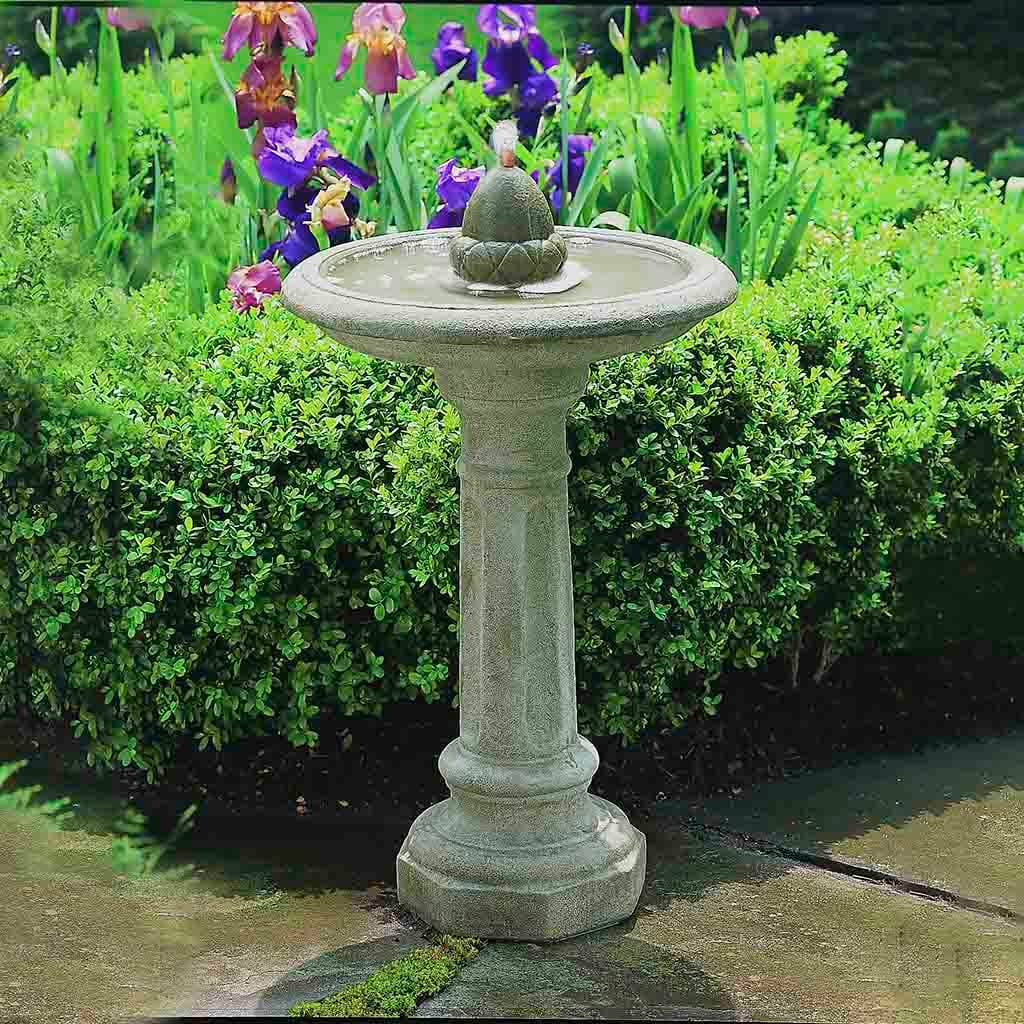
Acorn Garden Small Water Fountain

Treatments to Be Careful With

Some fountain treatments are a bit stronger than people realize.

They’re often made for decorative ponds or large water features where the water isn’t meant to be touched much, let alone drunk by animals. In those settings the goal is simply stopping algae as quickly as possible.

The problem is that the same products sometimes end up in smaller garden fountains. If birds, pets, or neighborhood wildlife are stopping by for a drink, those formulas may not be the best fit.

Many of the fast-acting algae treatments rely on ingredients like copper compounds or chlorine-style chemicals. They do their job, but they weren’t really designed with curious dogs or thirsty birds in mind.

That’s why a lot of fountain owners pause for a moment before adding anything to the basin. If animals regularly visit the fountain, it’s worth checking whether the treatment specifically mentions being safe for wildlife or pets.

A Simple Rule Many Owners Follow

Over time, many fountain owners settle into a pretty straightforward way of thinking about it.

If birds, pets, or other animals can easily reach the water, they assume those animals will eventually drink from it. Once you look at the fountain that way, it makes sense to treat the basin more like a shared water source rather than just a decorative feature.

Because of that, some people skip stronger chemical treatments and lean more toward gentle options or simple cleaning instead. It’s usually easier to maintain the fountain that way when animals are part of the picture.

You’ll notice this especially with bird bath fountains, since attracting birds is often the whole reason the fountain is there in the first place.

Natural Ways to Reduce Algae

Not every algae problem needs a chemical solution. In fact, many fountain owners find that a few small habits make a big difference on their own.

Sunlight plays a larger role than people expect. When a fountain sits in full sun all day, the water warms up quickly, and that’s exactly the environment algae likes. Even a little shade during part of the day can slow that process down.

Changing the water now and then also helps more than people realize. Fresh water clears out the small bits of organic material that eventually feed algae growth.

And every so often, giving the basin a quick brush keeps residue from building up on the surface. Once that buildup starts, algae tends to follow.

None of these things are complicated, but together they often keep the water clear enough that treatments become unnecessary.

Circulation Helps More Than You Think

One advantage fountains have over still water features is movement.

Algae grows more easily in stagnant water. The constant circulation created by the pump helps slow that process naturally.

This is one reason many small fountains stay relatively clear with minimal chemical treatment compared to bird baths that hold still water.

The pump keeps oxygen moving through the basin and reduces the conditions algae prefer.

What to Do If Pets Regularly Drink From the Fountain

If your dog or other pets treat the fountain as a drinking spot, it’s best to assume they will continue doing so.

In that situation, the safest approach is often the simplest one:

  • keep the water fresh
  • clean the fountain regularly
  • avoid chemical treatments unless they are labeled safe for pets

Many owners who install decorative animal fountains actually embrace the idea that their pets will use them.

With a little maintenance, the fountain can function both as a decorative feature and a fresh outdoor water source.

The Role of Routine Cleaning

One thing that surprises many new fountain owners is how effective regular cleaning can be.

Draining the basin occasionally and wiping away debris prevents algae from taking hold in the first place. When this becomes part of a normal routine, chemical treatments are often unnecessary.

This approach is especially helpful for bird bath fountains, where birds introduce small debris that eventually breaks down in the water.

Keeping the basin clean often does more for water quality than any additive.

When Treatments Make Sense

There are still situations where fountain treatments are useful.

In very hot climates, for example, algae may develop quickly even with regular cleaning. In those cases, wildlife-safe treatments can help slow growth between maintenance sessions.

Just make sure the product clearly states that it is safe for animals if pets or wildlife have access to the water.

A Fountain That’s Safe for Everyone

One thing people notice pretty quickly after installing a fountain is how many visitors it attracts.

Birds tend to show up first. Before long you might see squirrels stopping by, and plenty of dogs seem to think the fountain is their new outdoor water bowl. Moving water has a way of drawing attention in the yard.

Because of that, many owners start thinking about fountain care a little differently. Keeping the water reasonably clean matters, but so does making sure whatever goes into the basin isn’t going to harm the animals that stop by.

In practice, that often means keeping things simple—occasional cleaning, fresh water when needed, and being selective about any treatments added to the fountain.

Whether it’s one of the decorative animal fountains in a garden bed, a bird bath fountain meant to attract wildlife, or one of the many small fountains used around patios and walkways, the idea is pretty much the same: a fountain that looks good, runs smoothly, and stays safe for the animals that end up enjoying it too.