Integrating a Fountain into Hardscaping: Pavers, Patios, and Retaining Walls

A fountain looks more natural when it’s built into the landscape. This guide explores how to integrate outdoor fountains with pavers, patios, and retaining walls to create a cohesive and intentional hardscape design.

One of the biggest differences between a fountain that looks “placed” and one that feels like it belongs comes down to how it’s integrated into the space.

Instead of setting a fountain in the middle of a lawn and calling it done, the more natural approach is to build it into the hardscape—the pavers, patio layout, or even a retaining wall. When it’s part of the structure, it feels intentional. Like it was always meant to be there.

This works especially well with designs like Wall Fountains, compact Birdbath fountains, or more minimal Zen fountains, where the surrounding materials can frame the fountain without overwhelming it.

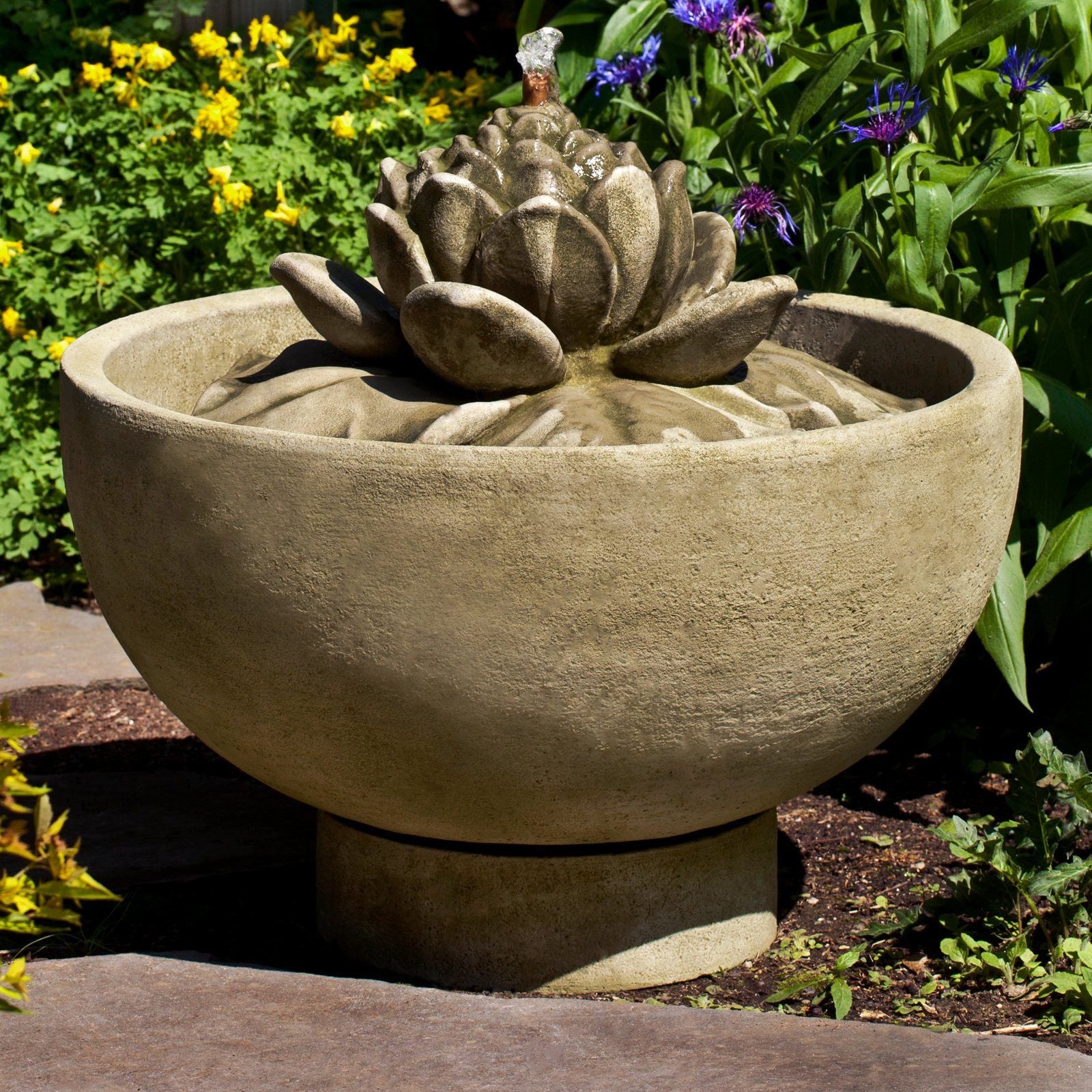
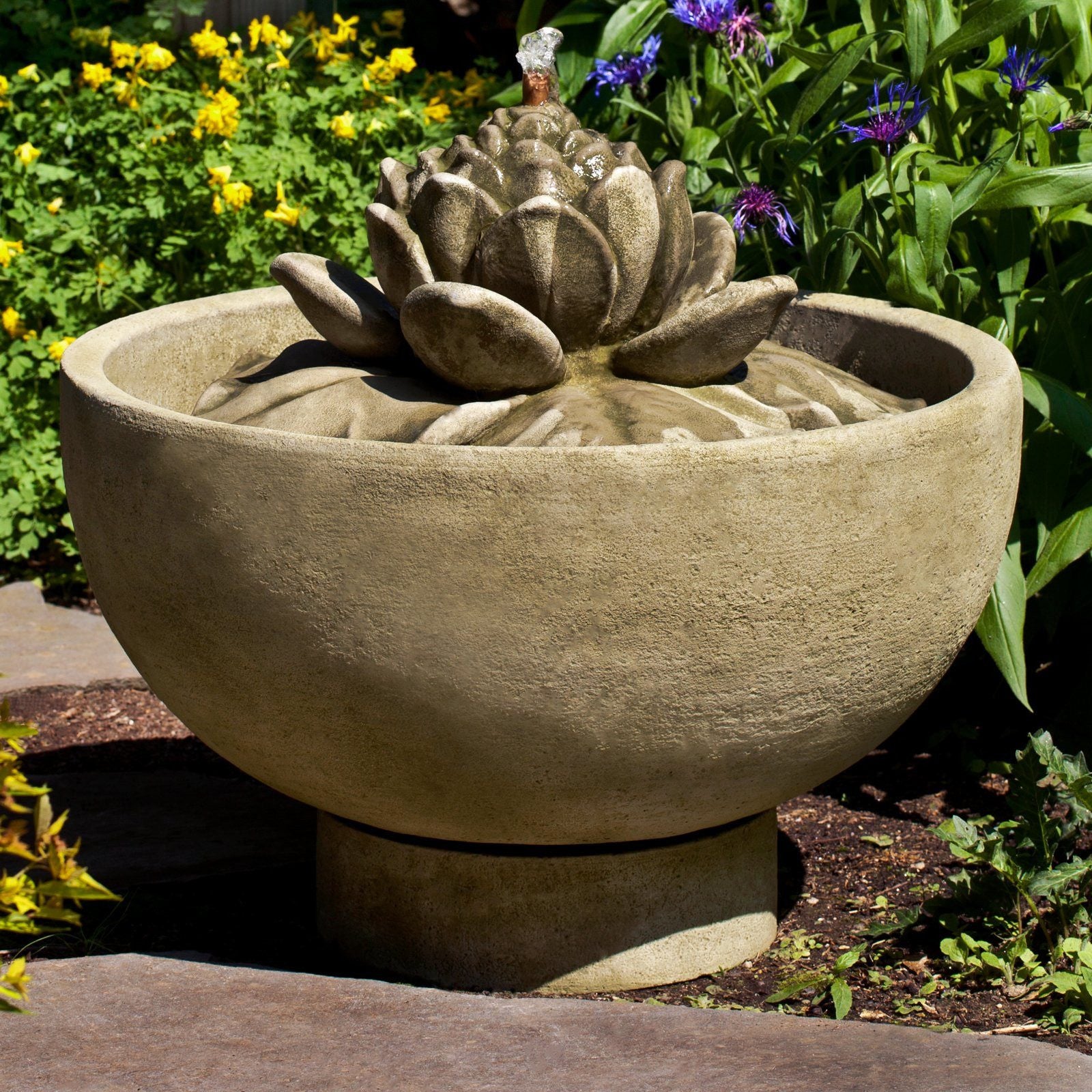
Smithsonian Lotus Water Fountain

Start With the Surface, Not the Fountain

A lot of people pick out a fountain first and then try to figure out where it should go afterward.

But when you look at how the space is already used, the placement usually becomes more obvious. Where people walk, where they tend to sit, even where your eye naturally lands when you step outside—those spots tend to guide the decision.

Once you notice that, the fountain doesn’t feel like something you’re trying to fit in. It just ends up in a place that already makes sense.

Even on a simple paver patio, putting the fountain near a walkway edge or beside a seating area can make the whole space feel more pulled together without doing much else.

And once you’ve chosen the spot, making sure the base is properly prepped and level is what keeps everything looking and working as it should.

Using Pavers to Frame the Fountain

Pavers are one of the easiest ways to visually anchor a fountain.

Instead of placing the fountain directly on grass or soil, setting it within a defined paver area gives it a sense of permanence. It also keeps the base stable, which helps with leveling and long-term maintenance.

Some people create a slightly different pattern or border around the fountain to make it stand out subtly. It doesn’t need to be dramatic—just enough to signal that the space is intentional.

This works well for Birdbath fountains, where a small circular or square paver base can turn a simple feature into a focal point.

Building Into a Patio Layout

On patios, fountains tend to work best when they’re slightly off-center.

Placing a fountain directly in the middle of a seating area can feel intrusive. But positioning it along the edge—where it’s visible but not in the way—usually feels more natural.

This is where Zen fountains often fit nicely. Their simpler designs blend into patio layouts without taking over the space.

The goal isn’t to make the fountain the only thing you see. It’s to make it part of the environment you’re already using.

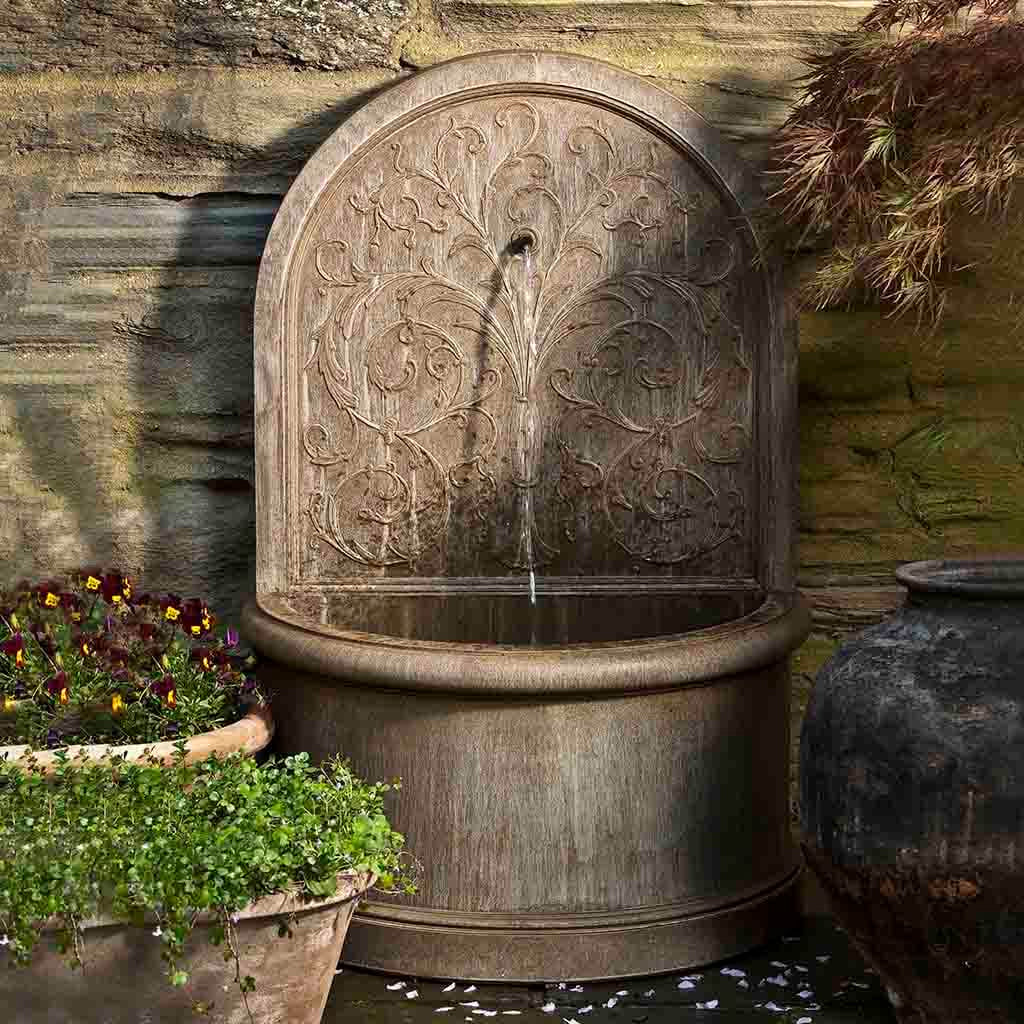
Corsini Wall Garden Water Fountain

Retaining Walls as a Natural Backdrop

Retaining walls offer one of the most natural ways to integrate a fountain.

Instead of placing the fountain in front of a blank space, the wall becomes part of the design. It adds height, structure, and a backdrop that makes the water more noticeable.

This is especially effective with Wall Fountains, which can either be mounted directly onto the wall or placed against it.

The result feels less like an added feature and more like something built into the landscape itself.

Creating a Sense of Flow in the Space

Hardscaping isn’t just about materials—it’s about how people move through the space.

A fountain can act as a visual pause point. Something you notice as you walk through the yard or step onto the patio.

Placing it where pathways meet, or where the layout naturally slows down, helps it feel connected to everything around it.

This works well whether the fountain is large or small. Even a compact piece can feel intentional if it sits in the right spot.

Blending Materials Together

The materials around the fountain matter just as much as the fountain itself.

Stone, concrete, brick, or tile—whatever you’re using in the hardscape should feel consistent with the fountain’s finish.

When the materials relate to each other, the entire space feels more cohesive. When they don’t, the fountain can feel out of place, even if it’s well-positioned.

This is one reason Zen fountains often pair well with neutral stone or simple pavers—they don’t compete visually.

Don’t Forget About Drainage and Splash

Practical details matter, too.

Water will splash, even in well-designed fountains. Placing the fountain on a surface that can handle moisture—like stone or properly sealed pavers—helps prevent long-term issues.

It’s also worth thinking about where excess water will go. Slight grading or drainage gaps in the hardscape can keep water from pooling around the base.

These small details are easy to overlook, but they make a big difference over time.

Lighting and Finishing Touches

Once the fountain is integrated into the hardscape, lighting can bring everything together.

Soft lighting along the pavers or a small light near the fountain can highlight both the structure and the water at night.

It doesn’t need to be bright—just enough to make the fountain visible and add a bit of atmosphere after sunset.

A Fountain That Feels Built-In

When a fountain is part of the hardscape, it stops feeling like an add-on.

It becomes part of the space itself—something that works with the patio, the walls, and the pathways instead of sitting apart from them.

Whether it’s a clean-lined Wall Fountain, a classic Birdbath fountain, or a minimal Zen fountain, integrating it into the surrounding structure makes all the difference.

And once it’s in place, it feels less like something you installed—and more like something that was always meant to be there.