How to Fix a Foamy or Cloudy Water Fountain

Foamy or cloudy fountain water is usually caused by organic debris or leftover soap residue. This guide explains why bubbles form and how to clear the water by flushing the system, cleaning the pump, and using fountain-safe defoamer.

If the water in your fountain suddenly starts looking cloudy or you notice foam collecting on the surface, it can be a little surprising at first. In most cases, though, it isn’t anything serious.

What usually happens is that small bits of organic material make their way into the basin. Pollen, dust, fallen leaves, and tiny plant particles slowly break down as the water circulates. As that material mixes with moving water, it can create bubbles or make the water look hazy. Sometimes the issue appears after cleaning if a small amount of soap residue was left behind in the basin.

The good news is that it’s usually easy to correct. Draining the fountain, rinsing the basin, and giving the pump a quick cleaning often clears things up. If a few bubbles still linger, a small amount of fountain-safe defoamer can help settle the surface again.

The process is pretty similar regardless of the fountain style. Whether you’re working with decorative Wall Fountains, a garden Birdbath fountain, or one of the quiet Zen fountain often used in patios or meditation spaces, the fix tends to follow the same basic steps.


Keeping up with a simple maintenance routine also helps prevent this kind of buildup from coming back too quickly.

Bjorn Garden Water Fountain

Why Fountain Water Becomes Foamy

Foam in a fountain usually forms when organic material builds up in the water.

Leaves, pollen, grass clippings, and dust slowly break down as the water circulates. As those materials decompose, they release natural compounds that behave a little like soap when the water moves.

The pump then agitates the water, creating small bubbles that gather along the surface or around spillways.

This tends to happen more often during certain times of the year—especially in spring when pollen levels are high or in autumn when leaves fall into the basin.

Fountains placed near trees or garden beds often experience this more frequently simply because more organic debris finds its way into the water.

Soap Residue Is Another Common Cause

Another situation that surprises many fountain owners happens after cleaning.

If a fountain basin is washed with household soap or detergent and not rinsed completely, small traces of that soap can remain on the surface. Once the pump starts circulating water again, those leftover residues can create foam.

This type of foam often appears quickly after restarting the fountain.

Fortunately, the solution is usually straightforward—flushing the fountain with fresh water until the residue is completely gone.

Bavarian Wall Outdoor Fountain With Plain Basin And Pedestals

Start With a Simple Water Change

When foam or cloudy water appears, the easiest place to start is with a full water change.

Turn off the pump and drain the basin completely. Once the water is out, rinse the basin walls to remove any visible residue or debris.

This step alone often removes most of the organic material causing the problem.

After rinsing, refill the fountain with fresh water and restart the pump.

For smaller installations like Birdbath fountains or compact Zen fountains, this entire process can take only a few minutes.

Mondrian Tall Fountain

Clean the Pump and Intake

When the fountain is already drained, it’s a good opportunity to take a quick look at the pump as well.

Over time, small bits of debris can gather around the intake area or inside the pump housing. Things like pollen, tiny leaves, or fine sediment sometimes get pulled in while the water is circulating. Even if the buildup is small, it can still affect how clear the water looks once the fountain is running again.

Lifting the pump out and rinsing the intake screen usually clears most of that material away. It only takes a minute and helps prevent those particles from getting pushed back into the water after the fountain is refilled.

This tends to matter a little more for fountains that run most of the day, including many Wall Fountains that circulate water continuously in patio or courtyard settings.

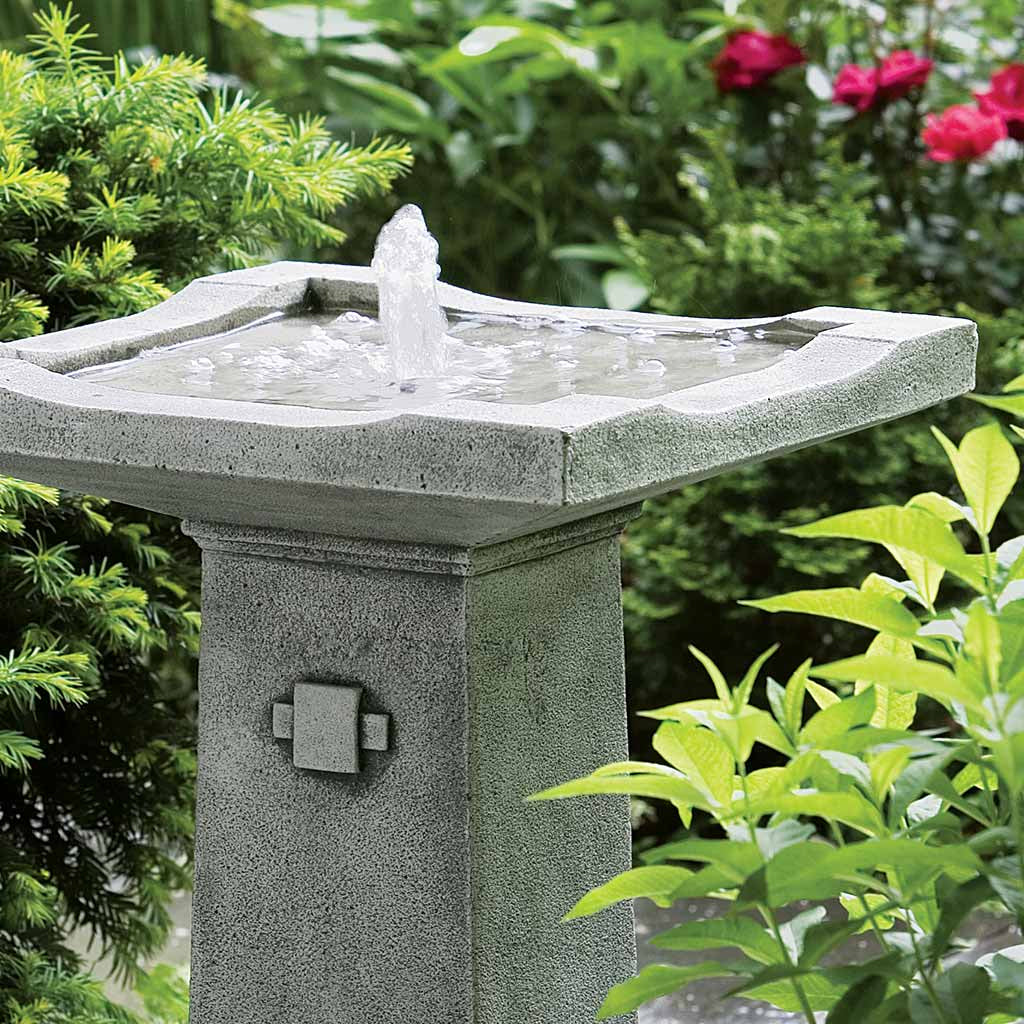
When Defoamer Helps

Sometimes foam returns even after cleaning the basin.

When this happens, a fountain-safe defoamer can help break down the bubbles quickly. These products are designed specifically for decorative water features and only require a few drops to work.

Defoamer doesn’t remove the debris causing the foam, but it collapses the bubbles so the water surface becomes clear again.

Because these treatments are concentrated, it’s important to follow the recommended amount rather than adding too much.

Preventing Foam From Returning

Once the water clears up, keeping it that way usually comes down to a few small habits.

Most foam problems start when organic material sits in the basin for too long. Leaves, pollen, and other debris slowly break down in the water, so pulling those out when you notice them can make a big difference.

Changing the water now and then also helps. Fresh water washes away dust and pollen that build up over time, especially during windy days or in the middle of pollen season.

If the fountain is placed near trees or garden beds, it’s pretty normal for debris to land in the basin. A quick skim every couple of days usually keeps it from turning into a larger problem later.

With those simple routines, many fountains stay clear without needing much more than occasional cleaning.

Why Moving Water Can Create More Bubbles

Fountains naturally create bubbles because water is constantly being aerated as it falls or splashes.

When organic material is present, those bubbles become more visible and linger longer.

Designs with cascading spillways or narrow drops tend to agitate the water more. That’s why foam may appear more easily in some fountains than others.

Even so, the foam usually disappears quickly once the underlying debris is removed.

When Cloudy Water Isn’t Foam

Sometimes the water doesn’t produce foam but still looks cloudy.

This is often caused by suspended particles—tiny bits of dust, pollen, or sediment floating in the water. These particles scatter light and make the water look hazy.

A full water replacement usually clears this up quickly.

Allowing the fountain to circulate fresh water for several minutes often restores the clear look people expect.

Keeping the Water Clear

Foamy or cloudy water can look alarming at first, but it’s rarely a serious problem.

Most of the time the cause is simply organic material that found its way into the fountain basin. A quick rinse, fresh water, and an occasional pump cleaning usually solve the issue.

With regular care, fountains—whether they’re decorative Wall Fountains, wildlife-friendly Birdbath fountains, or peaceful Zen fountains—stay clear and enjoyable throughout the season.

And once the water settles back to normal, the only thing you’ll notice again is the sound of water moving through the fountain.