Hardwired vs. Solar Outdoor Fountains: The Honest Pros and Cons

Trying to decide between a solar or hardwired outdoor fountain? This guide compares both options, explaining power output, reliability, sunlight requirements, and when each type works best for your garden.

If you’re deciding between a hardwired fountain and a solar one, the short answer is this:

  • Solar is convenient and simple but it’s not as powerful or consistent.
  • Hardwired requires an outlet but it runs stronger and more reliably.

Neither option is “better.” It depends entirely on what kind of fountain you want and how you plan to use it.

A small garden feature that runs gently in full sun? Solar can work well.
A tall cascade or large outdoor centerpiece that needs steady flow? Hardwired is usually the safer choice.

The frustration most buyers feel later isn’t about price — it’s about expectations. So let’s break this down honestly.

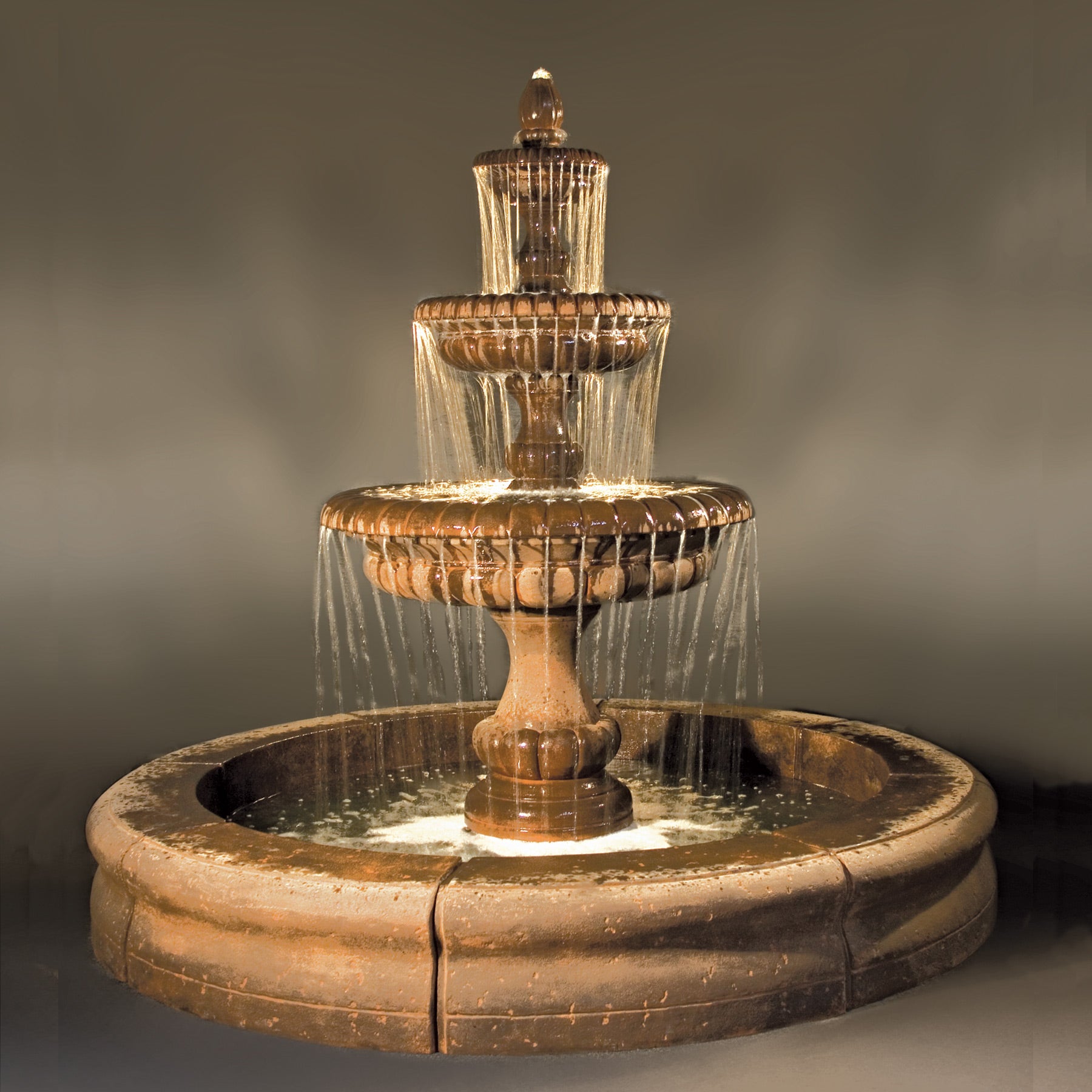
Pioggia Large Outdoor Fountain with Fiore Pond

What “Hardwired” Actually Means

When people hear “hardwired,” they often imagine complicated electrical work. In most residential fountains, that’s not the case.

Hardwired usually just means the pump plugs into a standard 110-volt outdoor outlet — ideally one that’s GFCI protected for safety.

That’s it.

Once plugged in, the pump runs continuously (or on a timer if you prefer). It doesn’t depend on weather, cloud cover, or time of day.

This is why hardwired systems are commonly used for:

  • Large outdoor fountains
  • Multi-tier cascading designs
  • Fountains with significant lift height
  • Installations meant to run daily and consistently

You get steady power, predictable flow, and no surprises.

What Solar Really Means (And What It Doesn’t)

Solar sounds appealing for obvious reasons. No outlet. No cord across the patio. No electricity cost.

But here’s the part that often gets overlooked:

Solar pumps depend entirely on direct sunlight — not just daylight.

If the panel is shaded by:

  • Trees
  • Fences
  • The house
  • Clouds
  • Late afternoon angles

The water flow weakens or stops.

Some models include battery backups, which help, but the overall power output is still lower compared to plug-in pumps.

That’s why solar works best for:

  • Smaller birdbath fountains
  • Light bubbling features
  • Decorative movement rather than dramatic cascades

It’s not that solar is bad. It’s just limited by physics.

Power and Water Height: Where the Difference Shows

The biggest difference between hardwired and solar shows up in lift height — how far the water needs to travel upward.

Water is heavy. Pushing it vertically takes energy.

If you’re considering:

  • Tall tiered fountains
  • Strong waterfall effects
  • Deep fountain basins with noticeable splash

Solar pumps usually don’t provide enough consistent pressure for that look.

You may get water movement at peak sunlight, but the flow often weakens throughout the day. For small bubbling tops, that’s fine. For large outdoor fountains, it becomes frustrating.

Hardwired pumps don’t fluctuate like that. If you want a steady cascade from morning to night, plug-in power makes a difference.

It’s also worth noting that your power source directly affects the strength and consistency of the water sound you’ll hear.

Installation Differences

Solar Installation

Solar feels easier because there’s no outlet requirement. You position the panel in direct sun, connect it to the pump, and that’s it.

But placement becomes critical.

The panel must:

  • Face direct sunlight
  • Stay unshaded most of the day
  • Be positioned where it won’t be accidentally blocked

That can limit where you place the fountain itself.

For example, if your ideal fountain spot is under a tree or near a shaded patio, solar may struggle even if the yard overall gets good sun.

Hardwired Installation

With hardwired fountains, you’re planning around an outlet instead of sunlight.

If you already have a GFCI outdoor outlet, setup is usually straightforward. If not, installing one is typically a simple job for an electrician.

The benefit is freedom of placement. The fountain can go:

  • In shade
  • Against a wall
  • In a courtyard
  • Under partial cover

You’re not dependent on sun exposure to keep it running.

Maintenance Considerations

Solar systems have fewer cords across walkways, which some homeowners prefer visually. However, the panel itself needs to stay clean. Dust, pollen, and debris reduce efficiency quickly.

Hardwired systems don’t depend on panels but still require normal pump maintenance like cleaning debris and checking water levels.

Neither option is maintenance-free. They just require attention in different areas.

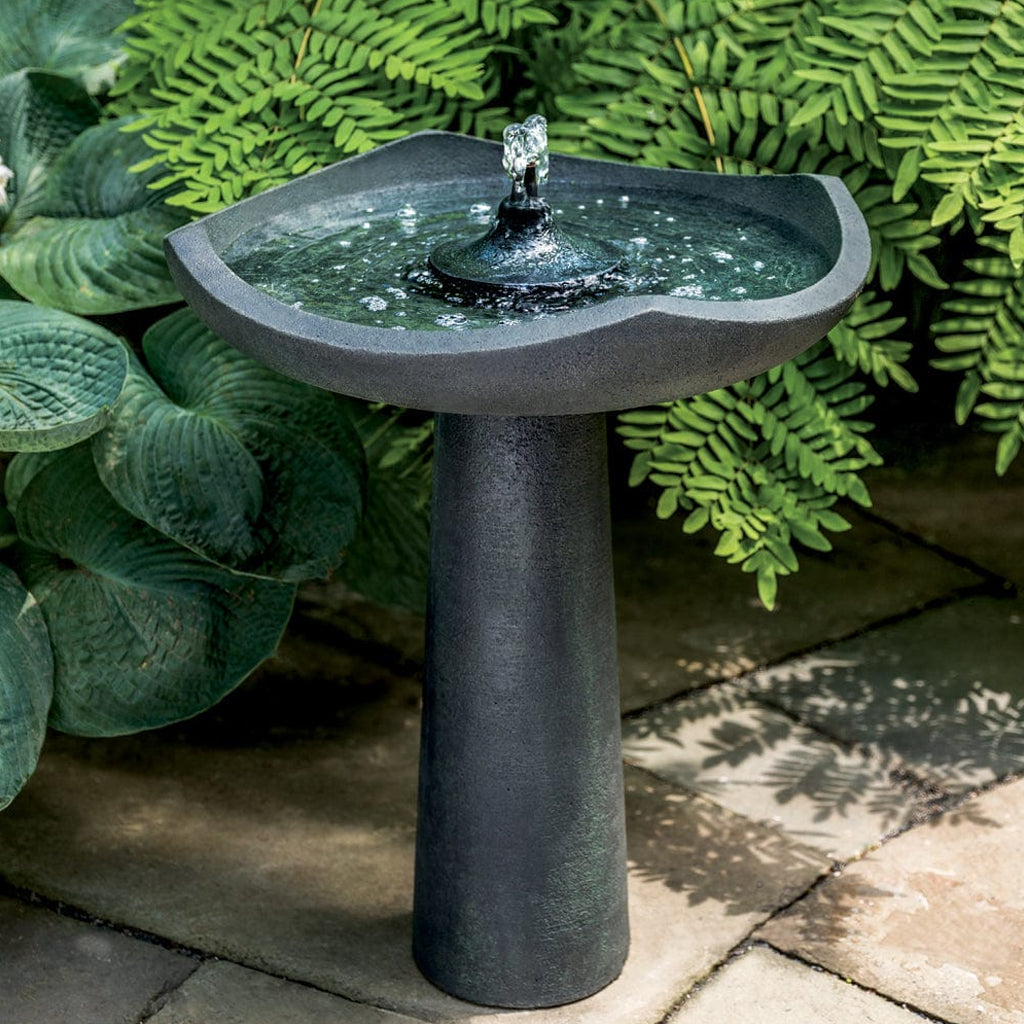
Medium Oslo Birdbath Fountain

Cost Over Time

Solar saves on electricity usage, which appeals to many buyers. However, fountain pumps generally use very little power — often comparable to a small light bulb.

For many homeowners, the monthly cost of running a hardwired fountain is lower than expected.

The bigger cost difference usually isn’t electricity — it’s performance. If a solar fountain doesn’t deliver the sound or movement you wanted, that’s when regret happens.

Matching the Power Source to the Fountain Type

Some fountain styles naturally align better with one power source than the other.

Birdbath fountains
Often work well with solar, especially in sunny garden areas. The water movement is typically gentle, and lift height is low.

Fountain basins
If you’re building a custom feature inside a basin and planning for layered water movement, hardwired pumps offer more flexibility and stronger flow.

Large outdoor fountains
These almost always perform better with hardwired systems. The scale, height, and continuous water movement demand consistent power.

Trying to run a tall multi-tier cascade on a small solar pump usually leads to disappointment.

The Honest Pros and Cons

Solar Pros

  • No outlet required
  • No visible extension cord
  • No electricity cost
  • Simple for small decorative features

Solar Cons

  • Requires direct sunlight
  • Flow strength fluctuates
  • Limited power for tall cascades
  • Performance depends on weather

Hardwired Pros

  • Consistent, reliable flow
  • Stronger pump options
  • Better for larger fountains
  • Works in shade

Hardwired Cons

  • Requires outdoor outlet
  • Visible cord unless concealed
  • Small ongoing electricity use

So Which Should You Choose?

Start with the fountain you actually want.

If you’re picturing a gentle bubbler in a sunny garden bed, solar can make sense.

If you’re imagining layered water spilling from tier to tier, or you’re shopping for large outdoor fountains meant to anchor the yard, hardwired power will likely meet your expectations better.

The biggest mistake isn’t choosing solar or hardwired.

It’s choosing solar for a fountain that really needs hardwired performance.

Once the power source matches the design, everything feels simple. The water flows the way you expected, the sound is consistent, and the fountain becomes part of the landscape instead of something you’re adjusting.

That’s ultimately the goal — not just saving on wiring, but choosing the option you won’t second-guess later.