Outdoor fountain material matters

Not all fountains are made the same. This guide compares cast stone, concrete, resin, and copper fountains, explaining differences in weight, durability, cost, and how each material ages outdoors so you can choose the right option for your space.

If you’re shopping for a fountain and wondering why one costs $120 and another costs $1,200 — you’re not actually paying for the design.

You’re paying for the material.

Most fountain returns, disappointments, and “this wasn’t what I expected” emails happen because the buyer pictured one type of material and received another. A fountain can look identical online, but cast stone, concrete, resin, and copper behave completely differently once they’re sitting outside in sun, wind, and water 24 hours a day.

The goal of this guide isn’t to tell you which material is best.

It’s to help you choose the one you’ll still be happy with a year from now.


Of course, the material you choose doesn’t exist in a vacuum—it performs very differently depending on your climate and exposure.

Why Outdoor Fountains Material Changes Everything

First — Why Material Changes Everything

A fountain lives a harder life than most outdoor décor.

It holds standing water.
It runs a pump.
It heats during the day and cools at night.
Minerals build up.
Algae appears.
Weather happens.

So the real question isn’t “Which looks nicest?”

It’s: How do you want the fountain to age?

Some materials slowly develop character.
Others stay lightweight and practical.
Others are meant to be moved easily.

Once you understand that, choosing becomes much easier.

Cast Stone (The Traditional Garden Fountain)

Cast stone is what most people picture when they imagine a classic outdoor fountain — the kind you see in courtyards, estate gardens, and older homes.

It’s made from crushed stone aggregates mixed with cement and poured into molds, then cured for strength. The result feels closer to carved stone than to décor.

The first thing you notice is the weight. Even a medium cast stone fountain can weigh several hundred pounds once installed. That sounds inconvenient, but it’s actually one of the reasons homeowners choose it: it stays put. Wind, pets, and weather don’t move it.

Over time, cast stone changes. Not quickly, but gradually. Minerals in the water, sun exposure, and air all interact with the surface. After a year or two, the fountain usually looks better than the day it arrived. Slight color variation appears, edges soften visually, and it blends into the landscape instead of sitting on top of it.

This is why cast stone is often chosen for larger installations and permanent placements, especially in outdoor seating areas or entry views. Many classic birdbath fountains use cast stone because the basin remains stable and birds actually prefer the secure footing.

Things to expect:

  • Heavy delivery (often freight)
  • Not something you’ll move around the yard
  • Designed to last many years outdoors
  • Appearance improves with age rather than staying perfect

What surprises customers most:
Cast stone is not supposed to look factory-perfect forever. The aging is the point.

Concrete (The Structural Choice)

People often think concrete and cast stone are identical. They’re related, but not quite the same in practice.

Concrete fountains are typically thicker, simpler in finish, and built more like architectural elements than decorative pieces. If cast stone feels like sculpted garden décor, concrete feels like part of the structure of the yard.

They are extremely durable and tolerate harsh weather very well. Heat, freezing nights, and constant water exposure rarely bother them when properly maintained. Because of that, concrete is often used in larger wall fountains or fountains placed against a fence or masonry wall.

The trade-off is appearance. Concrete doesn’t usually have the refined detailing of cast stone. It looks more modern and understated.

Concrete also ages in a different way. Instead of developing a patina, it slowly lightens and may show mineral streaking where water flows. Many homeowners actually like this because it gives a natural, architectural look — similar to stone planters or retaining walls.

Things to expect:

  • Very heavy
  • Extremely long-lasting outdoors
  • More structural than decorative
  • Minimal maintenance beyond normal cleaning

Good choice if you want a fountain that feels like part of the landscaping, not an object placed in it.

Resin (The Practical Option)

Resin tends to get mixed reactions, mostly because people picture something heavier when they see it online.

It’s a molded composite made to look like stone, but when you actually pick one up, the difference is obvious. Compared to cast stone or concrete, it’s much lighter. In most cases you can carry it yourself and move it around without needing help.

That’s why resin shows up so often on patios, balconies, and smaller outdoor areas. A lot of tabletop fountains and compact outdoor fountains are made this way simply because weight matters in those spaces.

The upside is convenience. Setup is straightforward, you can reposition it if you change furniture, the price is lower, and it ships normally instead of arriving on a freight pallet.

Where expectations matter is long-term outdoor exposure.

Sunlight slowly wears the finish, and unlike real stone, it doesn’t really blend into the landscape over the years. It usually looks the same for quite a while and then gradually starts to show age. It’s not that the fountain suddenly breaks — it just isn’t intended to last decades the way heavy stone pieces are.

For a lot of homeowners, that’s completely acceptable. Not everyone is planning a permanent installation. Some people want a calming water feature for a few seasons, a rental property, or just to improve a patio seating area.

Resin works especially well on apartment patios, covered porches, smaller courtyards, and for first-time fountain buyers who want something easy to live with.

The important thing to understand is simply this: a resin fountain is decorative and practical. It isn’t meant to be a lifetime architectural piece, and once you know that, most people end up very happy with it.

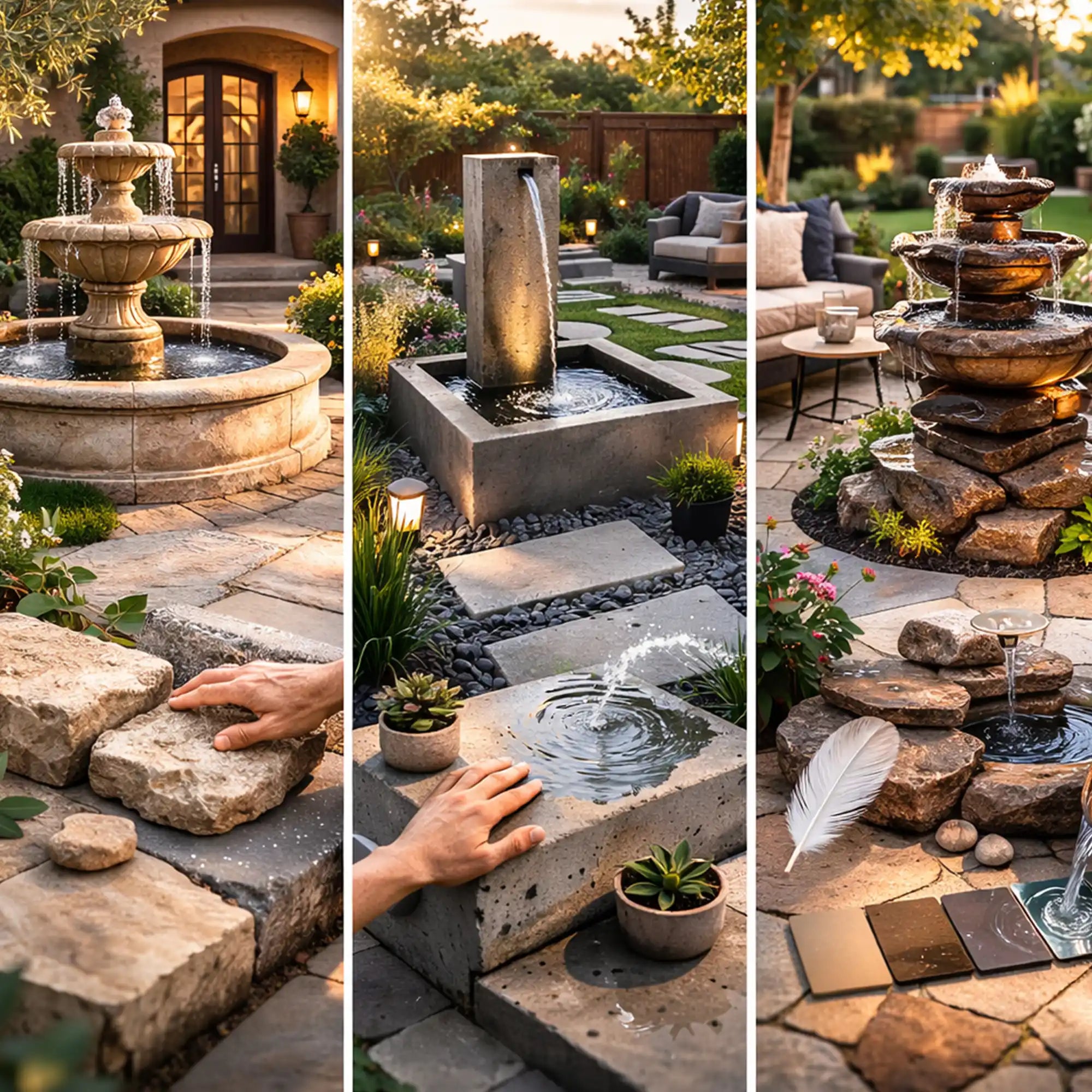
Copper (The Living Material)

Copper behaves very differently from the other fountain materials, mainly because it won’t keep the color you see on day one.

When it first arrives, the surface has a warm metallic shine. After it’s exposed to air and running water for a while, it starts to change. The color deepens, then shifts toward darker bronze tones, and sometimes develops small areas of green depending on the minerals in the water and the local climate.

Nothing is going wrong when that happens. That change is simply how copper naturally reacts outdoors.

For that reason, copper is usually chosen as a visual feature rather than a traditional garden fountain. You’ll often see it used on wall fountains or as a focal piece because people like watching it slowly evolve. Over time, each one ends up looking a little different.

In terms of weight, it falls between materials. It’s heavier than resin so it feels stable once placed, but it’s still movable with effort and planning, unlike stone.

Over the first several months you’ll notice the finish shifting. The coloration won’t stay uniform, and that’s normal. Some owners occasionally polish areas if they want to keep some shine, while others let it age naturally. Either approach works — it just depends on preference.

This is usually the most personal material choice. Some homeowners enjoy the changing appearance and character, while others would rather their fountain look the same year after year.

Weight Comparison (What Delivery Really Means)

Most buyers don’t think much about weight until the fountain actually arrives.

  • Resin is the easiest to deal with. One person can usually carry it and place it without much trouble.
  • Copper takes a bit more effort. It’s still movable, but you’ll want a second set of hands to position it safely.
  • Cast stone is where planning starts to matter. These pieces are heavy, and setting one up normally takes at least two people.
  • Concrete goes a step further. Many of those fountains arrive by freight and are placed once and left there. After installation, they’re not something you’ll casually move around the patio.

So the choice really depends on how you plan to use the space. If you like rearranging furniture or changing layouts, a lighter fountain will make life easier. If you want something that stays anchored and never shifts, the heavier materials are actually an advantage.

Fountain Material Weight Comparison

Longevity Expectations

A question we hear a lot is simply, “How long will this last?” It’s a fair thing to ask, and the answer depends more on material than design.

  • Resin fountains generally hold up for a number of years outdoors, especially if they’re in a covered or partially shaded area and maintained normally.
  • Copper tends to last much longer. The surface appearance changes over time, but the structure itself can remain in use for decades.
  • Cast stone is usually chosen when someone wants a long-term installation. With typical care, it’s common to keep one in place for ten years or more.
  • Concrete often lasts the longest. Once installed, it’s closer to a landscape feature than décor.

This isn’t really a quality comparison - it’s about intended use. A small tabletop fountain on a patio isn’t expected to have the same lifespan as a larger courtyard centerpiece, and it doesn’t need to.

Choosing the Right Material for Your Space

Instead of asking “Which material is best?”

Ask a better question:
How permanent do I want this fountain to be?

  • Choose cast stone if you want a traditional garden focal point.
  • Choose concrete if you want something architectural and extremely durable.
  • Choose resin if you want flexibility and simplicity.
  • Choose copper if you want a fountain that evolves visually over time.

Once you match the material to your expectations, you won’t second-guess the purchase — and you won’t be surprised when it arrives.

And in fountain buying, avoiding surprises is half the decision.