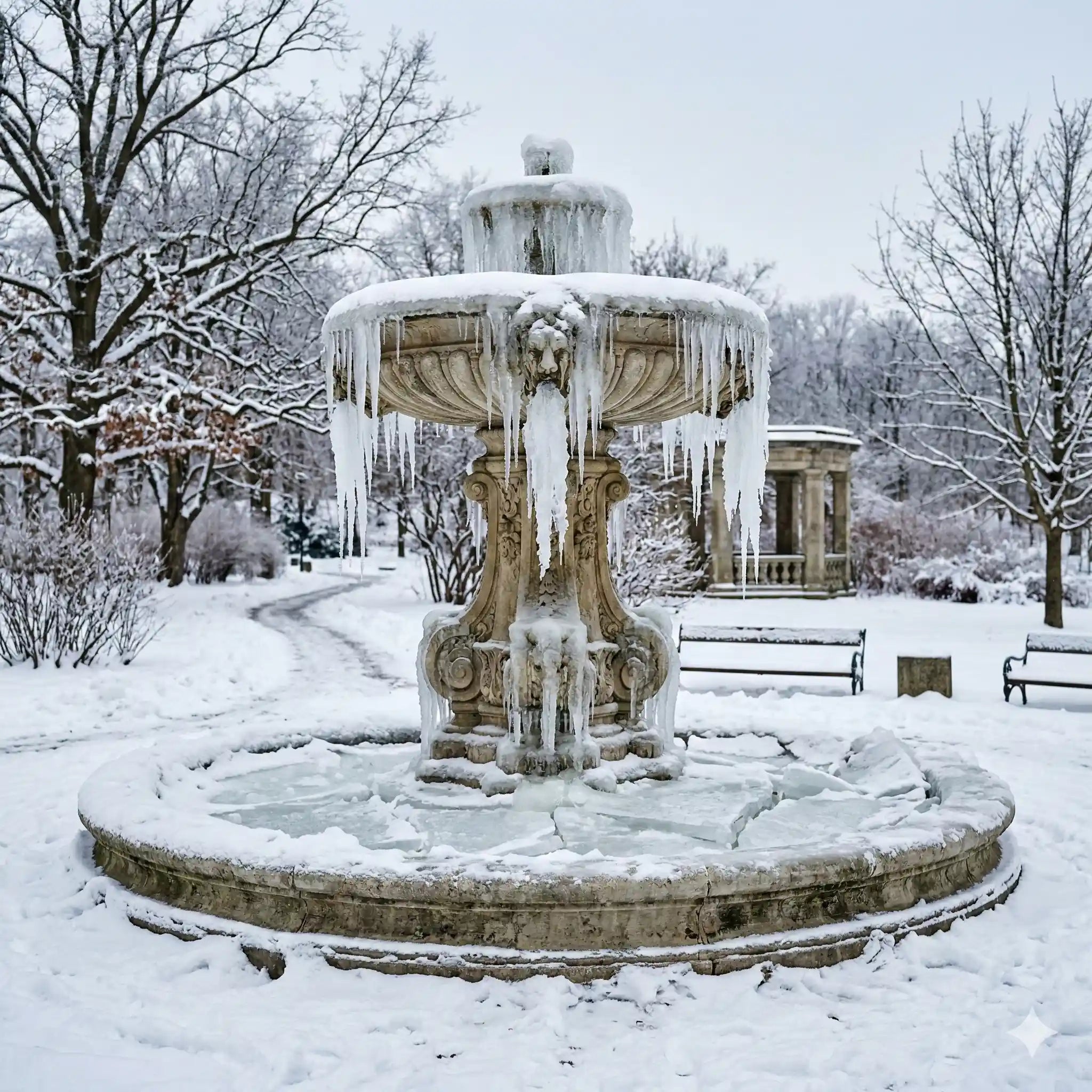
The right fountain for specific climate
How to Choose the Right Fountain for Your Specific Climate

Climate plays a major role in how long an outdoor fountain lasts. This guide explains how freeze-thaw cycles, intense sun, wind, and evaporation affect fountain materials so you can choose the right option for your environment.

The biggest factor in whether a fountain lasts five years or twenty usually isn’t the brand — it’s the climate you put it in.

Most fountains don’t fail because of the pump. They fail because weather slowly works on the material. Freezing water expands. Intense sun dries and fades finishes. Wind increases evaporation. Buyers often choose purely on appearance and only later realize their environment mattered more than the style.

The good news is you don’t need to be a landscaper or contractor to get this right. You just need to match the fountain material and placement to the kind of weather your yard actually experiences through the year.


That’s why choosing the right material isn’t just about looks—it’s about how it holds up in your specific environment over time.

First: Know What Your Climate Really Does to a Fountain

Most people think of a fountain as a decoration that happens to have water in it. In reality, the water is the part that causes almost every long-term issue.

A fountain is always wet somewhere — inside the basin, along the pump tubing, or in the channels where the water flows. Once you place it outdoors, the weather starts interacting with that water every single day.

In hotter areas the water level drops faster than expected.

In colder areas the water freezes inside small openings.

In dry or windy yards the splash slowly pushes water out of the basin.

In humid climates you simply clean it more often.

So the question isn’t really whether a fountain can go outside. Most are designed for that. The real question is whether the material and placement match the conditions around your home.

Hot and Sunny Climates (Intense Sun and Heat)

Warm climates cause a completely different kind of wear.

Instead of cracking, the sun works on the surface. Day after day of direct exposure slowly lightens finishes and dries certain materials. This shows up fastest on painted or lightweight surfaces, especially when placed on open patios.

Stone materials tend to hold their appearance longer because the color runs through the material. Lighter pieces still work outdoors, but they benefit a lot from partial shade or placement where the house blocks afternoon sun. Many modern fountains are positioned near seating areas or covered patios for this reason — not just for comfort, but for longevity.

Heat also creates the issue people most often mistake for a leak: evaporation.

Moving water disappears faster than still water. Add heat and a bit of breeze, and the basin level drops quickly. Courtyard fountains and shallow birdbath fountains especially show this because of their wider water surface.

In summer, it’s normal to top off the basin regularly. As long as the pump stays submerged, the fountain is operating exactly as intended.

Windy or Dry Regions

Wind affects fountains more than most people expect.

What usually happens isn’t obvious right away. The fountain runs fine, but after a couple of days the water level is lower and it looks like it’s leaking. It usually isn’t. The breeze is pushing a small amount of water outward every time it falls back into the basin. Little by little, it adds up.

Taller fountains notice this first because the water has farther to drop before it returns to the bowl.

In breezy yards, placement matters more than the material. Putting the fountain near a wall, a fence line, or even a dense hedge makes a big difference. Courtyard fountains tend to do well here simply because the surrounding structure blocks some of the airflow.

A deeper basin helps too since it catches more of the splash that would otherwise end up outside the fountain instead of back inside it.

Humid Climates

Humidity is usually easier on the structure but heavier on maintenance.

Warm moisture encourages algae growth and mineral spotting. Nothing is wrong with the fountain — it just needs occasional cleaning. Birdbath fountains especially collect buildup faster because of shallow standing water and visiting birds.

Routine rinsing and occasional water treatment keeps it under control. Structurally, humid climates are actually among the gentlest environments for fountains.

Matching Fountain Types to Climate

After a while you start noticing certain fountain styles end up in certain kinds of yards, and it’s usually not just about appearance.

Modern fountains tend to be placed near patios or seating areas. That ends up helping more than people realize because the house or overhang blocks part of the afternoon sun, so the finish holds up better and the water level stays more consistent.

Birdbath fountains are usually out in the open garden. They work well there, but they do need a little more attention in summer since shallow basins lose water faster. In colder areas they’re also the ones you definitely want drained before the first freeze.

Courtyard fountains are almost the opposite situation. Because they sit inside enclosed or semi-enclosed spaces, the surrounding walls cut down wind. Less breeze means less splash-out and the basin level stays steadier.

A Simple Way to Decide

At some point the question stops being which fountain is strongest and becomes how you actually plan to use it.

If you want to leave it outside all year, it makes sense to choose a heavier piece and just plan on a little seasonal prep when the weather changes.

If you like rearranging the patio or don’t want a permanent feature, a smaller movable fountain is simply easier to live with.

And if your yard gets strong afternoon sun, try to place the fountain where the house, a wall, or even a pergola gives it some cover.

Once the fountain fits the conditions around it, you don’t spend time adjusting or worrying about it. It just runs, and you notice the water instead of the maintenance.

Why This Matters Before You Buy

Sizing mistakes show up immediately.

Climate mistakes take a year or two.

That’s why this step matters so much. When a fountain fits the weather conditions around your home, maintenance stays simple and the appearance stays consistent. Most long-term satisfaction comes down to this single decision made before ordering.

A fountain doesn’t have to be complicated to own — it just has to be chosen with the right environment in mind.