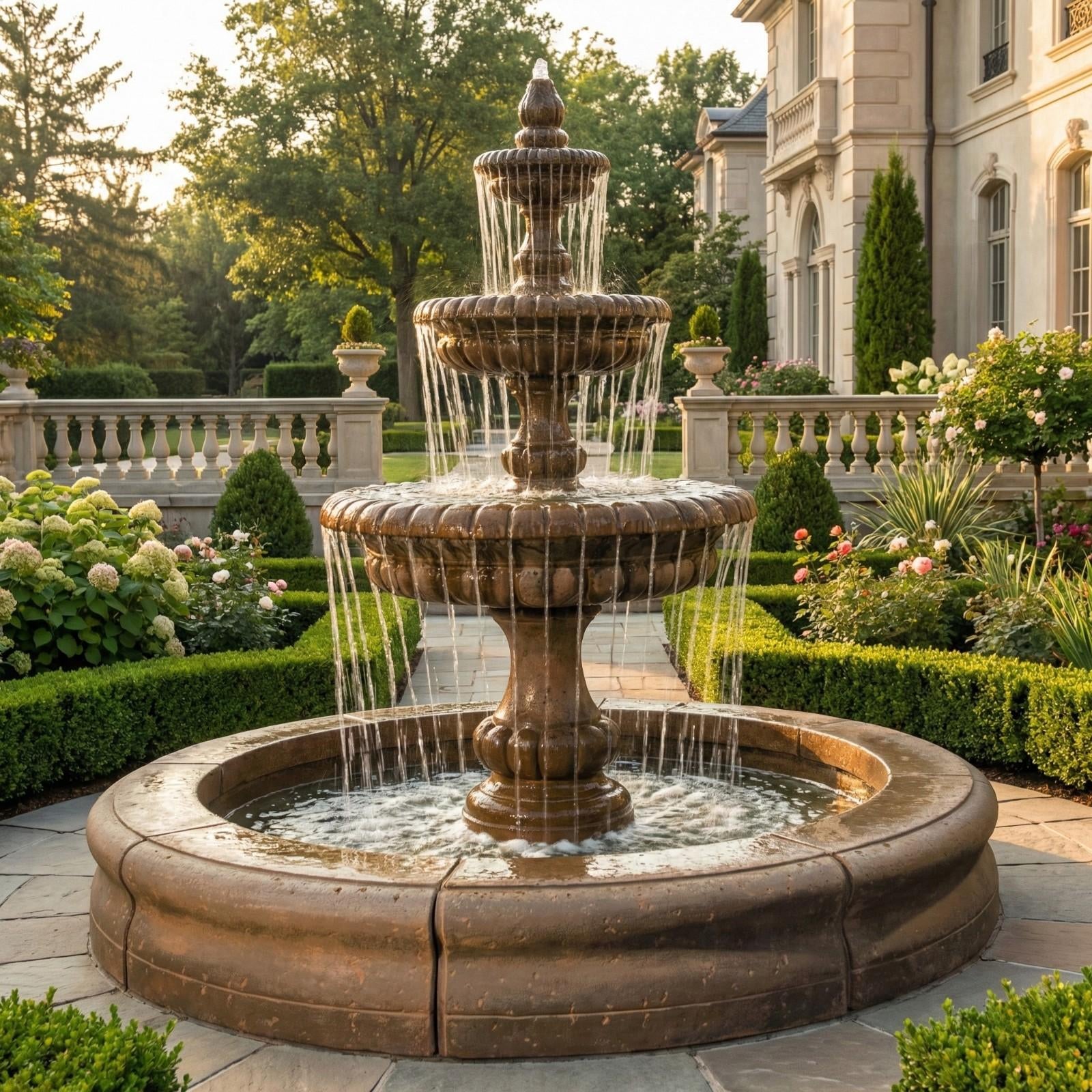
Fountain noise level
The Sound of Water: How to Choose a Fountain by Noise Level

Water sound is one of the most important parts of choosing a fountain. This guide explains how fountain height, water drop distance, tier design, and pump speed affect noise levels so you can pick the perfect sound for your garden or patio.

When someone says a fountain is “relaxing,” they’re usually not talking about how it looks.

They’re talking about how it sounds.

The mistake many first-time buyers make is choosing a fountain based only on appearance and discovering later that the sound is either too quiet to notice or much louder than expected. Unlike color or size, the sound can’t be ignored once it’s running every day. The right fountain becomes calming background noise. The wrong one turns into something you switch off.

The good news is the sound of a fountain isn’t random. It follows a few simple physical rules. Once you understand what creates the noise — water height, how far it falls, and how it lands — you can predict very closely how a fountain will sound in your yard.

Pioggia Large Outdoor Fountain with Fiore Pond

Why Fountain Sound Matters More Than Style

Most shoppers start with how the fountain looks, but after a few days the appearance stops being the main thing you notice. The sound is.

Once it’s running every day, it changes the atmosphere of the yard. A light trickling fountain makes a space feel calm and tucked away. A steady cascade helps blur out nearby houses. A stronger flow can even soften traffic noise if you live near a road.

What catches people off guard is that they didn’t really buy an ornament — they added a constant background sound to their outdoor space.

That’s why two fountains that seem similar in photos can feel completely different once they’re set up and running.

The Three Things That Control Fountain Noise

Every fountain sound — whether it’s a light bubbling or a noticeable splash — comes from three factors working together:

  1. How far the water drops
  2. How many times it falls
  3. How fast the pump moves it

Once you know these, you can almost “hear” a fountain just by looking at it.

Water Drop Distance (The Biggest Factor)

The height the water falls is the single strongest influence on volume.

When water barely leaves the surface and flows gently into a basin, the sound stays soft. When it drops several inches or more and strikes the water below, the sound becomes sharper and more noticeable.

This is why taller large outdoor fountains tend to be louder. The water has more distance to travel before impact, and the impact creates the sound.

You can picture it like rain:

  • Mist on a pond = quiet
  • Rain on a roof = noticeable
  • Water pouring from a gutter = loud

It’s the same water, just a different drop distance.

If you want something subtle for a patio seating area, look for fountains where water hugs the surface or spills gently over edges instead of falling through open air.

If you want to reduce traffic noise, you actually need a fountain where water visibly drops from level to level.

Tier Count (How Many Times Water Falls)

The number of levels matters just as much as the height.

Each time water falls, it creates a separate sound layer. One drop makes a soft note. Several drops create a fuller, more complex sound.

This is why traditional multi-tier garden fountains rarely sound silent even if they’re not extremely tall. The water is falling repeatedly — bowl to bowl to basin — creating overlapping noise that your ear blends together into a steady background sound.

More tiers = fuller sound
Fewer tiers = simpler sound

This is also why some smaller fountains can still be noticeable. Even without great height, repeated falling water adds presence.

Pump Speed (The Hidden Volume Control)

Many people don’t realize the pump acts like a volume dial.

The pump determines how much water moves at one time. More flow means thicker streams and stronger impact when water lands. Less flow softens everything.

Most fountains allow some adjustment using a small flow control valve on the pump. Slowing the flow doesn’t stop the fountain — it changes the tone.

High flow: active, splashing sound
Lower flow: calmer, smoother sound

This matters especially with waterfall fountains, where a wide sheet of water can go from gentle to quite noticeable depending on pump speed.


Behind every sound profile is the pump doing the work, and understanding how it’s powered can give you more control than you might expect.

Matching the Sound to the Space

Rather than thinking of a fountain as simply loud or quiet, it helps to imagine where you’ll actually spend time around it.

If it’s going beside a chair, a small patio table, or a spot where you read or drink coffee, a gentle sound is usually the most comfortable. Fountains where the water bubbles up or just slips over an edge tend to work well there because you hear them nearby but they don’t take over the space.

Some buyers are trying to cover background noise instead — nearby houses, voices, or a road in the distance. In those cases a soft trickle won’t do much. A fountain with several drops or a steady cascade works better because the sound stays continuous and blends into everything else you hear outdoors.

Open yards are a little different. A very quiet fountain can seem noticeable when you stand right next to it, but once you walk a short distance away it almost disappears. A slightly stronger flow actually feels more natural in a bigger space because outdoor sound spreads and softens as you move away from it.

International Tiered Garden Fountain

Why Large Fountains Don’t Always Sound Loud

A lot of people assume large outdoor fountains are automatically going to be noisy, but that’s not usually how it plays out once they’re installed.

We’ve set up taller fountains that customers worried about, only for them to realize the sound was actually pretty calm. The water was spreading across the tiers and settling into a deeper basin instead of hitting hard. At the same time, smaller pieces sometimes end up sounding sharper because the stream falls straight down into a shallow bowl.

What makes the difference isn’t really the overall size. It’s the way the water meets the basin.

When the water lands in a deeper pool, the sound gets absorbed and softens. When it hits a shallow surface, you hear more splash, which makes the fountain seem louder even if the fountain itself is smaller.

A Simple Way to Predict the Sound

When you’re looking at product photos, try not to focus only on the shape of the fountain. Pay attention to how the water is moving.

If the water is just bubbling up at the top or barely moving across the surface, the sound will be very gentle. When it rolls over edges or a spillway, you’ll hear a soft steady flow. If it’s moving from one bowl to another, the sound becomes more present because each drop adds another layer. And when the water is falling through open air before it lands, that’s when the fountain becomes clearly noticeable.

After a while you can almost guess the volume just from the pictures. Watching the path the water takes usually tells you more about the sound than the overall style of the fountain.

Choosing With Intention

Before placing an order, it helps to picture a normal day outside and what you actually want to hear in the background.

Some people just want a light water sound while they sit with a cup of coffee or read for a bit. In that case, a gentle flowing fountain usually feels right because it stays in the background instead of pulling your attention.

Others are trying to soften nearby activity — passing cars, distant voices, or general neighborhood noise. A stronger cascading design works better there since the continuous water sound blends into everything else you hear outdoors.

Neither option is really better. They just serve different uses.

A fountain can look great in a photo, but the part you live with every day is the sound. The right choice is the one that feels comfortable once it’s running in your own space.