How to Control and Prevent Unwanted Splashing

If your fountain keeps losing water, splashing is often the cause. This guide explains how to reduce splash by adjusting pump flow, leveling the fountain, and adding river rocks to control where the water lands.

If your fountain is losing water faster than expected, splashing is usually the reason.

Most outdoor fountains are designed so water falls back into the basin. But if the pump flow is too strong, the fountain isn’t perfectly level, or the water drops too far onto a hard surface, small splashes can send water outside the basin. Over time this lowers the water level and can even damage nearby wood decking, patio furniture, or walls. If splashing continues to be an issue, it’s often a sign that the base isn’t as level as it should be.

The good news is that splashing problems are almost always easy to fix. In most cases, a simple pump adjustment, better leveling, or adding a few stones to the splash zones will solve the issue quickly.

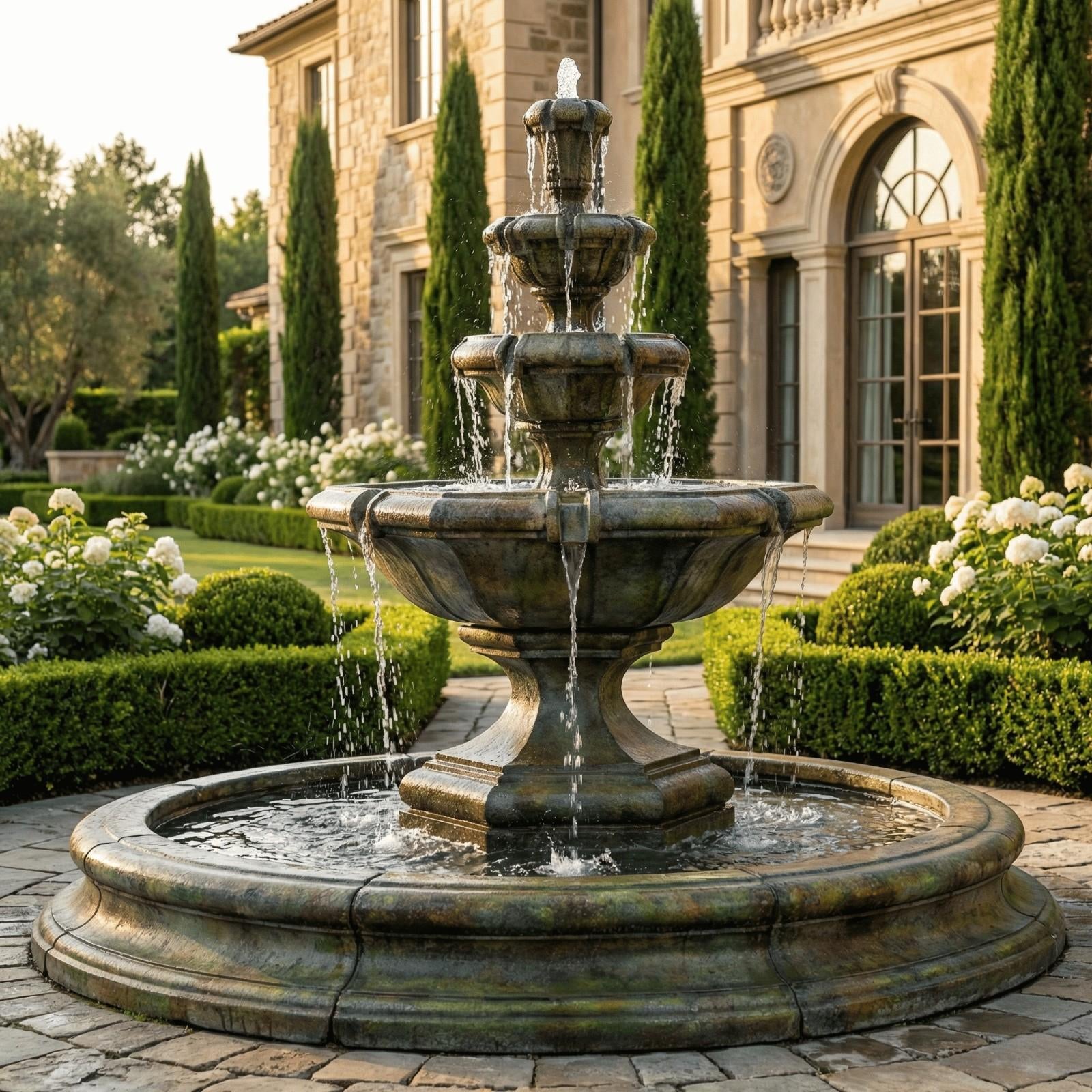
Grande Kensington Three Tier Fountain in Toscana Pool

Why Splashing Happens in the First Place

When a fountain starts losing water, splashing is usually the reason. In most cases it comes down to a few simple things.

One of the most common causes is the pump pushing water faster than the fountain really needs. When that happens, the stream hits the basin with more force and tiny droplets bounce outward instead of settling back into the bowl.

Leveling can also play a role. If the fountain tilts even slightly, water tends to favor the lower side. Over time that heavier flow can cause small splashes that eventually send water outside the basin.

The basin design itself can make a difference too. When water lands in a deeper pool it usually settles quietly, but when it hits a shallow or flat surface it’s more likely to scatter.

You’ll see these issues in all kinds of setups—from smaller decorative garden fountains to taller large outdoor fountains where water drops through multiple tiers before reaching the base.

Start With the Pump Flow

The easiest fix is often adjusting the pump.

Most fountain pumps include a small flow control valve. It’s usually located on the pump housing or along the tubing. Turning the valve slightly reduces how much water the pump pushes upward.

When the flow slows down, the water returns to the basin more gently.

Many homeowners worry that lowering the pump speed will make the fountain look weaker. In reality, most fountains actually look more natural when the flow is slightly reduced. The water becomes smoother and more controlled instead of forceful.

This adjustment is especially helpful for waterfall fountains, where wide sheets of water can sometimes fall too hard into the basin.

A small change to the valve often solves splashing immediately.

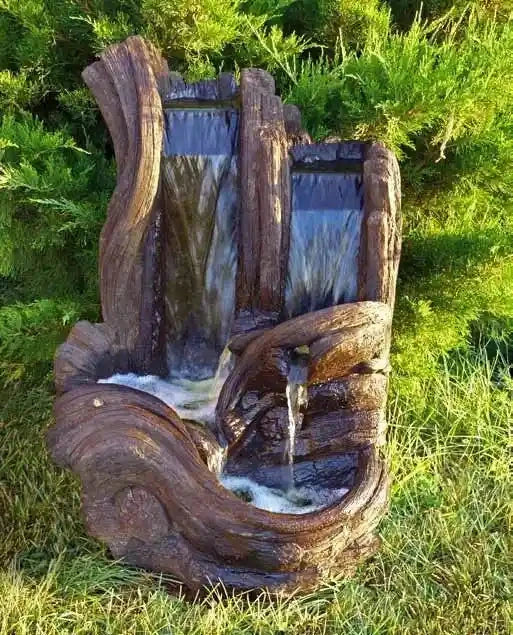
Waterfall Outdoor Fountain

Check the Fountain’s Level

If adjusting the pump doesn’t solve the issue, the next thing to check is the fountain’s level.

Water will always move toward the lowest point. If the base is even slightly tilted, more water will flow toward that side and increase the chance of splashing.

Place a carpenter’s level across the basin in several directions:

  • front to back
  • side to side
  • diagonally

If one side is lower, lift the base slightly and add sand or a thin paver beneath it to correct the tilt.

This step is especially important for heavier large outdoor fountains because their weight can cause them to settle slightly after installation.

Once the basin is perfectly level, water circulation usually becomes much more balanced.

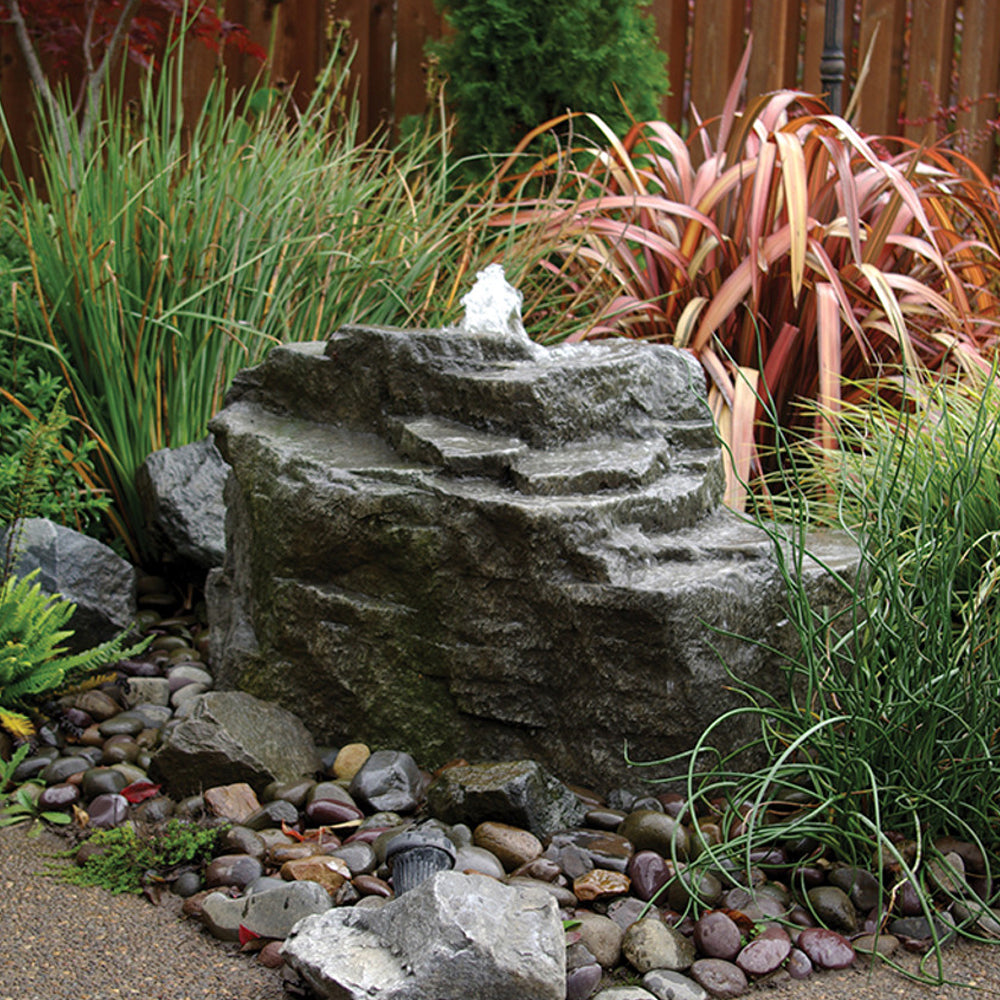
Mountain Spring Rock Outdoor Fountain

Use River Rocks to Absorb Splash

Another simple trick installers often use is adding smooth stones to the basin where water lands.

When water falls directly onto a hard surface, it tends to bounce outward. River rocks break that impact. The rounded stones absorb some of the energy and redirect the water downward instead of outward.

You don’t need to fill the entire basin. Just place a few stones in the areas where the water drops most forcefully.

This technique works particularly well for waterfall fountains, where water spills from one level to the next.

Besides reducing splash, the stones can also add a natural look to the basin.

Watch the Water Height

Sometimes the issue isn’t the pump or the fountain design at all—it’s simply the water level.

When the basin gets a little low, the water has farther to fall before it reaches the surface. That extra drop can make the landing more forceful, and that’s when droplets start jumping outside the basin.

Keeping the water level where it’s supposed to be usually softens that impact. When the basin is full, the falling water settles more gently instead of splashing.

This tends to show up more in the middle of summer. Heat and sun can lower the water level faster than people expect, especially on warm days.

Taking a quick look at the basin every few days and topping it off when needed keeps the pump covered and helps keep splashing under control at the same time.

Consider Wind and Placement

Outdoor fountains don’t operate in perfect conditions. Wind can influence how water moves.

Even a gentle breeze can push falling water slightly off course. In open yards, this can send droplets outside the basin.

This is one reason many garden fountains are placed near landscape features such as shrubs, fences, or walls. These elements help block wind and keep the water falling straight down.

If splashing seems to increase on windy days, placement may be contributing to the problem.

Don’t Ignore Splashing Near Walls or Structures

If a fountain is placed near siding, drywall, or wooden structures, splashing should be addressed quickly.

Over time, repeated moisture can stain surfaces or cause damage to nearby materials.

This is particularly important for wall-mounted or waterfall fountains placed near the exterior of a home or patio wall.

Keeping the water contained inside the basin protects both the fountain and the surrounding space.

Most Splashing Problems Are Easy to Fix

The first time splashing appears, many homeowners assume something is wrong with the fountain.

In reality, splashing is a normal adjustment issue that happens during setup.

A few small changes—reducing pump flow, leveling the base, adding river rocks, or topping off the water level—usually solve the problem within minutes.

Once the water begins falling smoothly back into the basin, the fountain runs quietly and efficiently the way it was designed to.

A Well-Tuned Fountain Should Feel Effortless

When a fountain is balanced correctly, the water movement looks natural and controlled. The sound becomes steady and calming instead of chaotic.

Whether you’re installing decorative garden fountains, cascading waterfall fountains, or dramatic large outdoor fountains, the goal is always the same: water flowing smoothly back into the basin without leaving the system.

Once that balance is achieved, the fountain stops feeling like a project and starts doing what it was meant to do—adding movement, sound, and atmosphere to the space around it.